United Airlines, Delta Air Lines, and LATAM Airlines Group are commanding the spotlight in the post-pandemic airline industry resurgence, delivering exceptional earnings growth and securing a stronghold in global markets. Investors and analysts alike are eyeing these carriers as the primary drivers of sector recovery, capitalizing on a potent mix of rising passenger demand, operational upgrades, and strategic network expansions.

Post-Pandemic Resurgence Powers Upward Trajectory
The lifting of pandemic-era restrictions has reinvigorated global travel, and no players have leveraged this resurgence more effectively than United Airlines (UAL), Delta Air Lines (DAL), and LATAM Airlines Group (LTM). These airlines have outpaced recovery expectations through well-executed strategies that combine capacity growth, profitable routes, and revamped fleet operations.
United Airlines, for instance, has expanded aggressively into transatlantic and Pacific markets, capturing pent-up international travel demand. With a renewed focus on premium offerings and operational efficiency, UAL has seen profit margins climb steadily. In Q2 of 2025, the carrier reported earnings that beat analyst expectations by over 15%, driven by increased load factors and cost discipline across its global operations.
Delta Air Lines continues to impress with its balanced network and premium cabin growth strategy. As business travel returns, Delta’s differentiated product mix, including Delta One Suites and elevated Sky Club experiences, has created strong revenue per available seat mile (RASM) growth. Its operating margin currently sits around 11.5%—among the highest in the U.S. airline industry.
LATAM Airlines Group, meanwhile, has emerged from its restructuring phase stronger than ever. The Santiago-based airline reported quarterly profits that surpassed 2019 levels, highlighting its success in streamlining operations, increasing aircraft utilization, and expanding cargo revenues. LATAM’s recovery is further bolstered by alliances with major U.S. carriers, granting it wider access to high-yield markets.
Strategic Expansions Deliver Competitive Edge
What sets these airlines apart is their bold push into strategic markets and fleet modernization initiatives. United’s landmark order of 270 next-generation aircraft, including Boeing 737 MAX and Airbus A321neo models, has enabled higher fuel efficiency and greater range, reinforcing its long-haul competitiveness.
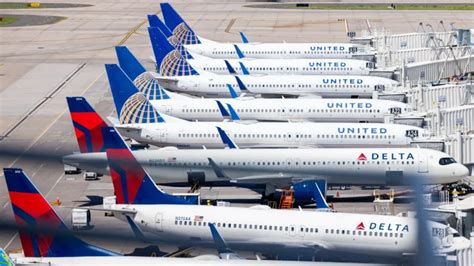
Delta has taken a slightly different route, focusing on refurbishing its widebody fleet while acquiring regional jets for improved short-haul connectivity. Its recent purchase of Airbus A350s has improved operating economics and passenger comfort on high-demand international routes. Delta also holds a significant stake in LATAM, strengthening bilateral operations between the U.S. and Latin America.
LATAM’s partnerships, particularly its joint venture with Delta, have allowed it to unlock more routes between South America and North America. With a leaner cost base and better aircraft utilization post-Chapter 11 restructuring, LATAM is well-positioned to benefit from the ongoing surge in Latin American travel demand.
Profitability Signals Strong Investment Case
Financials tell the clearest story. United Airlines posted an EPS of $4.28 in the last quarter, marking a 20% year-over-year increase. The airline expects full-year earnings to exceed previous guidance, buoyed by summer travel bookings and premium cabin upsell success. United’s CEO Scott Kirby noted that business travel demand has reached 95% of pre-pandemic levels, a major revenue milestone.
Delta’s recent earnings call was equally optimistic, with CEO Ed Bastian highlighting that operating income hit $2.1 billion for Q2. Free cash flow increased dramatically, helping Delta reduce net debt and commit to shareholder returns. The airline’s share price has climbed more than 25% year-to-date, making it a standout in the Dow Jones Transportation Average.
LATAM Airlines, despite being an emerging market player, has delivered equally compelling numbers. Its net income margin climbed to 8.7% in the latest quarter, outperforming many regional competitors. LATAM’s cargo division contributed nearly 20% of total revenues, an important cushion in an industry still prone to demand shocks.
Stock Market Upside Remains Substantial
The market is rewarding these carriers for their agility and foresight. All three stocks—UAL, DAL, and LTM—have shown robust year-to-date growth, but analysts suggest there’s room for further upside.
United Airlines has been given a price target of $76 per share by leading analysts, implying an 18% upside from current levels. Its price-to-earnings (P/E) ratio remains attractive at just 9.2X forward earnings, especially given its earnings momentum and revenue diversification.
Delta’s valuation also signals opportunity. Trading at a forward P/E of 10.5X, DAL remains underpriced relative to its earnings power. The airline’s recent investor guidance hinted at continued margin expansion, supported by loyalty program growth and strong forward bookings.
LATAM Airlines Group, trading on the Santiago Stock Exchange and as an ADR in U.S. markets, has reemerged as a value pick. Analysts have upgraded the stock based on stronger-than-expected restructuring results and increasing regional travel demand. A full recovery of international capacity by late 2025 could significantly lift earnings.
Copa Holdings and Euroseas: Sector Bright Spots
While UAL, DAL, and LATAM dominate headlines, Copa Holdings (CPA) and Euroseas (ESEA) are making waves in niche segments of transportation. Based in Panama, Copa Airlines has proven to be one of the most profitable airlines in the Western Hemisphere, with operating margins exceeding 20%—far above industry averages.
Copa is currently projecting 14% EPS growth for FY25, with strong investor confidence reflected in its 6% upward revision of earnings estimates over the past 60 days. The airline has built its success on efficient hub-and-spoke operations from Tocumen International Airport and maintains one of the best on-time records globally.
Meanwhile, Euroseas, a Greek containership operator, has capitalized on strategic fleet optimization, selling older ships and reinvesting in newer, more fuel-efficient vessels. Despite a projected slight dip in FY25 earnings, its EPS estimates have still risen 2% over 60 days, indicating enduring investor confidence.
Both companies offer exceptional value based on P/E ratios—Copa at 6.4X and Euroseas at a staggeringly low 2.8X—while also delivering attractive dividend yields. Copa’s dividend is a rarity among airlines, and Euroseas’s 6.36% yield is well above the industry average, supported by a conservative 16% payout ratio.
Airline Sector Outlook: Momentum Remains Strong
As the transportation sector continues to rebound, the airline segment remains a core driver of stock market optimism. The combination of surging passenger volumes, disciplined cost controls, and strategic international alliances has created a potent formula for success.
United, Delta, and LATAM are leading this resurgence, while Copa and Euroseas showcase what profitability and operational finesse can achieve in specific sub-sectors. With fuel prices stabilizing and global travel demand showing no signs of slowing, these stocks remain high-conviction picks for growth-oriented investors.
Wall Street’s renewed confidence in the transportation sector, supported by upward revisions and favorable analyst ratings, suggests that the momentum is not only sustainable—but potentially accelerating. Whether through passenger airlines or shipping and cargo operators, transportation equities are flying high, and savvy investors are already on board.