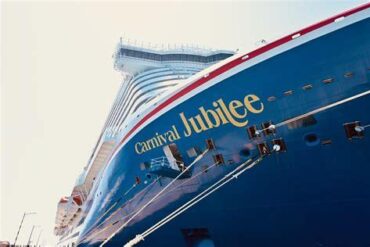
Carnival Corporation (NYSE: CCL) has recently witnessed an extraordinary surge in its stock, climbing nearly 40% over the past year, with an impressive 11% increase just in the last month. This remarkable rise can be attributed to the cruise line’s stellar second-quarter performance, where revenues not only met but exceeded expectations, generating considerable excitement among investors. Carnival’s quarterly revenue reached an astounding $6.33 billion, reflecting a 9% increase from the previous year. Additionally, net income soared to $565 million, a significant leap from the mere $92 million reported the previous year. As this upward momentum continues, many are left pondering: what does the future hold for Carnival stock, and how will it affect both investors and travelers in the cruise industry?
A Strong Performance and a Promising Outlook
Carnival’s impressive financial results come at a crucial time when the cruise industry is experiencing a resurgence following the challenges posed by the Covid-19 pandemic. The company has capitalized on robust demand for leisure cruising, attracting passengers with appealing prices and all-inclusive packages that offer substantial value compared to traditional land-based vacations. Barathan Pasupathi, CEO of Jazeera Airways, commented on this growth, stating, “The company’s ability to increase revenue while controlling costs has created an impressive foundation for future growth.” In light of these positive trends, Carnival has adjusted its full-year forecast, raising its net income projection by 40% compared to the previous year, suggesting that favorable conditions in the cruise sector are likely to persist throughout 2025.
Expanding Horizons: The New Bahamas Destination – Celebration Key
One of the critical strategies contributing to Carnival’s growth is its commitment to enhancing its fleet and expanding its destination offerings. A major milestone in this endeavor is the upcoming opening of Celebration Key, Carnival’s new private island in the Bahamas, set to debut on July 19, 2025. This exciting new destination promises to provide Carnival passengers with an exclusive, controlled environment that enhances their overall cruise experience while simultaneously driving additional revenue for the company. The introduction of Celebration Key signifies a strategic shift towards offering unique, private experiences that cater to travelers seeking personalized and safer travel options in our post-pandemic world. By focusing on exclusive experiences and serene environments, Carnival aims to further solidify its position as a leader in the cruise industry.

A Modest Valuation: Stock Still Appears Undervalued
Despite these positive results, Carnival’s stock remains modestly valued in comparison to the broader market. The company’s price-to-sales (P/S) ratio stands at 1.3, which is significantly lower than the 3.1 P/S ratio of the S&P 500. This disparity suggests that Carnival’s stock may be undervalued. Furthermore, Carnival’s price-to-earnings (P/E) ratio of 16.4 is well below the benchmark’s P/E ratio of 26.9, raising an important question: Is now the opportune moment for investors to acquire Carnival stock?
Profit Margins and Operational Performance: Are They Sustainable?
While Carnival has reported solid revenue growth, its profit margins remain moderate. The company’s operating income for the past four quarters was $3.8 billion, reflecting an operating margin of 15.1%. Although this figure aligns with typical cruise industry performance, it falls short of some broader market averages. Additionally, Carnival’s net income margin of 8.1% is below the S&P 500 average of 11.6%, indicating that while the company is profitable, there remains ample room for improvement in operational efficiency. For travelers, this suggests that while Carnival is performing well currently, the company’s ability to sustain long-term profitability and deliver consistent services may be influenced by broader economic conditions and the cyclical nature of the cruise industry.
Debt Levels and Financial Stability: A Concern for Investors?
One of the most pressing concerns for investors is Carnival’s substantial debt load, currently standing at $28 billion. This figure is quite significant when juxtaposed against its market capitalization of $34 billion, resulting in an exceedingly high debt-to-equity ratio of 84.4%, far exceeding the S&P 500’s average of 19.4%. Such a high debt burden raises serious questions regarding the company’s long-term financial health, particularly in the event of another economic downturn. Additionally, Carnival’s relatively weak cash-to-assets ratio of just 1.7% underscores the company’s struggles in managing its debt obligations. For investors, this could signal vulnerability, especially during times of economic uncertainty when cruise demand may decline or prices could be adversely affected by rising costs.
How Resilient Is Carnival in a Downturn?
Historically, Carnival has demonstrated vulnerability during economic downturns. For instance, during the inflation shock of 2022, the stock plummeted 79.6% from its peak, significantly underperforming the S&P 500. Likewise, during the 2020 Covid pandemic, Carnival’s stock experienced a staggering 84.6% drop. These alarming statistics indicate that while Carnival has rebounded robustly post-pandemic, it remains susceptible to wider economic forces that could weigh heavily on its performance in the future. For travelers, this means that although cruising offers an attractive and affordable vacation option for many, the cruise line industry—much like other sectors—continues to be influenced by economic cycles. Therefore, travelers should always be prepared for potential changes in pricing and availability, particularly if the broader market faces another downturn.
Tips for Investors and Travelers
For investors looking to capitalize on Carnival’s recent stock surge, it is vital to strike a balance between optimism and caution. While Carnival’s growth prospects appear strong, particularly with the launch of its private island and upgraded fleet, the significant debt load and exposure to economic fluctuations present substantial risks. Those considering investing in Carnival stock should think about diversifying their portfolios to mitigate risk, while remaining vigilant regarding the company’s long-term financial health and operational performance.
Travelers planning to book a Carnival cruise may find that now is an excellent opportunity to take advantage of the company’s expanded destinations and unique private island experiences. However, it is wise to remain aware of potential price increases and booking flexibility, as the cruise line industry’s performance can be swayed by larger market trends. It is always prudent to book early and monitor any changes in cruise schedules or pricing.
Looking Ahead: Is Carnival a Strong Buy?
Although Carnival has displayed impressive results, significant risks remain, particularly concerning financial stability and market volatility. For investors, the stock is currently undervalued, yet its high debt levels and cyclical nature necessitate caution. On the other hand, travelers can look forward to enhanced experiences and new destinations, making Carnival an appealing choice for those seeking affordable, all-inclusive vacation options. In conclusion, Carnival’s recent performance and growth outlook remain robust, but its vulnerabilities—especially in terms of financial health—should not be overlooked. Both investors and travelers must carefully weigh the potential risks and rewards when considering Carnival as a viable investment or travel option. As the cruise industry continues to rebound, it will be fascinating to observe whether Carnival can sustain its momentum amid looming economic uncertainties.