AIRO Group Holdings has catapulted into the spotlight following its explosive IPO debut, capturing the attention of both Wall Street and defense industry observers. The New Mexico-based aerospace and drone company stunned the market on June 13, 2025, as its shares soared by 140% on the first day of trading, reflecting a surging wave of investor enthusiasm for advanced unmanned systems in an increasingly volatile global security landscape.
AIRO’s IPO: A Stunning Market Debut
The IPO of AIRO Group Holdings was initially priced conservatively at $10 per share, below earlier estimates of $14 to $16. Despite this cautious approach, the offering quickly gained traction, with shares hitting an intraday high of $39.07 before settling at $24—a staggering 140% gain from the initial offering. This remarkable upswing elevated AIRO’s market capitalization to roughly $650 million, more than doubling its initial valuation of $270 million.
The company offered 6 million shares, raising approximately $60 million in gross proceeds. Underwriting was led by a seasoned triad: Cantor Fitzgerald, BTIG, and Mizuho Securities, indicating serious institutional backing and confidence in AIRO’s long-term potential.
A Multifaceted Aerospace Challenger
What sets AIRO apart in the crowded aerospace space is its diverse technology portfolio, structured across four strategic business divisions:
Drone Systems
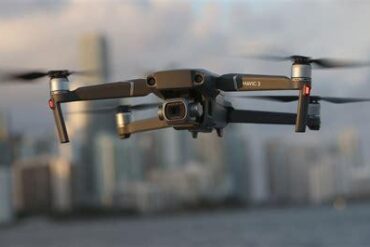
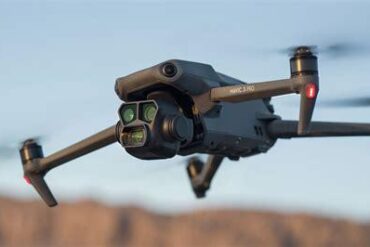
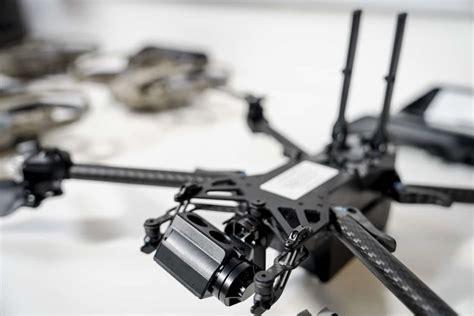
The heart of AIRO’s operations lies in its unmanned aerial systems (UAS) division, with flagship products such as the Sky-Watch line and the military-grade RQ-35 Heidrun. These drones are already deployed by NATO and have proven their effectiveness on the battlefield in Ukraine, particularly for real-time reconnaissance and electronic warfare resilience.
Advanced Avionics
AIRO also develops sophisticated flight control systems for both manned and unmanned aircraft. These avionics solutions are designed to support high-reliability missions, incorporating AI-enhanced features that contribute to precision navigation and autonomous flight capabilities.
Military Training
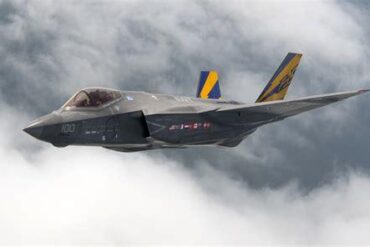
Its training arm delivers combat-ready simulation and live training using L-39 jets, with a focus on U.S. military close air support missions. The training curriculum combines tactical ground simulations with advanced air maneuver instruction, reflecting AIRO’s end-to-end defense solutions approach.
Electric Air Mobility
AIRO is also pushing boundaries in electric vertical takeoff and landing (eVTOL) technologies. This division aims to disrupt cargo logistics and urban air mobility markets by 2027, positioning the company at the nexus of defense, logistics, and green aviation.
Financial Momentum and Market Valuation
In fiscal year 2024, AIRO posted revenues of $87 million, doubling its sales from the previous year—a rare growth curve for a mid-sized aerospace entrant. At current prices, the company is trading at roughly 7 times its 2024 sales, placing it competitively alongside more established firms:
- AeroVironment trades at about 12x sales.
- Kratos Defense & Security Solutions is valued at 6x sales.
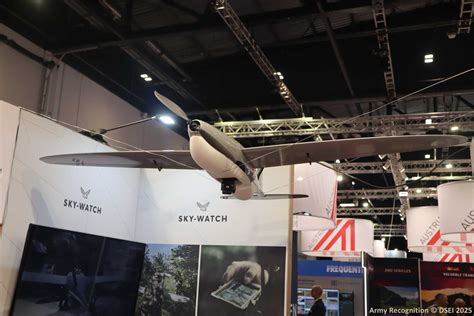
This comparison highlights that while AIRO is priced aggressively, its growth trajectory and technology differentiation offer a compelling narrative for institutional investors and defense-sector analysts.
Geopolitical Tailwinds Fueling Demand
AIRO’s breakout performance can be directly tied to geopolitical shifts, particularly the Russia-Ukraine conflict, which has dramatically reshaped military procurement strategies worldwide. Drones, once seen as niche tools, are now central assets in surveillance, logistics, and targeted strikes. AIRO’s UAVs, praised for their AI capabilities and battlefield durability, have earned a trusted spot in NATO’s defense inventory.
Moreover, the increased adoption of drones by nations outside of NATO—such as Eastern European allies and Indo-Pacific partners—indicates a sustained demand curve that AIRO is strategically positioned to fulfill.
Capital Deployment: Scaling Innovation and Global Reach
With the fresh influx of capital from the IPO, AIRO plans to expand its drone portfolio, enhance AI integration, and invest in global military pilot training programs. CEO Joseph Burns has emphasized that funds will also be directed toward R&D in AI-driven avionics and accelerating the roadmap for eVTOL logistics aircraft.

Executive Chairman Chirinjeev Kathuria, a recognized entrepreneur in space and aviation, views the IPO not merely as a liquidity event, but as a strategic leap that aligns with a long-term mission of “defense innovation through smart capital.” His vision for AIRO includes deepened collaborations with global defense ministries, NATO’s procurement arm, and U.S. intelligence contractors.
Competitive Edge in an Evolving Industry
While AIRO’s size still pales in comparison to aerospace titans like Northrop Grumman or Lockheed Martin, its lean innovation model enables rapid prototyping and faster go-to-market execution. Unlike legacy firms tied to decades-long contracts and rigid government cycles, AIRO can nimbly respond to emerging threats and customize solutions within months.
Moreover, its full-stack offering—from hardware to training—gives it a turnkey edge in a sector where integration is increasingly critical. Defense buyers are prioritizing vendors who can deliver not just tools, but full operational ecosystems.
Risk Considerations for Investors
Despite its bullish market entrance, AIRO is not without risks. The defense sector is highly dependent on government contracts, and policy shifts or budget reallocations could impact forward revenue. Additionally, competition is intensifying, with new drone startups in Israel, Turkey, and China also seeking global market share.
AIRO’s valuation premium, while justifiable by growth, leaves little room for error. Any operational hiccups, such as manufacturing delays or regulatory headwinds in the eVTOL space, could cause sharp corrections.
Still, the company’s performance indicators suggest a strong foundation: repeat NATO contracts, high-margin drone platforms, and an internal cost structure designed for scalability.
Long-Term Outlook: A Future-Focused Defense Pioneer
Looking ahead, AIRO is positioned to benefit from both short-term military procurement cycles and long-range shifts toward AI-integrated combat systems. Its hybrid model—spanning defense, training, avionics, and mobility—mirrors the emerging needs of multidomain warfare strategies embraced by modern militaries.
As the aerospace and defense landscape continues to evolve, the companies that will lead are those that embrace modularity, software-defined systems, and interoperability across allied forces. AIRO’s technology stack appears aligned with these future-forward demands.
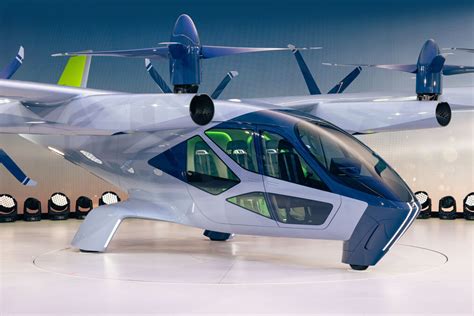
If the firm successfully executes on its roadmap, especially in eVTOL logistics and autonomous avionics, it could be seen not just as a drone maker, but as a platform innovator in military-grade mobility.
Final Thoughts
AIRO’s IPO has ignited a spotlight on how modern defense startups can capture investor imagination by riding the twin waves of geopolitical necessity and deep tech innovation. Its blockbuster debut signals a new era where nimble, tech-centric defense firms can stand shoulder to shoulder with traditional military-industrial players.
The coming months will test whether AIRO can scale sustainably while retaining its agility. But for now, the message is clear: drones are no longer future tech—they are today’s frontline, and AIRO is flying high at the center of this transformation.