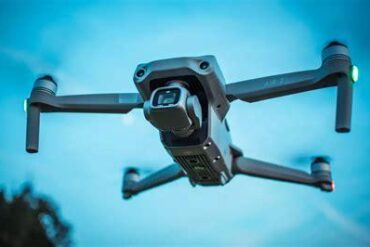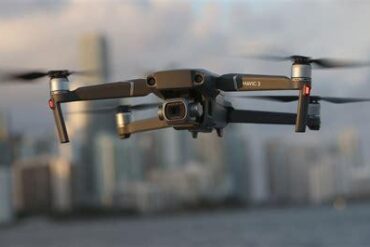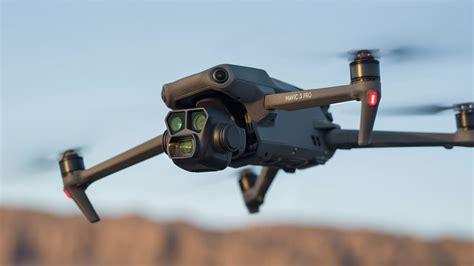
The world’s largest drone manufacturer, DJI, is entering one of the most precarious phases in its history as the United States intensifies its regulatory clampdown on foreign-made technologies. Under proposed Federal Communications Commission (FCC) rules, DJI may soon find itself at the heart of a national-security storm that could effectively ban new sales of its drones in the U.S. and cripple its dominant position in the global market.
FCC Tightens Security Net Around Foreign Tech
At the center of this escalating crisis is FCC Chairman Brendan Carr, who recently announced a proposal allowing the agency to revoke certifications for devices already approved if they are later deemed national-security risks. This would close a long-standing gap in U.S. communications law that, until now, only allowed the FCC to deny new certifications, not rescind existing ones.
Carr described the move as a means to give the agency “new tools to safeguard our networks from insecure spy gear.” The initiative is part of a broader push to fortify American infrastructure against potential surveillance threats from foreign adversaries — a category that increasingly includes Chinese-made hardware and software.
Under the new framework, the FCC could not only block future imports of suspect devices but also retroactively revoke approval for products already circulating in the market. This could be devastating for DJI, whose devices dominate consumer and commercial drone markets across the U.S.

How DJI Became a Target
DJI’s troubles didn’t start with the FCC. The company has already been flagged by the Pentagon, which added DJI to its Chinese Military Companies list, banning its use in federal government operations. The U.S. Department of the Interior followed suit, grounding much of its DJI fleet over cybersecurity and data privacy concerns.
Despite DJI’s efforts to enhance transparency — such as implementing privacy modes that prevent flight data from syncing with company servers — U.S. officials remain unconvinced. The perception that DJI’s drones could be exploited for data collection or intelligence gathering continues to fuel bipartisan anxiety in Washington.
The FCC’s upcoming vote is not explicitly directed at DJI, but it’s clear the new rules would arm the agency with authority to remove “untrustworthy” technologies — a definition broad enough to include DJI’s product ecosystem. If the measure passes, DJI’s presence in the U.S. could shrink dramatically, perhaps irreversibly.
The Legal and Political Context
The proposed regulation falls under a wider national-security umbrella that has tightened over recent years. Beyond telecommunications giants like Huawei and ZTE, entities like Hikvision have also been added to the FCC’s Covered List, barring their technologies from the U.S. market.
The new rule would extend the FCC’s jurisdiction beyond new device authorizations to already-certified products, effectively erasing any safe harbor DJI might have relied upon. The timing couldn’t be worse. Under the 2025 National Defense Authorization Act (NDAA), the U.S. government must complete a formal national-security review of DJI by December 23, 2025. Should the review raise concerns—or fail to be completed—DJI could be automatically placed on the Covered List.
Potential Fallout: A Paralyzed U.S. Drone Market
If the FCC revokes DJI’s certification, the ripple effects will be immediate and far-reaching:
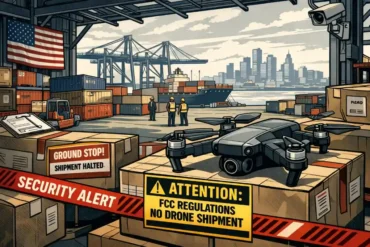
- No new DJI drones could be legally imported or sold within the U.S.
- Retailers like Amazon and Best Buy would be forced to pull inventory.
- Repair centers and drone service providers would face shortages of replacement parts.
- Even software updates could be blocked if they depend on FCC compliance.
Although existing DJI drones would remain operational—since the FCC lacks authority to disable previously sold devices—the company’s U.S. business model could collapse overnight. Current models might instantly become collector’s items, marking the end of a decade-long dominance in aerial innovation.
The Last Days of Abundance: Retailers Scramble
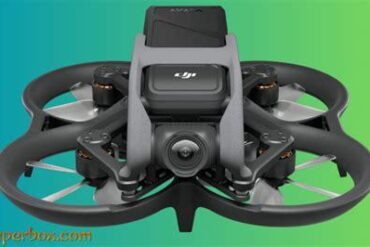
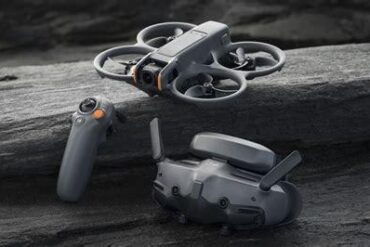
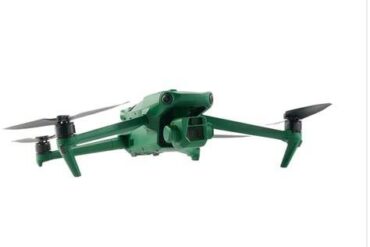
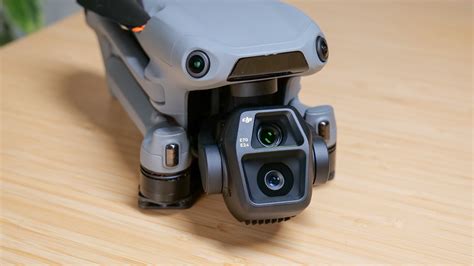
DJI’s U.S. webstore already paints a grim picture. Most flagship drones are listed as sold out, and inventory across major retailers is dwindling rapidly. Models still available include the DJI Mini 3, Mini 4K, Neo, Air 3S, Avata 2, and Flip — each serving distinct niches of the drone market.
The DJI Mini 3, celebrated for its compact 249g weight and 4K HDR video, remains a top seller, appealing to hobbyists who want professional results without FAA registration hassles. The DJI Neo, on the other hand, targets beginners with intuitive flight control and 2.7K recording, offering a friendly gateway into aerial videography.
Then comes the DJI Air 3S, the workhorse of creators, boasting a dual-camera system and 46-minute flight time, while the DJI Avata 2 provides an immersive FPV (first-person view) experience for thrill-seekers. The ultra-portable DJI Flip, tailored for social media creators, folds neatly into a pocket, turning any location into a cinematic set.
For now, these models remain legal to purchase, but their future availability is hanging by a thread. As supply chains adjust to the tightening noose of U.S. import restrictions, even accessories like batteries, propellers, and camera modules could become scarce.
Why DJI’s Case Is Different
While other Chinese firms like Huawei faced similar scrutiny, DJI occupies a unique position. Its products have become deeply integrated into U.S. industries, from real estate marketing and film production to infrastructure inspection and agricultural monitoring. Thousands of businesses rely on DJI drones daily for data collection, photography, and environmental mapping.
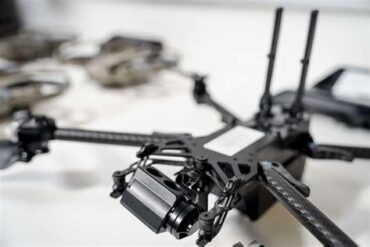
Banning DJI from the market would not only hurt hobbyists but also disrupt entire professional sectors. Alternative drone makers, such as Skydio or Autel Robotics, could partially fill the gap, but none yet match DJI’s balance of cost, performance, and technological maturity.
For federal agencies, the move could backfire. Several departments previously relied on DJI drones for their efficiency, reliability, and affordability. Replacing them with approved domestic models could mean higher costs and lower technical capability, at least in the short term.
Inside the FCC’s “Component Parts Loophole” Crackdown
A particularly dangerous aspect of the new regulation for DJI lies in the so-called “component parts loophole.” Until now, a banned manufacturer could, in theory, supply components—such as chips or radio modules—to other brands, which would then integrate them into their own certified products. The new rules aim to eliminate that possibility entirely.
This change could indirectly impact DJI even if it isn’t explicitly banned. Any U.S. manufacturer using DJI software libraries or electronic components could lose eligibility for FCC certification, effectively isolating the Chinese firm from collaborative opportunities in the American tech ecosystem.
The Broader Implications for Global Drone Innovation
What’s happening to DJI is more than a national-security story — it’s a turning point in global tech governance. The United States’ regulatory stance reflects a growing trend among Western democracies to de-risk critical technologies from perceived foreign influence. The European Union and Australia are also reviewing their own frameworks for drone imports, suggesting that the wave of scrutiny could go global.
The outcome of the U.S. review could determine whether DJI remains an international powerhouse or becomes a cautionary tale of geopolitical overreach. Should the FCC follow through with its revocation authority, it would signal a precedent — that no foreign company, no matter how dominant, is beyond the reach of national-security regulation.
The Countdown to 2025
The clock is ticking. By December 2025, DJI’s future in the United States will be decided. If the company fails the security review—or if it’s automatically blacklisted by default—it will lose access to its most profitable overseas market. That would not only devastate DJI’s revenues but also reshape the global drone supply chain, forcing distributors, filmmakers, and industrial operators to find alternatives.
For consumers, this likely means fewer choices and higher prices. Domestic drone makers might gain ground, but innovation could slow without DJI’s competitive pressure. Even if existing drones remain functional, their support networks will erode: fewer firmware updates, limited repairs, and vanishing spare parts.
A Shrinking Horizon for Drone Enthusiasts
DJI’s predicament illustrates how geopolitics now directly shapes consumer technology. What began as a niche hobby has evolved into a battleground for national sovereignty, data privacy, and technological dominance. For years, DJI defined what was possible in aerial imaging. Now, it faces the prospect of being grounded by forces far beyond the sky.
Right now, DJI drones remain fully legal to own and operate in the United States. But the horizon is closing fast. The FCC’s upcoming vote could mark the last chapter in DJI’s American journey — a story of innovation stifled by politics, and a warning shot for every foreign tech company hoping to soar in the land of the free.