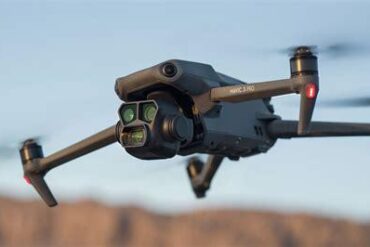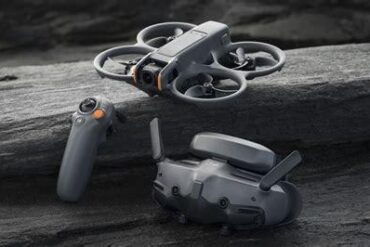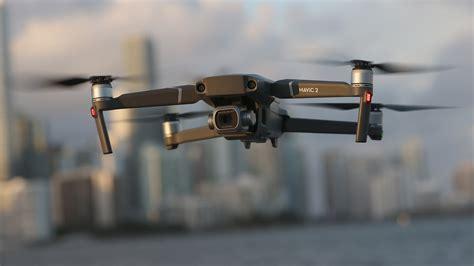
The legal battle between DJI, the world’s largest commercial drone manufacturer, and the United States Department of Defense (DoD) has reached a pivotal moment. U.S. District Judge Paul Friedman has ruled that the Chinese drone giant will remain on the Pentagon’s Section 1260H list, which designates certain companies as “Chinese military companies.” This ruling solidifies Washington’s stance that DJI is affiliated with China’s defense industry, a designation that carries significant political, economic, and security implications.
DJI’s Legal Challenge Against the U.S. Government
DJI, headquartered in Shenzhen, China, has been under scrutiny for years due to its dominance in the global drone market and its Chinese origin. In 2022, the Pentagon formally added DJI to its Section 1260H list, citing links between the company and the Chinese military-industrial ecosystem. The company subsequently filed a lawsuit against the federal government, arguing that the designation was unjustified and based on flawed reasoning.
In its defense, DJI stressed that it is neither owned nor controlled by the People’s Liberation Army (PLA) or the Chinese Communist Party (CCP). Company officials argued that the blacklisting had damaged its reputation, disrupted its business opportunities, and discouraged federal agencies from contracting with it.
Judge Friedman’s ruling, however, dismissed most of DJI’s claims. Although the court acknowledged that the DoD had failed to provide strong evidence on several points, it ultimately upheld the listing based on a single justification: that DJI’s technological capabilities and industry role make it a potential contributor to China’s military ecosystem.
What the Pentagon’s Military Company List Means
The Pentagon’s Section 1260H list is not a blanket ban but a national security designation. Being included on the list signals that a company operates in ways that may support or enable China’s military or defense activities. For DJI, the implications are significant:
- U.S. investors are restricted from buying shares in listed companies.
- Federal agencies are discouraged or outright barred from purchasing listed firms’ products.
- The designation stigmatizes the company globally, raising doubts among international partners and governments.
While the ruling does not immediately ban DJI from selling drones in the United States, it makes government procurement and business partnerships far more difficult. In addition, lawmakers have repeatedly introduced bills that could escalate restrictions, including outright bans on DJI’s consumer drones, which dominate more than 70% of the U.S. civilian drone market.
DJI’s Response to the Court Ruling
Following the decision, a DJI spokesperson expressed disappointment but also emphasized resilience. The company pointed out that the court had rejected most of the DoD’s arguments but regretted that the single surviving rationale was enough to keep it on the blacklist.
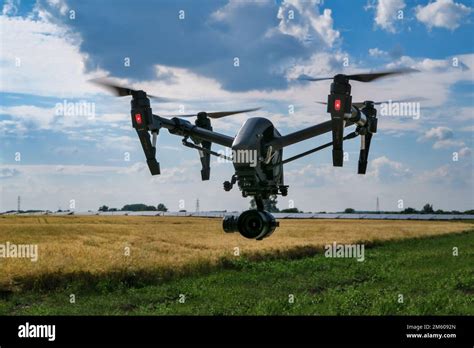
Despite the setback, DJI confirmed that it will continue operating in the U.S. market and pursue further legal options. The company also underscored that it produces only civilian drones, primarily used in aerial photography, agriculture, construction, and emergency response, not military applications.
A Broader Context: U.S.-China Tech Rivalry
The ruling is not an isolated case but part of the broader U.S.-China technology confrontation. Washington has increasingly targeted Chinese tech firms, citing risks of espionage, surveillance, and forced cooperation with the Chinese government. The Huawei ban, restrictions on semiconductor exports, and scrutiny of companies like Hikvision and ZTE all fall under the same strategic framework.
DJI’s case mirrors the experience of other Chinese firms. Recently, Hesai Group, a leading Lidar manufacturer, also lost its lawsuit against the DoD after being listed as a Chinese military company. Like DJI, Hesai has appealed, but the rulings demonstrate a consistent judicial pattern favoring the Pentagon’s authority in national security matters.
National Security Concerns: Why DJI Faces Scrutiny
The U.S. government’s primary concern is not that DJI directly builds military drones, but rather that civilian drones could be repurposed or compromised. The ubiquity of DJI drones among American consumers, local governments, and industries raises fears that Beijing could exploit them for intelligence gathering.
Key concerns cited by lawmakers and defense officials include:
- Data Security: DJI drones often transmit flight and image data, which critics warn could be routed to Chinese servers.
- Infrastructure Surveillance: Drones used by U.S. agencies in mapping, agriculture, or construction could inadvertently provide intelligence on critical infrastructure.
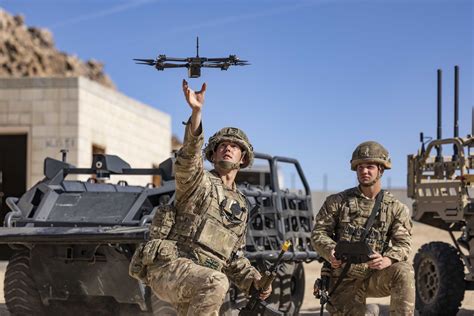
- Military Applications: While DJI markets consumer drones, modified units have already appeared on the battlefield in Ukraine, where drones are used for reconnaissance and even improvised attacks.
These risks underpin Washington’s insistence that companies like DJI cannot be treated as entirely civilian in nature, given the blurred lines between China’s commercial sector and its defense establishment.
The Global Drone Market and Strategic Impact
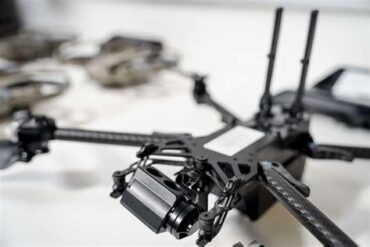
DJI’s market dominance complicates U.S. efforts to limit its influence. No American or Western company currently matches DJI in terms of cost efficiency, reliability, and technological advancement. Competitors like Skydio in the U.S. and Parrot in Europe exist, but they hold only niche shares compared to DJI’s vast footprint.
The ruling may accelerate U.S. efforts to build and subsidize a domestic drone industry. Washington has already poured funding into startups developing secure, American-made drones for government and enterprise use. However, scaling production to compete with DJI’s established supply chains remains a formidable challenge.
Beijing’s Position and Geopolitical Undercurrents
The Chinese government has consistently condemned U.S. moves against its tech firms as politically motivated protectionism. Beijing argues that Washington’s designations are part of a larger campaign to suppress China’s rise in advanced technology sectors.
From Beijing’s perspective, DJI is a symbol of Chinese innovation and global competitiveness. U.S. restrictions are viewed as an attempt to handicap Chinese companies in industries where they have secured global leadership. This fuels further geopolitical friction between the two powers, especially in sensitive technology areas with dual-use potential.
Possible Future Scenarios
The ruling leaves DJI facing an uncertain path in the U.S. market. Several scenarios are possible in the coming years:
- Escalation of Restrictions: Congress could revive legislation to ban DJI sales outright, especially if national security concerns intensify.
- Security Review in 2025: DJI must undergo another formal review in 2025 to determine whether its products present risks. A negative outcome could drastically curtail its U.S. presence.
- Global Ripple Effects: U.S. allies may adopt similar measures, further constraining DJI’s international business opportunities.
- Domestic Substitutes: American firms may accelerate development of homegrown drones, gradually eroding DJI’s dominance.

Public Reaction and Industry Debate
The ruling has ignited heated debate across technology forums, social media, and policy circles. Some commentators highlight the irony that U.S. defense contractors like Boeing and Lockheed Martin are deeply tied to the U.S. military, while DJI faces penalties for alleged indirect links. Others argue that the comparison is flawed, since U.S. companies operate under a market system where government influence is limited, whereas Chinese firms operate under a party-state framework that obliges compliance with state directives.
Drone enthusiasts and professionals express concern over losing access to DJI’s affordable, high-quality drones. Alternatives exist, but none currently match DJI’s combination of price, performance, and ease of use. Critics fear that restricting DJI could stifle innovation and accessibility in the drone sector, especially for small businesses and hobbyists.
Conclusion: A Precedent with Global Implications
The court’s decision to uphold DJI’s listing as a Chinese military company is more than just a setback for the world’s leading drone maker. It represents a legal affirmation of Washington’s broader campaign to curb Chinese technological influence, especially in sectors with national security relevance.
As U.S.-China tensions deepen, the case underscores how civilian technologies with dual-use potential are increasingly entangled in geopolitical conflict. For DJI, the ruling poses an existential challenge to its American operations, even as it continues to dominate the global market. For Washington, it marks another step in its effort to draw hard lines between technology, security, and geopolitics.
The outcome will not only shape DJI’s future but also influence how governments worldwide approach the intersection of commercial innovation and national security risks in the decades ahead.