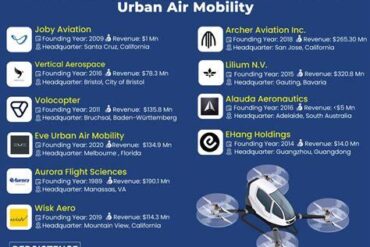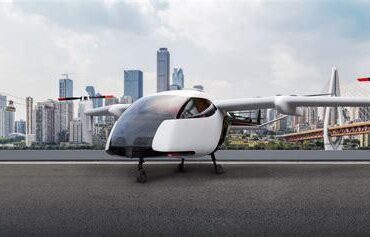
Archer Aviation Inc. has rapidly emerged as one of the most disruptive forces in the aviation industry, pioneering electric vertical takeoff and landing (eVTOL) aircraft that aim to revolutionize short-distance urban travel. Founded in 2018 and headquartered in San Jose, California, Archer is not just building futuristic aircraft—it’s laying the groundwork for a new form of urban air mobility (UAM) that may soon become as ubiquitous as rideshares.
By combining sleek engineering, aviation-grade safety, and electric propulsion, Archer’s approach challenges the long-standing constraints of ground-based transit in congested cities. Its flagship models, Maker and Midnight, embody this shift and signal a future where air taxis will cut 60-minute commutes down to 10 minutes—quietly, sustainably, and efficiently.
The Vision Behind Archer Aviation
The company was co-founded by Adam Goldstein and Brett Adcock with the goal of eliminating the pain points of traditional urban commuting. Archer’s mission hinges on three core principles: safety, sustainability, and scalability. The goal isn’t just to build aircraft but to establish a reliable, repeatable transportation network in densely populated metro areas like Los Angeles, Miami, and Chicago.
By targeting trips around 20–50 miles, Archer aims to replace car rides and eliminate the bottlenecks of inner-city traffic. The company projects their vehicles will operate at speeds of up to 150 mph (240 km/h) and will utilize dedicated infrastructure such as vertiports for takeoff and landing.
Maker: The Technological Proof of Concept
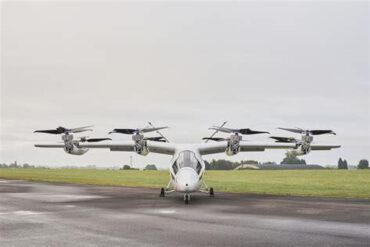
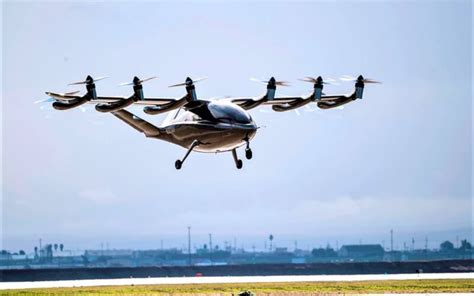
Archer unveiled its first full-scale demonstrator, Maker, on June 10, 2021. This aircraft became the cornerstone for Archer’s engineering philosophy and public credibility. Maker features 12 electric propellers—six five-blade tilt rotors for vertical and horizontal flight, and six two-blade stationary rotors for VTOL-only lift.
The Maker aircraft is powered by six independent battery packs, ensuring both redundancy and safety. In December 2021, the Maker prototype received an FAA special airworthiness certificate and conducted its first hover flight, marking a pivotal milestone.
While Maker was never intended for commercial use, it validated Archer’s core flight systems, aerodynamic configurations, and battery management systems. Maker’s role was essential in developing a scalable blueprint for commercial aircraft.
Midnight: The Future of Urban Air Taxis
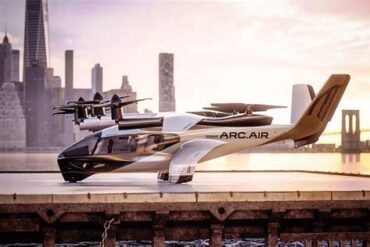
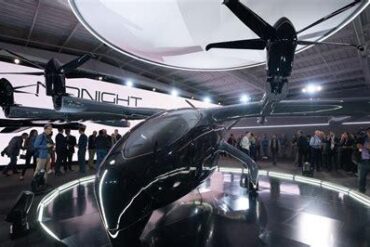
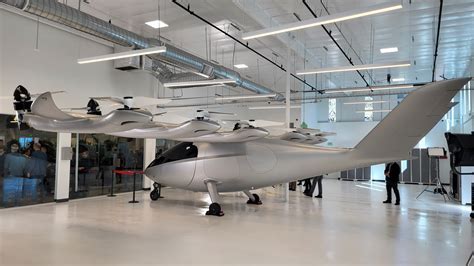
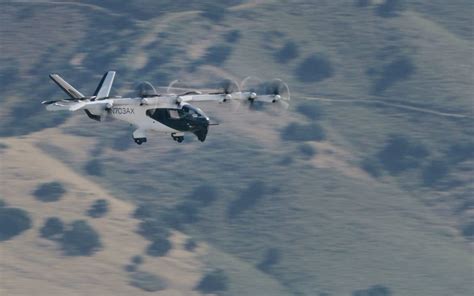
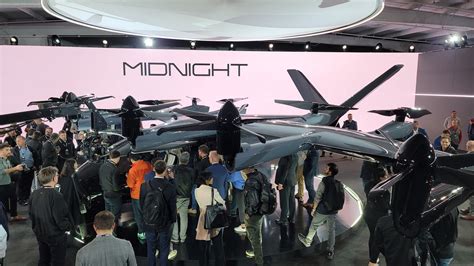
Unveiled on November 17, 2022, Midnight is Archer’s production-ready eVTOL aircraft. Designed to carry four passengers and one pilot, it retains Maker’s core architecture with 12 propellers (six tilt, six stationary), and is optimized for short-haul trips averaging 20 miles.
What sets Midnight apart is its emphasis on rapid turnaround capability. The aircraft is engineered to perform back-to-back flights with minimal recharge time, supported by a robust battery system spread across six packs. Midnight’s payload capacity exceeds 1,000 pounds, and its structure is built to meet rigorous FAA Part 135 and Part 141 certification standards.
In June 2024, Midnight completed its first transition flight—shifting from vertical hover to horizontal cruise—a critical step in the FAA certification process expected by late 2024.
Strategic Partnerships Fuel Archer’s Momentum
Archer’s ambitions extend far beyond engineering. Its ability to attract strategic corporate partners has become a defining element of its growth trajectory.
- In February 2021, United Airlines placed a conditional order for 200 eVTOL aircraft, signaling industry confidence in Archer’s platform.
- By August 2022, United reinforced this trust with a $10 million deposit to support manufacturing.
- In January 2023, Stellantis committed up to $150 million in equity and became Archer’s exclusive manufacturing partner, positioning Archer for mass production by 2025.
- In March 2023, Archer and United announced a dedicated air taxi route between O’Hare International Airport and Vertiport Chicago.
- In July 2024, Archer signed an MoU with Southwest Airlines to explore air taxi network integration.
These alliances highlight Archer’s hybrid approach—combining Silicon Valley innovation with commercial aviation infrastructure.
Regulatory Milestones and FAA Certifications
Certification is the linchpin for any aviation product. Archer has made significant strides in this area:
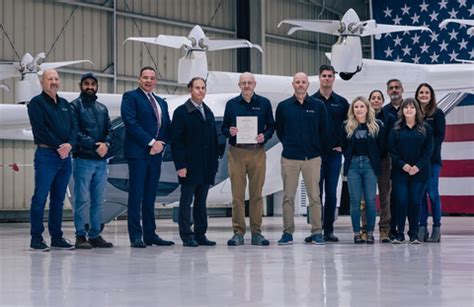
- Part 135 Air Carrier Certificate (June 2024): Allows Archer to operate aircraft for hire, a requirement for scheduled passenger service.
- Part 141 Pilot Training Certification (February 2025): Authorizes the company to operate a pilot training academy, crucial for scaling pilot availability.
These approvals underscore Archer’s intent to not only build aircraft but operate them, aligning its business model more closely with airline operations than traditional OEMs.
Scaling Through Vertiports and Urban Partnerships
Urban Air Mobility can only succeed with the necessary ground infrastructure. Archer has been proactive in forming public-private partnerships to ensure vertiport placement, traffic management, and community integration.
- In Los Angeles, Archer collaborates with Urban Movement Labs and the Department of Transportation to plan launch routes and vertiports.
- In Miami, Archer is working with local agencies to design air corridors optimized for daily commuter traffic.
- Archer also operates a research lab at the University of Florida, working closely with academic institutions to refine aircraft performance.
This urban-first approach ensures Archer’s aircraft will fit seamlessly into metropolitan ecosystems, minimizing noise, maximizing route utility, and adhering to zoning regulations.
Engineering for Redundancy, Safety, and Sustainability
Archer’s aircraft integrate multiple levels of redundancy, including:
- Six battery packs to ensure continued power in the event of a failure.
- Distributed electric propulsion across 12 rotors for balanced lift.
- Advanced flight control systems tuned for transition stability between VTOL and forward flight.
Additionally, the aircraft produce zero emissions, aligning with rising global expectations for sustainable urban infrastructure. The sound profile is also dramatically lower than helicopters, allowing for quieter urban operations without disturbing communities.
Financial Landscape and Market Position
Despite a revenue of $0 million in 2023, Archer holds $578.3 million in assets and maintains $493.3 million in total equity. These figures demonstrate Archer’s model as pre-revenue but highly capitalized, typical for high-tech aerospace ventures still in certification phases.
The market potential for eVTOL services remains staggering. Analysts project the urban air mobility sector to exceed $1 trillion globally by 2040, and Archer’s early-mover advantage, particularly with corporate clients like United Airlines, places it in a strategic position to capitalize on this growth.
A Path Toward Public Air Taxi Service by 2025
Archer’s air taxi network is expected to launch in 2025 with Miami and Los Angeles as first cities. The company will operate short-range scheduled services between airports and downtown hubs, often replacing 60- to 90-minute ground commutes with 8–12 minute flights.
Archer is also developing flight operations centers, pilot recruitment strategies, and vertiport partnerships. Their goal is to make flying taxis as accessible and familiar as booking a rideshare. This service will also offer last-mile transport solutions, integrating with existing public transportation systems to reduce urban congestion.
Conclusion: Lifting the Future, One Vertical Mile at a Time
Archer Aviation is not merely building electric aircraft—it’s building a new aviation ecosystem. From the evolution of Maker to the certification of Midnight, Archer’s trajectory blends cutting-edge engineering, strategic partnerships, and deep urban integration. With FAA certifications in hand, strong backing from corporate giants, and an eye on commercial launch in 2025, Archer stands ready to reshape how cities move.
In a world increasingly defined by smart mobility and environmental accountability, Archer’s electric air taxis represent more than futuristic convenience—they may soon become an essential layer of urban infrastructure.