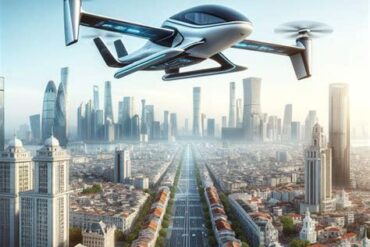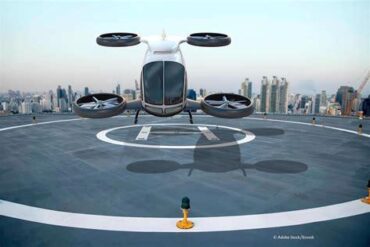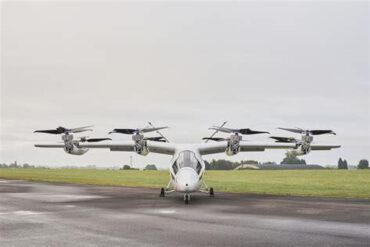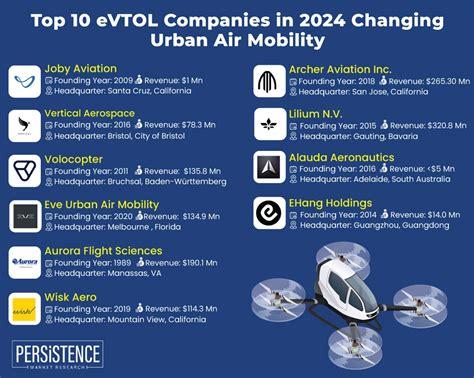
Electric vertical take-off and landing (eVTOL) aircraft are poised to redefine urban air transportation. Unlike conventional planes, eVTOLs can take off and land vertically, similar to helicopters, but do so using fully electric propulsion systems. These aircraft aim to offer fast, clean, and efficient travel over short distances, bypassing the congestion of city streets. They’re often dubbed “air taxis” for their anticipated role in point-to-point urban transport. Though many models are still in development or awaiting certification, several companies are leading the charge with serious innovation and ambitious timelines.
General Motors: Engineering the Cadillac of Air Taxis
General Motors (GM), headquartered in Detroit, Michigan, is bringing its legacy of automotive engineering into the skies. Its Cadillac eVTOL concept, revealed in 2021, is a bold vision of a future where individual aerial mobility becomes the norm. Designed as a single-passenger drone, this aircraft showcases GM’s commitment to luxury air travel using sustainable technologies. Although it remains in the concept stage, it symbolizes how traditional automakers are adapting to the new mobility paradigm.
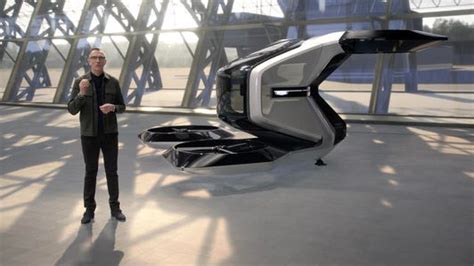
Unlike some eVTOL manufacturers focused purely on ridesharing, GM’s approach hints at personal ownership models — an area where its deep automotive experience could be a distinct advantage. The Cadillac eVTOL, which merges futuristic styling with urban functionality, may not be far from production once regulatory paths become clearer.
Joby Aviation: Pioneering Aerial Ridesharing
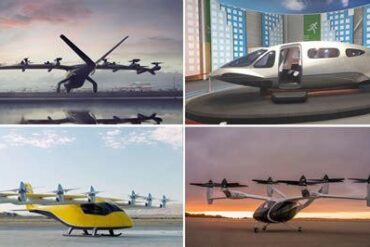
Joby Aviation, based in Santa Cruz, California, is one of the most prominent names in the eVTOL space. Founded in 2009, the company has been a trailblazer in electric flight innovation. Its signature aircraft is designed to carry a pilot and four passengers, offering a range of up to 150 miles on a single charge. That makes it one of the most ambitious projects in terms of both range and passenger capacity.
The company has conducted extensive testing, logging over 30,000 miles of flight. Its goal is to offer on-demand aerial ridesharing, similar to how Uber operates on the ground. In fact, Joby has partnered with Uber to eventually integrate air mobility services within the Uber app.
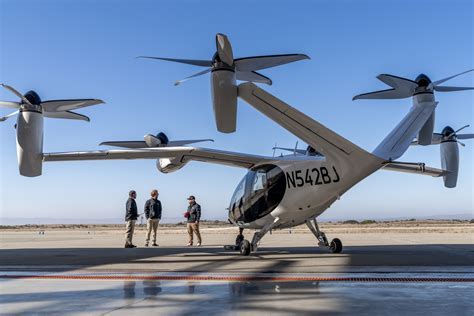
Joby’s focus is on FAA certification, and its strategy includes collaborations with defense and government agencies to accelerate development. With multiple production sites and growing investment, Joby could be among the first eVTOL companies to bring a commercial service to market.
BETA Technologies: Powering the Future of eAviation
Headquartered in South Burlington, Vermont, BETA Technologies brings a unique perspective to the eVTOL industry by simultaneously building both aircraft and charging infrastructure. Its flagship model, the ALIA-250, features a 50-foot wingspan and can accommodate five passengers and a pilot.
What sets BETA apart is its holistic ecosystem approach. In addition to aircraft, BETA produces the Charge Cube, a mobile charging station designed to power both aerial and ground-based electric vehicles. The company also develops the CX300, a fixed-wing electric aircraft tailored for airport-to-airport missions, expected to gain FAA certification before the ALIA-250.
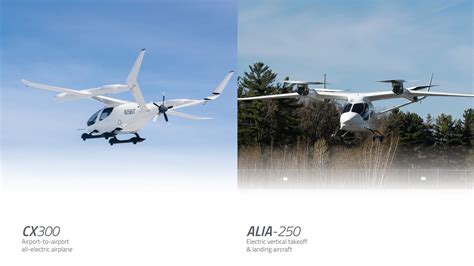
This dual-pronged strategy could make BETA a major player not only in urban transport but also in regional logistics and medical delivery, opening up new revenue streams beyond passenger services.
Archer Aviation: Building Midnight for the Masses
Archer Aviation, based in San Jose, California, is focused on launching a commercial aerial ridesharing service with its first production aircraft, the Midnight eVTOL. Designed for quick-turnaround urban operations, Midnight can transport four passengers and a pilot over short hops — typically 20 to 50 miles per flight segment.
Archer’s strategy includes strategic partnerships with airlines, most notably United Airlines, which has committed to purchasing a fleet of Midnight aircraft. This airline alignment accelerates its route-to-market and enables a clearer certification and operational roadmap.
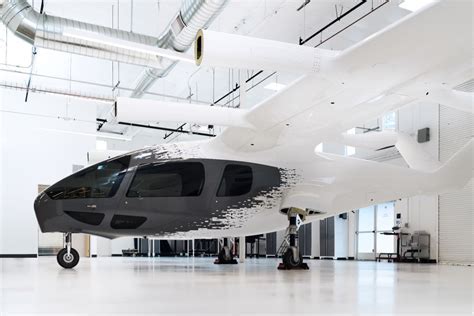
The company is progressing through ground testing and flight validation, aiming for FAA certification in the near future. Archer envisions a hub-and-spoke model for urban mobility, connecting city centers to airports in minutes, potentially transforming both commuter and traveler behavior.
Vertical Aerospace: UK’s Push into Zero-Emission Flight
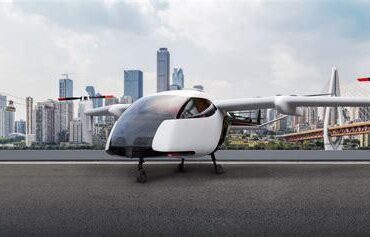
From its headquarters in Bristol, England, Vertical Aerospace is developing the VX4, a zero-emission electric aircraft designed to transport up to five people at speeds of up to 200 mph. Its range of over 100 miles positions it as a versatile solution for inter-city travel in dense urban areas and regional corridors alike.
Vertical Aerospace’s vision is globally focused. With a strategy aimed at multinational certification, including in the UK, Europe, and the U.S., the company is positioning the VX4 for widespread adoption. Its collaborations with Rolls-Royce, Honeywell, and Microsoft further enhance its credibility and engineering pedigree.
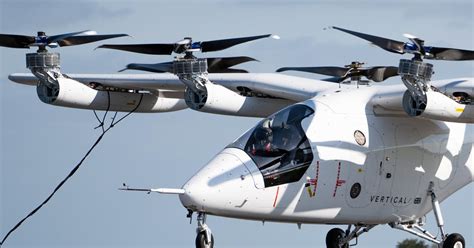
As of 2024, Vertical has secured over 1,400 conditional pre-orders, signaling robust demand and commercial interest. It is also exploring autonomous flight capabilities as regulatory pathways evolve.
Eve Air Mobility: Embraer’s Innovation Powerhouse
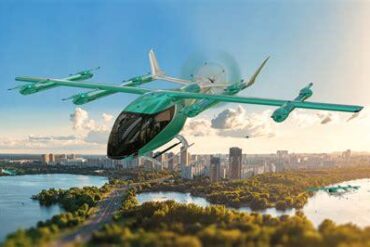
Launched as a spin-off from Embraer-X, Eve Air Mobility is now an independent entity based in Melbourne, Florida. Leveraging Embraer’s global aviation experience, Eve is developing an eVTOL that is quieter, more efficient, and more affordable than comparable helicopters.
The initial version of Eve’s aircraft is designed for four passengers, with future plans to expand capacity to six once autonomous flight is approved. Its design emphasizes low-noise operation, which is crucial for urban deployment.
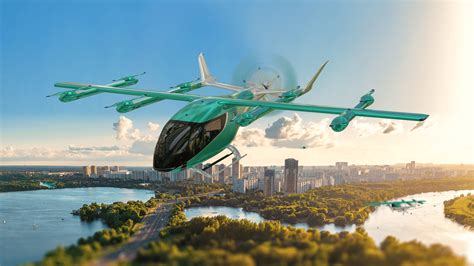
Eve’s business model is deeply integrated with urban air traffic management (UATM) systems, allowing the company to offer end-to-end solutions from vehicle production to flight orchestration. Its partnerships with dozens of urban mobility operators give it a scalable launchpad for entering key metropolitan markets.
The Future of eVTOL: Challenges and Opportunities
While the technological advancements of these companies are remarkable, the path to mass adoption of eVTOL aircraft is paved with hurdles. Regulatory certification, battery technology, infrastructure development, and public trust remain significant barriers. However, companies that combine engineering excellence with strong partnerships and holistic mobility strategies are best positioned to succeed.
We believe that as these top eVTOL firms move from prototypes to production, they will shape a new era of urban transport — one defined by speed, sustainability, and unprecedented accessibility.
The air mobility race is far from over, but the frontrunners are already changing how we envision the skies of tomorrow.