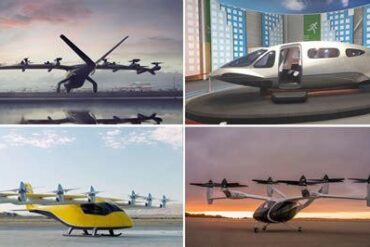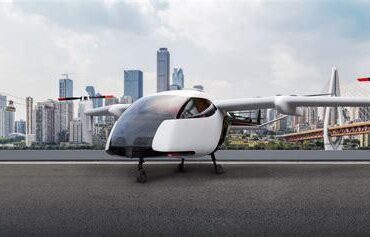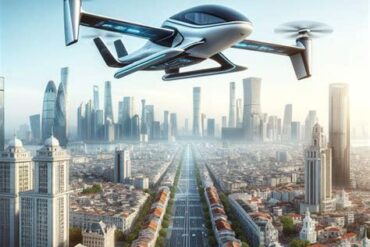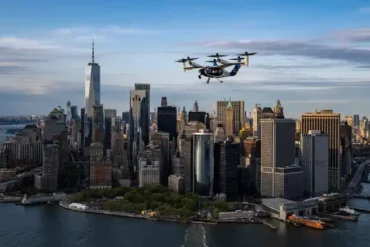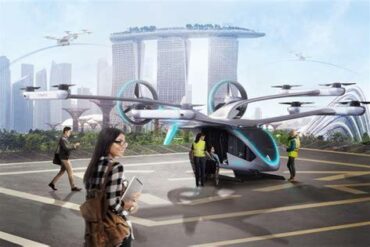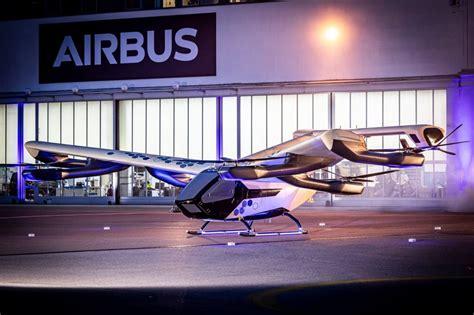
Urban transportation is on the brink of a radical transformation, and at the forefront of this aerial revolution stands the Airbus CityAirbus, a cutting-edge electric vertical takeoff and landing (eVTOL) aircraft. With increasing urban congestion and the urgent need for sustainable mobility, Airbus Helicopters has spearheaded a visionary initiative to redefine how we move through city skies. Designed as a fully electric air taxi, the CityAirbus represents the culmination of years of research, innovation, and urban air mobility (UAM) foresight.
Pioneering a New Age of Urban Aviation
The CityAirbus was conceived within Airbus Helicopters as a response to the growing demand for alternative urban transport solutions. By 2015, Airbus had already begun assessing the viability of urban air mobility, conducting feasibility studies that confirmed the safety, operating cost efficiency, and regulatory potential of a personal aerial vehicle.
This initiative aligns with earlier Airbus ventures such as Skyways, a package delivery UAV project at the National University of Singapore, and Vahana, a single-passenger, self-piloted VTOL vehicle. These pilots laid the groundwork for CityAirbus, merging robust electric propulsion systems with autonomous control strategies to explore shared aerial transport.
The Development Journey: From Concept to Flight
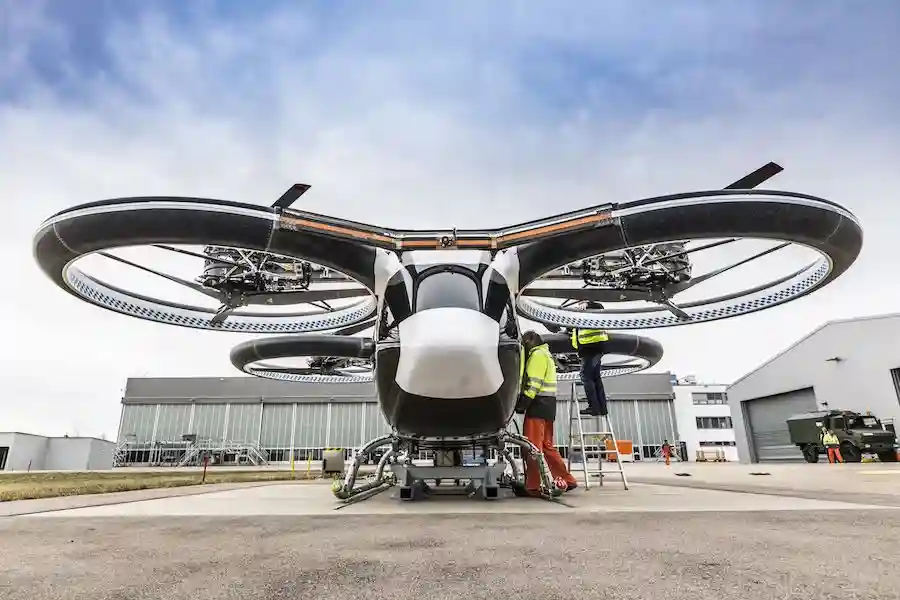
The first full-scale drivetrain test took place in October 2017, validating the ducted propeller configuration under dynamic load conditions. In December of the same year, Airbus introduced the Iron Bird—a ground test rig designed in Taufkirchen, Germany. This allowed engineers to simulate flight scenarios and optimize systems integration before progressing to actual flight trials.
On 3 May 2019, the CityAirbus made its maiden uncrewed flight. The significance of this milestone cannot be overstated: it marked the first real-world demonstration of a fully electric, multirotor air taxi by a major aerospace company. The demonstrator later relocated to Manching, Bavaria in August 2020 to continue advanced flight tests.
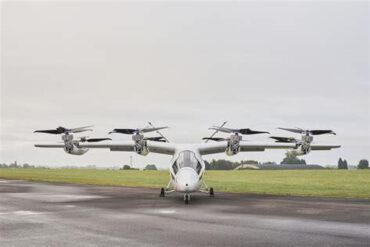
By September 2021, after over 240 test flights covering more than 1,000 km combined between the original CityAirbus and Vahana, Airbus unveiled a bold new NextGen configuration. This iteration removed the ducted rotors in favor of eight open, fixed-pitch propellers, integrated within a main wing and V-tail structure.
Design Philosophy and Engineering Excellence
Every design decision in the CityAirbus program centers around safety, noise reduction, and operational efficiency. The aircraft features:
- A fixed wing with eight electrically driven propellers, eliminating moving surfaces and complex tilting mechanisms.
- A V-tail boom for aerodynamic control.
- Four ductless rotors positioned for stability, safety, and urban-scale maneuverability.
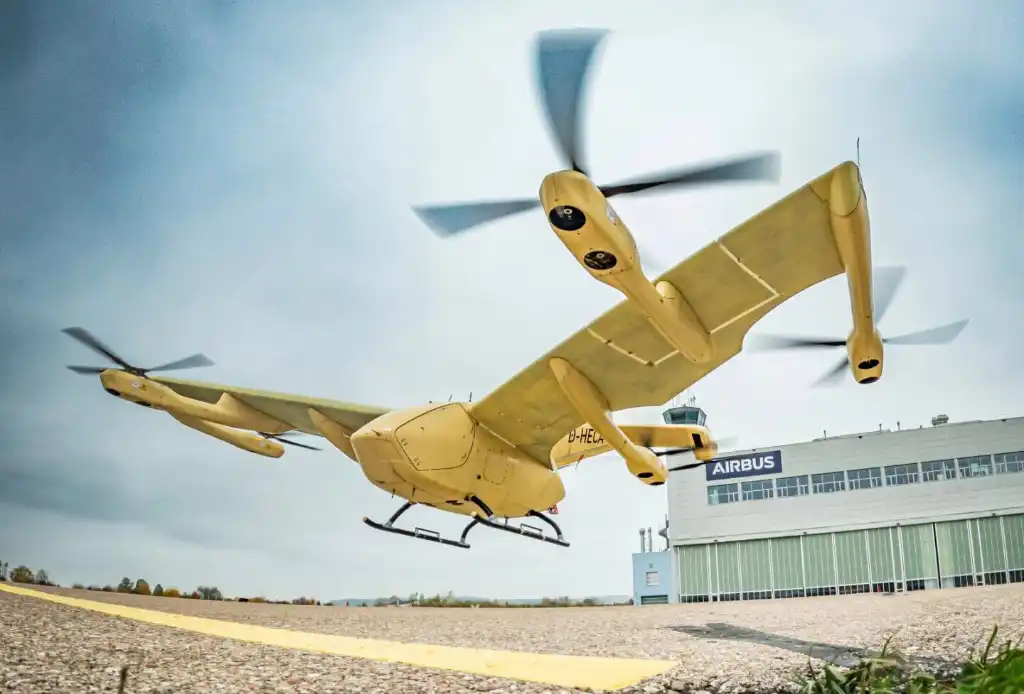
At its core, the CityAirbus relies on Siemens SP200D direct-drive electric motors. Each of the eight motors delivers 100 kW (130 hp), while the four onboard lithium batteries, weighing 500 kg, produce a combined battery output of 4 × 140 kW. This setup enables a cruise speed of 120 km/h (75 mph) and a range of 80 km, ideal for fixed urban corridors. With 15 minutes of endurance, it’s perfectly tailored for short-hop intercity routes.
Critically, the aircraft maintains a low acoustic footprint—less than 65 dB(A) during flyover and below 70 dB(A) on landing. This feature ensures its viability within densely populated areas, where noise pollution remains a top concern for regulators and citizens alike.
Interior Vision: Comfort Meets Connectivity
Although still under prototype development, the passenger cabin is envisioned as a sleek, minimalist space capable of accommodating four passengers, plus a pilot in early operations. As regulations evolve, the design is meant to transition to fully autonomous control, paving the way for pilotless air taxis.
Airbus is working closely with Thales and Diehl Aviation to develop dual flight control computers, enhancing redundancy and system resilience. These partnerships ensure that the CityAirbus meets and exceeds EASA’s SC VTOL certification standards.
Urban Integration: From Vertiports to Sky Lanes
Urban Air Mobility cannot succeed without the ecosystem to support it. Airbus envisions a comprehensive network of vertiports, air traffic management systems, and integrated booking platforms. Drawing from lessons learned in their Voom helicopter rideshare platform, Airbus is uniquely positioned to handle the logistics, customer experience, and regulatory hurdles of urban flight.
In this vision, the CityAirbus operates along fixed air corridors, optimized for traffic control, energy use, and safety. Routes would be pre-planned, with AI-assisted systems governing collision avoidance, energy optimization, and weather tracking.
Performance Specifications of CityAirbus NextGen
| Feature | Specification |
|---|---|
| Crew | 1 (initially), autonomous future capability |
| Passengers | 4 |
| Payload | 250 kg (550 lb) |
| Length | 8 m (26 ft 3 in) |
| Wingspan | 8 m (26 ft 3 in) |
| Max Takeoff Weight | 2,200 kg (4,850 lb) |
| Motors | 8 × 100 kW Siemens SP200D |
| Battery Capacity | 110 kWh total |
| Propeller Diameter | 2.8 m (9 ft 2 in) |
| Cruise Speed | 120 km/h (75 mph, 65 kn) |
| Endurance | 15 minutes |
| Noise Level (Flyover) | < 65 dB(A) |
| Noise Level (Landing) | < 70 dB(A) |
Regulatory Challenges and Global Outlook
Although Airbus initially aimed for a 2023 maiden flight and 2025 certification, real-world complexities in flight testing, regulatory adaptation, and infrastructure readiness have influenced the timeline. However, as of mid-2025, Airbus has confirmed that at least one test flight of the NextGen prototype has been conducted successfully.
EASA is at the forefront of adapting its certification framework to include VTOL aircraft. The Special Condition VTOL (SC VTOL) and the forthcoming EUROCAE standards will pave the way for fully electric air taxis to operate in European airspace. With Airbus’s extensive experience in compliance and safety, the CityAirbus is well-positioned to meet these rigorous criteria.
Market Potential and Industry Impact
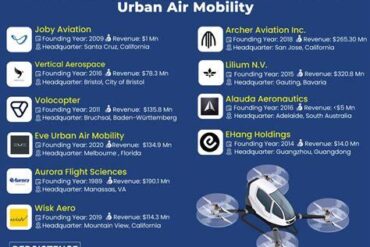
The demand for sustainable, high-efficiency urban transit is accelerating. Analysts project the global urban air mobility market to reach $1.5 trillion by 2040, with major players including Boeing, Volocopter, Lilium, and Joby Aviation racing to stake their claim. However, Airbus benefits from a unique competitive advantage:
- A proven aerospace pedigree with global manufacturing and regulatory reach.
- Established partnerships with infrastructure, avionics, and energy system providers.
- Decades of safety-critical aircraft certification experience.
Unlike startups, Airbus has the credibility and institutional strength to navigate long-term investments and slow-moving bureaucracies. This gives the CityAirbus a realistic path toward commercial adoption rather than remaining a perpetual prototype.
A Glimpse Into the Skies of Tomorrow
The CityAirbus is not merely an aircraft—it is a vision for transforming urban life. By offering clean, efficient, and rapid intra-city transportation, Airbus aims to redefine personal mobility in an era of climate urgency and overburdened infrastructure.
As the program matures, and as global cities begin to prepare for aerial transit, the CityAirbus may one day become as familiar in the skyline as the bus on the street below. With a blend of cutting-edge technology, sustainable design, and regulatory foresight, Airbus is preparing to make flying taxis not just a fantasy—but a feature of modern life.