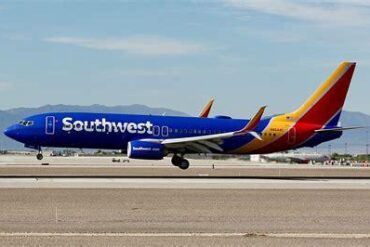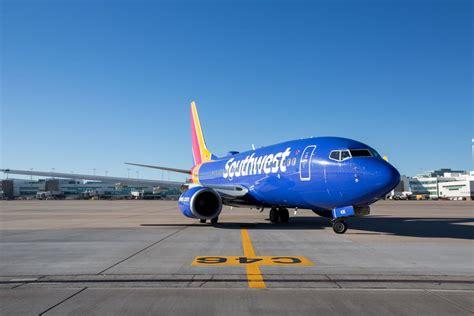
Southwest Airlines (NYSE: LUV) has closed 2025 amid a striking paradox: profits plunged by over 40%, yet its stock price soared more than any other U.S. airline. For investors and industry watchers alike, this duality encapsulates a year of turbulence and transformation, where short-term pain is being bet against long-term promise.
A Tumultuous 2025: Profit Pressure Amid Strategic Pivot
Throughout the first nine months of 2025, Southwest’s profits slid by approximately 42% compared to 2024. The decline stemmed from a combination of operational setbacks and broader macroeconomic pressure. Despite these results, shares of Southwest gained roughly 24% year-to-date, outpacing rivals like Delta Air Lines (NYSE: DAL) and United Airlines (NYSE: UAL).
The contradiction between profits and stock performance is rooted in investor optimism around a comprehensive strategic overhaul set to debut in 2026. Spearheaded by Elliott Investment Management, the restructuring includes a seismic shift away from the airline’s long-held operational model. This marks a significant departure from the one-size-fits-all, open-seating approach that Southwest has built its brand on for decades.
Radical Transformation: A New Southwest Takes Shape
Beginning January 27, 2026, the airline will launch a suite of premium service options, including:
- Paid extra-legroom seating
- Assigned seating across all cabins
- Tiered fare bundles, including a new basic economy option
These enhancements aim to close the competitive gap with full-service carriers, offering more flexibility and perks for travelers willing to pay a premium. Southwest executives have stated that early booking data already supports the viability of these new options, suggesting a strong consumer appetite for choice-driven service.
Wall Street has taken notice. Barclays and other major equity analysts have revised their estimates upward, projecting a significant earnings boost in the coming years. Management forecasts an additional $1 billion in pretax earnings for 2026, climbing to $1.5 billion in 2027 as the new fare structures gain traction.

What Dragged 2025 Earnings? A Perfect Storm of Disruptions
While the upcoming transformation dominates headlines, 2025 was a year fraught with layered challenges. The profit slump is not attributed to a single event but rather a convergence of compounding factors:
- Weakened demand early in the year forced the carrier to lower guidance.
- A 43-day U.S. government shutdown severely disrupted the global aviation system.
- The FAA’s staffing shortages mandated a reduction in flights at 40 major U.S. airports, directly impacting Southwest’s traffic and revenue.
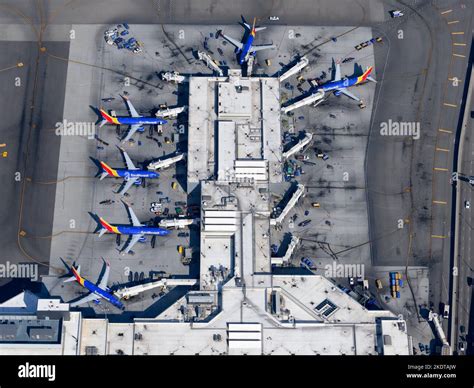
In tandem, jet fuel prices surged, tightening margins for an airline that operates on a low-cost, high-frequency model. Moreover, Southwest invested heavily in operational and commercial upgrades, preparing its fleet and infrastructure for the 2026 rollout. These capital expenditures, though forward-looking, weighed down the 2025 bottom line.
To underscore the impact, Southwest slashed its full-year EBIT forecast to approximately $500 million, down from previous estimates. While this figure may appear bleak, it reflects a deliberate tradeoff—short-term sacrifice for long-term strategic gain.
Stock Soars as Investors Look Beyond the Horizon
Despite weak earnings, Southwest’s stock reached a 2.5-year high in December 2025. This surge is grounded not in recent performance, but in expectations for future profitability and structural change.
Barclays analyst Brandon Oglenski upgraded the stock in mid-December, projecting EPS of $4 in 2026 and $6 in 2027. These figures represent a multi-year step-change in earnings potential, driven largely by the monetization of seat assignments and premium offerings.
What makes this bullish sentiment even more notable is the restraint shown by some fund managers who have chosen not to short Southwest, despite apparent overvaluation on traditional metrics. The logic? Valuations today may be high relative to 2025 earnings, but tomorrow’s margins could radically redefine the baseline.
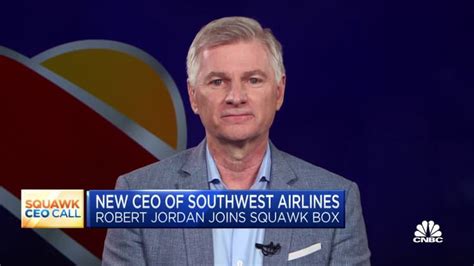
CEO Bob Jordan emphasized that the airline remains strategically sound even amid macroeconomic uncertainty. “We’re not just surviving—we’re reimagining our product to unlock new growth,” Jordan said during the company’s Q3 earnings call.
The Bigger Picture: A New Competitive Paradigm
By pivoting away from its historic simplicity, Southwest is stepping into a new competitive arena—one that blends elements of low-cost efficiency with high-margin service features. The shift is designed to:
- Broaden the airline’s customer base, especially targeting business travelers
- Reduce the need for aggressive discounting to fill seats
- Increase per-passenger revenue through upsells like seat selection and bundled perks
This model mirrors the success of hybrid carriers globally, who combine low-cost operations with a la carte pricing strategies. For Southwest, it’s a strategic evolution, not a departure, from its customer-centric ethos.
Investor Sentiment: Why Analysts Remain Bullish
Equity analysts are maintaining high ratings on Southwest’s stock not because of 2025’s results, but because of the long-term margin expansion story. The carrier’s ability to generate higher revenue per seat—without drastically increasing operational costs—is key to maintaining investor confidence.
This forward-looking strategy has created a powerful narrative:
- 2025 = Transformation investment year
- 2026 = Monetization of changes
- 2027 = Full realization of earnings power
This story arc is resonating with investors, who increasingly view the airline not as a laggard reacting to industry pressures, but as a proactive innovator positioning itself for sustained profitability.
Conclusion: A High-Stakes Gamble With High Potential Rewards
Southwest Airlines’ 2025 financials may look troubled on the surface, but they represent the tail end of an era rather than a systemic weakness. With a clear, investor-supported roadmap to revamp its offerings and generate over $1.5 billion in additional pretax earnings by 2027, the airline is betting big on reinvention.
The company’s decision to embrace assigned seating, fare stratification, and premium services has already propelled its stock to outperform all other major airlines. While short-term profits fell victim to unavoidable disruptions and heavy investment, the foundation is being laid for a stronger, more competitive Southwest.
If execution aligns with projections, 2026 and beyond could mark a new golden era for the airline—one where margin growth, customer diversity, and operational efficiency converge to redefine what low-cost air travel can look like in North America.