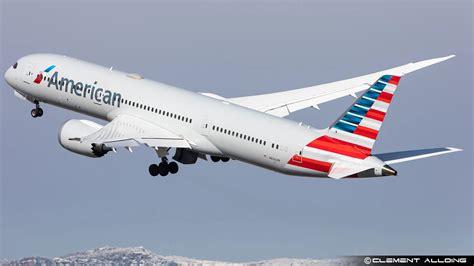
American Airlines has quietly reshaped one of the most emotionally charged parts of the frequent flyer experience: the first class upgrade. Buried inside the carrier’s nearly $10 billion pilot contract ratified in 2023 is a provision that allows deadheading pilots to clear into first class ahead of even the airline’s most loyal customers within 24 hours of departure. The policy is contractually locked in, operationally nuanced, and psychologically explosive, because it touches the nerve center of airline loyalty: the expectation that status means priority.
For years, American’s upgrade hierarchy followed a predictable logic. Revenue passengers first, elite members ranked by status and fare class next, and employees only if seats somehow remained empty. That structure no longer holds. Today, under specific circumstances, a uniformed pilot traveling as part of an assignment can leapfrog Concierge Key and Executive Platinum members at the last moment. The rule is precise, but its impact feels blunt to customers who have spent years and tens of thousands of dollars chasing upgrades that now evaporate at the gate.
Understanding why this policy exists, how it works in practice, and whether it truly undermines elite upgrade odds requires peeling back layers of labor contracts, operational realities, and the evolving economics of airline loyalty.
The Crucial Distinction Between Commuting and Deadheading Pilots
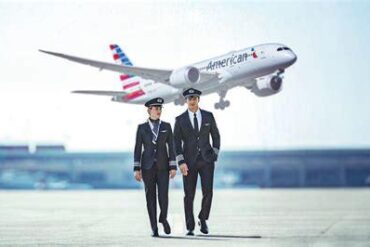
Not every pilot seen walking through the terminal in uniform is traveling for the same reason, and this distinction sits at the heart of American’s policy. Pilots typically fly as passengers for one of two reasons: commuting or deadheading.
Commuting is a lifestyle choice. A pilot may live in one city and be based in another, traveling to and from work on a space-available basis. A pilot living in Tampa but based in Dallas, for example, is commuting. These pilots are treated much like any other non-revenue traveler. They clear behind paying passengers and behind all elite members when upgrades are processed. Their presence does not disrupt the traditional upgrade order.
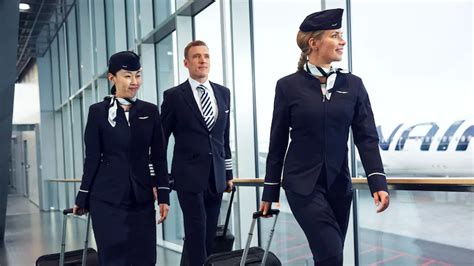
Deadheading is different. Deadheading occurs when a pilot is repositioning as part of their assigned duty. Weather disruptions, aircraft swaps, crew shortages, and scheduling irregularities routinely require pilots to move between cities to operate specific flights. In these cases, the pilot is effectively “on the clock,” even if seated in the cabin rather than the cockpit. From a labor and safety perspective, deadheading is considered work-related travel.
This difference is not cosmetic. It is the legal and contractual foundation that allows American to prioritize one group of pilots over its most loyal customers without violating internal logic or union agreements.
How American Airlines’ Pilot Upgrade Policy Actually Works
American’s upgrade policy for pilots is narrower and more structured than online outrage often suggests, yet its timing makes it especially visible. The policy applies only to deadheading pilots, not commuters, and only under certain routing conditions.
On long-haul international flights, including transoceanic routes, flights to Hawaii and Alaska, and flights south of the equator, deadheading pilots are assigned the highest available class of service outright. There is no waitlist drama. If first or business class exists, that is where they go.
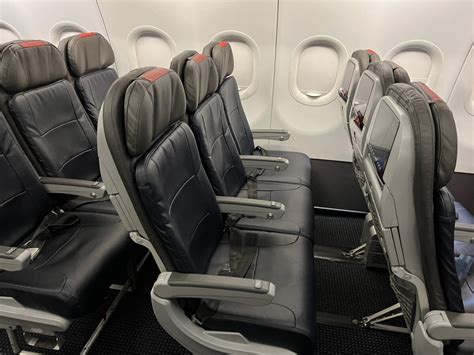
On other routes, primarily domestic and short-haul international flights, the process unfolds in stages. Pilots are initially seated in economy, with a preference hierarchy that favors exit row aisle seats first, then exit row windows, followed by standard aisle and window seats. This initial assignment happens early, often well before customer upgrades are finalized.
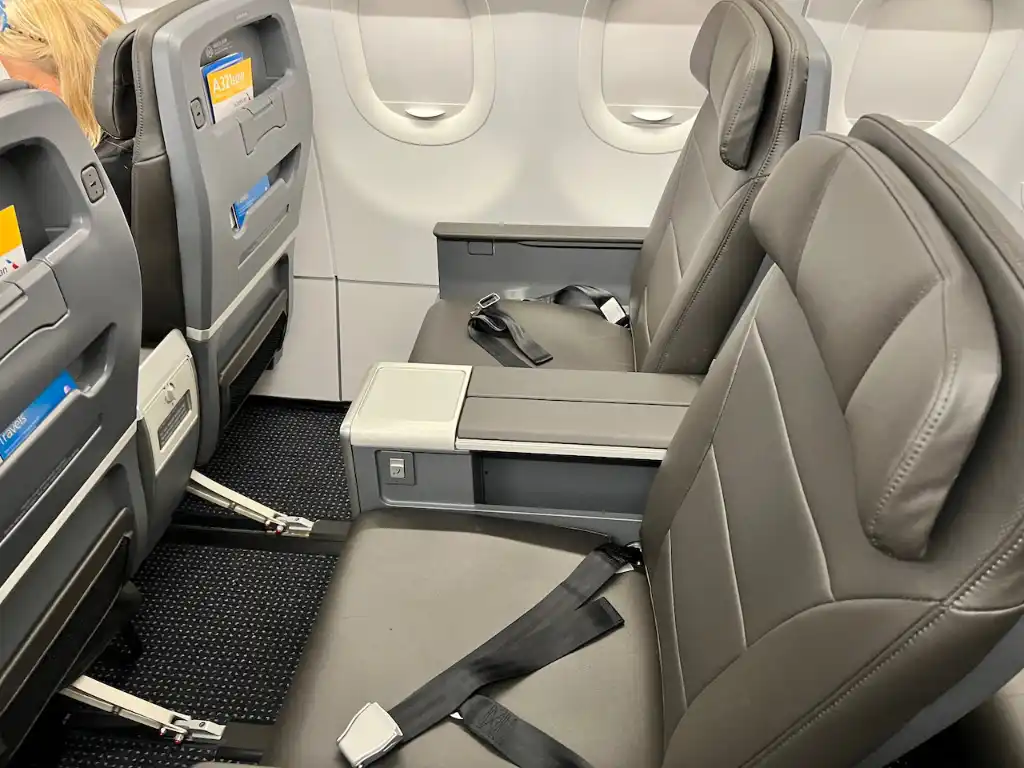
The pivotal moment arrives within 24 hours of departure. At that point, if first class seats remain unsold, deadheading pilots are placed at the very top of the upgrade list, ahead of Concierge Key and Executive Platinum members. Revenue passengers whose upgrades have already cleared remain protected. No one is bumped out of a confirmed first class seat to accommodate a pilot. The displacement occurs only among those still waiting.
Before this contract took effect, pilots would only clear into first class after every eligible elite member had been processed. On most domestic routes, that meant pilots almost never upgraded. The new policy flips that reality during the final hours before departure.
Why This Change Feels So Jarring to Elite Flyers
The controversy surrounding American’s pilot upgrades is not about volume alone. It is about expectation versus reality. Elite members are conditioned to believe that their loyalty confers a near-sacred priority, especially at the top tiers. When that priority is visibly overridden by an employee in uniform, the emotional response is immediate.
Part of the frustration stems from how dramatically the upgrade landscape has already shifted. American now sells roughly 80 percent of its first class seats, a far higher proportion than a decade ago. Complimentary upgrades have become scarcer even before pilots enter the equation. Add aggressive last-minute paid upgrade offers, and elite members often find themselves competing not just with other loyal customers, but with the airline’s revenue management algorithms.
In that context, the sight of a pilot clearing ahead of the list can feel like a symbolic breaking point. Loyalty, after all, is not just transactional. It is psychological. Elite members invest in co-branded credit cards, route their business travel strategically, and tolerate operational shortcomings because they believe the airline will reciprocate with tangible perks. When one of the most visible perks disappears, resentment follows.
The Labor Reality Behind the Policy
From the pilots’ perspective, the policy is not radical. It is the result of pattern bargaining, a long-standing practice in the airline industry where unions negotiate benefits comparable to those secured by peers at competing carriers. United Airlines implemented a similar policy years earlier, giving its pilots priority for upgrades while deadheading. American’s union was not blazing a trail so much as closing a gap.
Deadheading pilots are often traveling immediately before or after operating a flight. Fatigue management is not an abstract concept in aviation. Comfort, rest, and reduced stress directly affect safety and performance. From that lens, assigning pilots the best available seat is not a luxury perk but a pragmatic investment.
There is also an uncomfortable economic truth at play. Pilots are highly trained professionals whose compensation has risen sharply in recent contract cycles. Just as frequent business travelers accumulate elite status through their employers’ spending, pilots now receive premium travel benefits through collective bargaining. In both cases, the airline absorbs the cost as part of a broader economic ecosystem.
The Optics Problem American Cannot Escape
Even if the policy makes sense on paper, the optics are unforgiving. Airlines live and die by perception, and perception is shaped less by contract language than by lived experience. Watching an employee in uniform receive a benefit that a top-tier customer did not feels personal, even if no explicit promise was broken.
This perception problem is amplified by the structure of American’s loyalty economics. In many quarters, the airline earns more profit from its loyalty program than from flying airplanes. Credit card partnerships and mileage sales underpin much of the company’s financial stability. Elite members understand, at least intuitively, that their spending helps fund wage increases and operational investments. When those same members lose access to upgrades that once defined elite status, the cognitive dissonance is sharp.
The airline is not wrong to prioritize employee well-being, but it is also not wrong for customers to feel sidelined when the balance appears to tilt too far.
Does the Policy Actually Reduce Upgrade Odds?
The hardest question to answer is whether American’s pilot upgrade policy materially changes upgrade outcomes or merely concentrates frustration around an already declining benefit. There is no public data on how often pilots clear into first class, but anecdotal evidence suggests it is not rare.
The structure of American’s inventory management plays a key role. Within 24 hours of departure, the airline often holds back one or two first class seats rather than releasing them immediately to elites. Those seats may be sold at the last minute, offered as paid upgrades, or allocated to deadheading pilots. Because pilots frequently travel in pairs, their presence can mean the difference between the top two elites clearing or not clearing at all.
For frequent flyers who track upgrade lists obsessively, the impact is tangible. A seat that once would have gone to a long-time Executive Platinum now disappears quietly, reassigned under a contractual obligation invisible to most customers until it happens to them.
Loyalty in an Era of Monetized Premium Cabins
American’s pilot upgrade policy does not exist in isolation. It is one thread in a broader tapestry of changes that have steadily eroded the traditional value proposition of airline loyalty. First class is no longer a reward to be earned; it is a product to be sold, optimized, and monetized to the last seat.
The unspoken message is increasingly clear. Complimentary upgrades are a bonus, not a promise. Status still matters, but it matters less than it once did, especially on popular routes and peak travel days. In that environment, the pilot upgrade policy feels less like an anomaly and more like a confirmation of a new reality.
The old logic of flying an airline loyally to secure comfort is giving way to a simpler equation: if first class matters, buy it. That shift may be economically rational for the airline, but it fundamentally alters the emotional contract with its most dedicated customers.
The Contractual Finality of the Policy
One of the most frustrating aspects for critics is that there is no meaningful avenue for change. The policy is embedded in a multi-year labor agreement. It is not a discretionary customer service decision that management can quietly reverse. Even if American wanted to placate elite members, its hands are tied without reopening the contract, a move that would be neither simple nor cheap.
Understanding the policy, then, becomes less about advocating for change and more about recalibrating expectations. Deadheading pilots will continue to clear ahead of elites within the final 24 hours when seats are available. That reality is baked into the system for the foreseeable future.
A Symbol of a Broader Shift
American Airlines’ controversial pilot upgrade policy is not just about who sits in first class. It is a symbol of how airline priorities have evolved. Labor contracts have strengthened. Premium cabins have become revenue engines. Loyalty programs have transformed into financial products. In that environment, the friction between employees and elite customers is almost inevitable.
Pilots are not villains for securing better working conditions. Elite members are not unreasonable for feeling shortchanged. Both are responding rationally to incentives created by the airline itself. The discomfort arises where those incentives collide in the narrow, highly visible space of the upgrade list.
For travelers who once built their flying habits around the promise of upgrades, the message is sobering but clear. The rules have changed, not suddenly, but decisively. Understanding those rules may not restore lost upgrades, but it does offer clarity in an era where loyalty, once rewarded predictably, has become increasingly conditional.