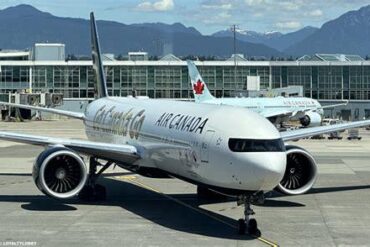
Air Canada’s decision to suspend its Toronto–Jacksonville route for the winter 2025–26 season marks another bold retreat from the U.S. market, and the move signals a deepening recalibration in the airline’s cross-border strategy. The Canadian flag carrier has been aggressively trimming its American footprint, and Jacksonville now joins an expanding list of U.S. cities — including Detroit, Minneapolis, Indianapolis, Nashville, Tampa, and San Francisco — that have seen service reduced or entirely cut. The underlying message is clear: Canadian travelers are turning away from the U.S., and Air Canada is wasting no time in following suit.
Jacksonville Added to a Shrinking U.S. Network
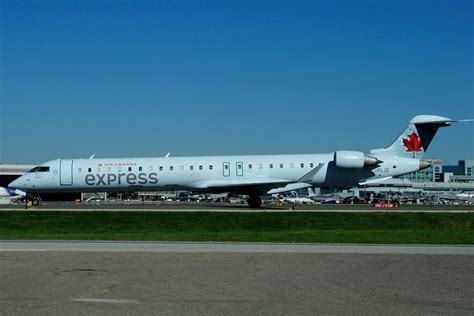
Starting November 2025, all direct flights between Toronto Pearson International Airport (YYZ) and Jacksonville International Airport (JAX) will be suspended. Previously operated using the Bombardier CRJ 900, the route was designed to capitalize on Canadian snowbirds heading south for the winter. Instead, the skies between the two cities will fall silent until at least March 2026, with no guarantee of return in the following summer.
The Jacksonville cut adds to an alarming pattern. What might have once seemed like isolated adjustments now reads as part of a deliberate dismantling of Air Canada’s U.S. connectivity. Cities like Detroit, Minneapolis, and Indianapolis have already seen their links severed, while routes to San Francisco, once among the most trafficked for tech and business travel, have also been downsized. What began as a trickle has become a cascade.
A Systemic Shift: Strategic Route Suspensions Across the Board
This isn’t just about Jacksonville. Air Canada’s recent moves paint a picture of a larger, systemic shift in its operational blueprint. In recent months, the following routes have been formally suspended:
- Montreal → Detroit — ends September 30, 2025
- Montreal → Minneapolis–St. Paul — ends October 19, 2025
- Toronto → Indianapolis — ends October 19, 2025
- Vancouver → Nashville & Tampa — winter-only services dropped
- Montreal → San Francisco — frequency halved to one daily flight
Each cancellation is emblematic of declining demand and mounting operational caution. While Air Canada has labeled many of these suspensions as seasonal, there is no firm commitment to reinstatement in the summer schedules, indicating a far more structural and strategic withdrawal than seasonal scheduling might imply.
The San Francisco Cut: A Bellwether of Broader Decline
Among the suspended or altered services, the Montreal–San Francisco route stands out. Once a robust, double-daily operation catering to a blend of business, tech, and leisure traffic, it has now been slashed to a single daily flight. This isn’t a backwater route — it connects two economic powerhouses. Yet even this high-profile corridor hasn’t been immune to downsizing.
The implications are stark: even major U.S. cities are no longer guaranteed robust Canadian links. It’s a trend being felt from the industrial Midwest to Silicon Valley and the warm coasts of Florida.
Political Tensions Fuel the Downturn
Air Canada has not openly attributed its U.S. pullback to politics, but the broader context is hard to ignore. Since the start of Donald Trump’s second term, cross-border relations have become more complicated and contentious. His administration’s aggressive trade posture, including a 25% tariff on Canadian imports, and friction over Canada’s digital services tax, has soured public perception and disrupted cross-border economic activity.
These tensions have had tangible consequences on travel patterns:
- Road crossings from Canada to the U.S. fell 35% in April 2025.
- Air passenger volumes declined 14% in April, plunging a further 24.2% in May.
- Corporate travel bookings to the U.S. dropped by 40%, according to Flight Centre.
Travelers appear increasingly unwilling to cross a border that feels less welcoming and more complicated. For many Canadians, the U.S. no longer feels like a seamless extension of their travel landscape.
Reallocation to Global Hotspots: Europe and Asia Take Priority
With Canadian demand for U.S. travel deteriorating, Air Canada is shifting focus to markets that remain profitable and politically stable. Europe and Asia are now commanding a greater share of the airline’s resources. Routes to London, Rome, Tokyo, and Delhi have witnessed robust growth, bolstered by pent-up demand, favorable currency trends, and strategic code-sharing agreements.
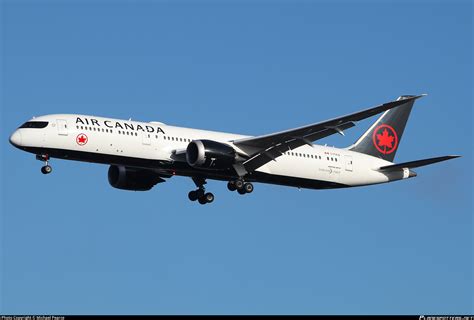
On a recent investor call, Air Canada executives emphasized this pivot, underscoring a “reallocation of assets to long-haul markets with higher yields.” The narrow-body aircraft once used for cross-border hops are being reassigned to intra-Canada or transatlantic missions, where demand continues to outpace capacity.
Not all U.S. cities are on the chopping block, but the airline is clearly concentrating its firepower where returns are strongest, not where legacy or historical route networks dictate. Jacksonville’s cut isn’t just about poor performance — it’s about comparative performance.
A Dwindling Winter Map: The U.S. Fade Out
As of winter 2025–26, Air Canada’s U.S. route map will look significantly leaner. While some of the suspended cities are smaller or seasonal markets, the cumulative effect is the erosion of Air Canada’s brand presence in the U.S. at large.
For example:
- Toronto–Jacksonville: Suspended Nov 2025 to Mar 2026
- Montreal–Detroit: Ends Sept 30, 2025
- Toronto–Indianapolis: Ends Oct 19, 2025
- Vancouver–Tampa/Nashville: Winter-only service axed
Each cut carves a little more connectivity away from travelers who once relied on seamless north-south links for business, tourism, and family reunions. The net result is a shrinking map — one that Canadian travelers will find increasingly difficult to navigate.
Beyond Seasonal: A Structural Realignment
Despite the use of the term “seasonal suspension” in corporate communications, the pattern suggests something deeper: a fundamental reshaping of Air Canada’s route priorities. This is not merely a reaction to short-term demand fluctuations or weather-based seasonality — it’s a long-term realignment of priorities based on a redefined understanding of risk, demand, and strategic value.
The company appears to be building resilience in its route portfolio, shedding underperforming segments in favor of those with stronger political and economic outlooks. It reflects a post-pandemic recalibration, where airlines no longer chase volume for volume’s sake, but prioritize yield, stability, and strategic alliances.
Canadian Travelers Left With Fewer Options
For Canadian passengers, the message is unavoidable: expect fewer direct flights into the U.S. from now on. Whether traveling for leisure or business, customers will need to consider connecting flights, alternate hubs, or different carriers altogether. Jacksonville’s removal is symbolic — a quiet severance that speaks loudly to a waning interest in the U.S. as a travel destination.
Air Canada’s moves may seem bold, even abrupt, but they are grounded in numbers — and in reality. The political and commercial underpinnings of U.S.–Canada travel have shifted, and the skies are shifting with them.
As more cities fall off the map, one thing becomes clear: Air Canada is done waiting for demand to return. It’s charting a new course — one that avoids turbulence and steers toward destinations with brighter horizons.