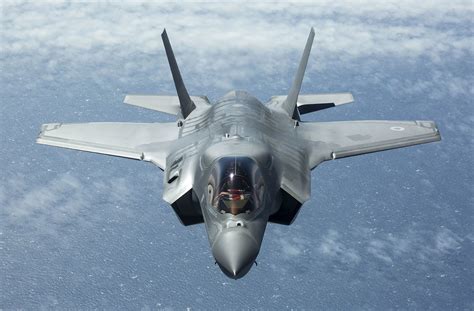
The debate over whether Portugal should order the F-35 Lightning II has become more than a procurement decision. It has evolved into a referendum on trust, sovereignty, alliance cohesion, and the future architecture of NATO air power. What was once a straightforward modernization plan for the Portuguese Air Force is now entangled in geopolitical uncertainty, political rhetoric, and fears about technological dependence.
For years, the Lockheed Martin F-35 Joint Strike Fighter was marketed as the inevitable successor to legacy fourth-generation fighters like the F-16 Fighting Falcon, which Portugal currently operates. The pitch was simple: modern threats require fifth-generation solutions. Stealth, data fusion, network-centric warfare—these are not luxuries in contemporary combat; they are survival tools. Yet beneath that compelling logic, a new anxiety has emerged: what happens if the supplier becomes unpredictable?
Portugal now finds itself at the center of a broader strategic tension. The United States continues to urge Lisbon to join the growing club of F-35 operators, while segments of Europe question whether dependence on American-controlled software and supply chains carries strategic risks.
The F-35 As NATO’s Digital Backbone
The F-35 was never designed to be “just another fighter jet.” It was conceived as a flying sensor node, a stealth-enabled data processor that shares targeting and intelligence information across allied networks in real time. Its strength lies not merely in speed or maneuverability, but in what military planners call “sensor fusion”—the ability to combine radar, infrared, electronic surveillance, and off-board inputs into a single coherent picture for the pilot.
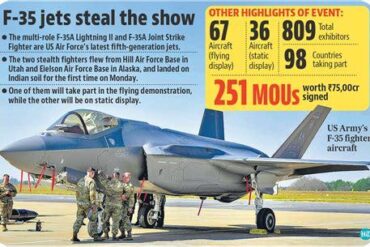
More than 1,300 F-35s are now active worldwide, with several hundred stationed across Europe. This density creates a network effect: the more allies operate the aircraft, the more interoperable and strategically integrated NATO becomes. In theory, Portugal’s acquisition would plug Lisbon directly into this evolving digital battlespace architecture.
From Washington’s perspective, the case is airtight. If NATO is to function as a cohesive high-tech alliance, its members must operate compatible platforms. The F-35 was designed explicitly with interoperability at its core. Choosing a different aircraft risks fragmentation at precisely the moment Russia’s military modernization and ongoing war in Ukraine have sharpened Europe’s security concerns.
The Lisbon Calculation: Performance vs Predictability
Technically, few dispute the F-35’s combat capabilities. Its low observable design reduces radar detection. Its advanced avionics outclass most fourth-generation aircraft. It can perform air superiority, close air support, electronic warfare, and intelligence missions within a single airframe.
The Portuguese Air Force, facing an aging fleet of F-16s, has reportedly recommended the F-35 as the most logical successor. Operationally, it makes sense. Transitioning from one American multirole fighter to its fifth-generation successor simplifies training pipelines and logistics compatibility.
Yet political considerations have complicated that logic.
Portugal’s Defense Minister, Nuno Melo, has publicly acknowledged concerns about policy volatility in Washington. Under the current U.S. administration, rhetoric surrounding NATO commitments, defense spending demands, and even territorial remarks involving allied nations has unsettled long-standing partners. For a procurement program expected to span decades, predictability is not a luxury—it is a prerequisite.
A fifth-generation aircraft is not a static purchase. It requires constant software updates, sustainment contracts, spare parts access, and digital infrastructure integration. The F-35’s mission systems are tightly controlled by U.S.-managed code and update pipelines. If political relations sour, allies fear limitations on upgrades or supply access could effectively ground portions of their fleets.
This concern is often described in shorthand as the “kill switch” debate. There is no public evidence of a literal remote shutdown button. However, the structural dependence on American-controlled software ecosystems creates perceived vulnerability. In modern warfare, code is as critical as fuel.
Europe’s Strategic Autonomy Ambition
Portugal’s hesitation does not exist in isolation. Canada, Denmark, Switzerland, and Spain have all experienced internal debates over F-35 procurement amid shifting diplomatic currents. Spain opted for the Eurofighter over the F-35 in certain modernization phases. Switzerland and Canada have faced renewed political scrutiny of their commitments.
The European Union has increasingly discussed “strategic autonomy”—a policy vision aimed at reducing reliance on non-European defense suppliers. This ambition is not purely ideological. It is a response to geopolitical uncertainty and trade friction, including tariffs on European goods imposed by Washington.
For Lisbon, the decision intersects with broader continental aspirations. Investing in a European-made platform such as the Dassault Rafale or Eurofighter Typhoon would align with efforts to strengthen the European defense industrial base. However, neither aircraft qualifies as a true fifth-generation stealth platform. That distinction matters in future high-threat environments dominated by advanced surface-to-air missile systems and integrated air defenses.
The technological trade-off is stark: superior stealth and sensor integration versus increased industrial sovereignty.
The Cost Spiral Risk
The F-35 program is projected to exceed $2 trillion over its lifecycle, making it the most expensive weapons system in history. Its sustainability depends heavily on multinational participation. When allies reduce or delay orders, unit costs risk climbing. This creates what defense analysts call a “death spiral”—shrinking orders increase per-unit cost, which in turn discourages further purchases.
Portugal’s order would not singlehandedly determine the program’s fate. Yet symbolically and economically, each European commitment reinforces the network. If multiple NATO members hesitate, the program’s economies of scale erode.
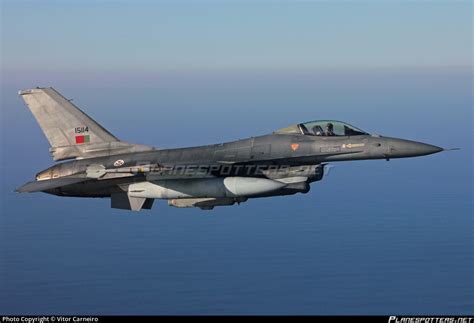
The Portuguese F-16 fleet is approaching the limits of its service life. Delaying a decision compresses modernization timelines and potentially increases interim maintenance costs. Ambassador John Arrigo, representing U.S. interests in Lisbon, has framed F-35 acquisition as Portugal’s ticket to remaining in the “Champions League” of European air forces—a vivid metaphor for technological relevance in a rapidly advancing battlespace.
American First vs Alliance Logic
The tension underlying this debate is philosophical as much as military. NATO historically operated under a doctrine of collective security: an attack on one is an attack on all. Yet recent rhetoric suggesting conditional defense commitments has unsettled the alliance’s psychological foundation.
Statements implying that defense guarantees may depend on spending levels or economic concessions have fostered unease. Allies accustomed to predictable partnership now perceive a more transactional dynamic.
Simultaneously, the F-35 is promoted as the embodiment of alliance integration. It is marketed as the universal language of 21st-century air combat. But if alliance trust weakens, the aircraft’s integrative power diminishes. A digital ecosystem thrives on shared confidence.
Critics argue that tying military cooperation to trade leverage or tariff disputes risks undermining the very industrial network the program relies upon. Steel and aluminum tariffs imposed on partner nations complicate supply chains that contribute components to the F-35 itself. In effect, political friction reverberates into production economics.
The Sovereignty Paradox
Portugal faces a paradox. Acquiring the F-35 enhances operational sovereignty by granting access to cutting-edge capabilities that deter adversaries. Yet it simultaneously increases technological dependence on U.S.-controlled systems.
Modern military aircraft are no longer isolated machines. They are nodes in vast software-defined networks. Updates refine radar algorithms, adjust electronic warfare libraries, and patch cybersecurity vulnerabilities. Without consistent upgrade pathways, a fifth-generation jet gradually degrades into a fourth-generation liability.
Rumors about remote disablement persist because digital architectures inherently allow centralized control over updates and mission data files. While there is no verified “off switch,” the dependence itself fuels anxiety. In strategic planning, perception can influence decisions as strongly as reality.
The Portuguese Decision Horizon
Lisbon has not finalized its selection. Officials emphasize that no formal decision has been made. This pause reflects caution rather than rejection.
The Portuguese government must balance several variables:
- Operational necessity to replace aging F-16s
- Long-term budget constraints and defense spending targets
- Alliance interoperability with NATO partners
- European industrial participation goals
- Political risk tied to U.S. policy volatility
These variables intersect in unpredictable ways. Raising defense spending to 5% of GDP by 2035, as encouraged by U.S. representatives, represents a substantial fiscal commitment for a nation of Portugal’s size.
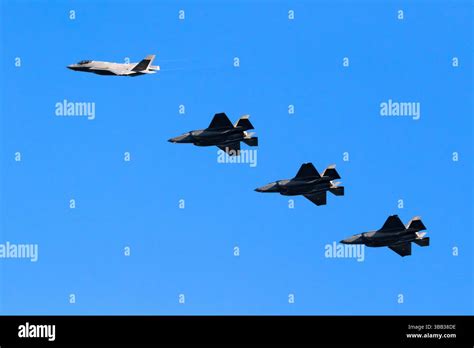
If Lisbon proceeds with the F-35, it reinforces NATO’s technological cohesion. If it pivots toward European alternatives, it signals a shift toward continental defense independence. Either path carries strategic consequences beyond Portugal’s borders.
Beyond Portugal: The Future of the F-35 Alliance
The broader question is not simply whether Portugal orders the F-35. It is whether the aircraft remains the gravitational center of Western air power.
The F-35 was designed as a platform for integration across air forces, navies, and allied militaries. Its value multiplies with participation. But integration depends on trust as much as technology. When political rhetoric introduces uncertainty, procurement decisions become geopolitical statements.
The United States continues to promote the F-35 as unmatched in stealth, data fusion, and multirole flexibility. On technical grounds, that assessment carries weight. Few competitors offer equivalent fifth-generation capability at comparable scale.
Yet defense procurement is never purely technical. It reflects confidence in decades-long partnership. Aircraft outlast administrations. Software ecosystems outlast election cycles. Nations buying the F-35 are effectively investing in a strategic relationship projected thirty or forty years forward.
Portugal stands at that crossroads now. The decision will signal whether Lisbon prioritizes cutting-edge interoperability within NATO’s digital combat architecture or leans toward reinforcing Europe’s independent defense industrial capacity.
In an era defined by rapid technological acceleration and geopolitical flux, even a single fighter contract can ripple across alliances. The F-35 remains a marvel of aerospace engineering. Whether it also remains the unchallenged centerpiece of Western unity will depend not only on radar cross-sections and sensor suites, but on something far less tangible: enduring political trust.