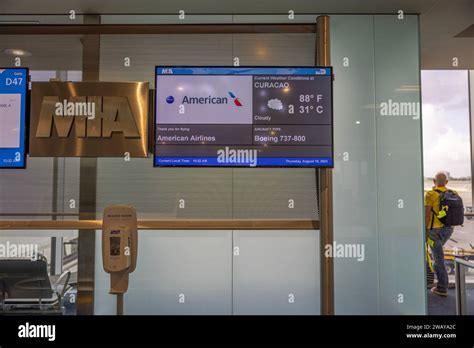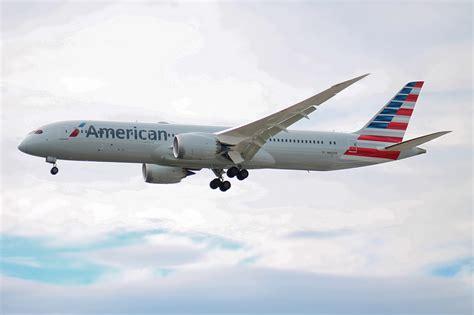
American Airlines has initiated a request with the U.S. Department of Transportation (DOT) to modify its current exemption and temporarily suspend flights between Miami and Santiago de Cuba, signaling a potentially significant setback in air connectivity between the United States and Cuba. If approved, this move would leave Santiago—Cuba’s second-largest city—without direct U.S. airline service via American Airlines for the remainder of the summer 2025 travel season.
The request, revealed by Airline Geeks, underscores the fragile state of Cuba–U.S. aviation ties and the growing uncertainty surrounding routes that once symbolized renewed engagement. The Miami–Santiago de Cuba route, launched in May 2019, was hailed as a landmark connection, granting easier access to thousands of Cuban-Americans seeking to reunite with relatives in eastern Cuba.

The initial launch was seen as a diplomatic and logistical achievement. Until that moment, travelers from eastern Cuba had to fly into Havana or Holguín and then traverse long internal distances—adding hours or days to their journey. The new route, a daily flight from Miami International Airport to Santiago’s Antonio Maceo International Airport, became the sixth Cuban destination on American Airlines’ network, marking a step toward more equitable air access across Cuba’s regions.
However, six years later, American Airlines now cites “persistent challenges in demand recovery” as the central reason for its reconsideration. The airline argues that to optimize fleet utilization and maintain economic viability, it must temporarily suspend less profitable routes, starting with Santiago. This action is reportedly part of a broader reshuffling that may include partial suspension of daily flights to Havana, although other destinations such as Camagüey, Holguín, Varadero, and Santa Clara will remain unaffected for now.
Demand Struggles and Policy Shifts: A Volatile Environment
The airline industry’s recovery has been anything but uniform. While some international routes have rebounded post-pandemic, Cuba-bound traffic remains under pressure, hampered by policy swings, visa restrictions, and weakening consumer confidence. American Airlines’ move comes in the same week former President Donald Trump signed a new executive order tightening visa categories for Cuban citizens, particularly B-1/B-2 tourist visas, F student visas, and J exchange visitor visas.
These restrictions, justified by Trump on national security grounds—labeling Cuba a “State Sponsor of Terrorism”—significantly impact passenger demand from the island to the United States. The policy may not directly cancel flights, but it renders routes economically unsustainable when passengers cannot legally enter the country. This was the same trigger that led to JetBlue and Delta ceasing Cuban routes in 2023.

In effect, if passengers are barred or deterred from flying due to immigration hurdles, airlines are compelled to reduce frequencies, downgrade aircraft, or eliminate services. American Airlines, with over 9,000 scheduled flights to Cuba in 2025, is the U.S. carrier with the highest exposure to Cuban markets. Its operational risk is amplified by these unpredictable geopolitical tides.
A Blow to Cuban Families and Diaspora Connectivity
For many Cuban-American families, especially those originating from the eastern provinces, the Miami–Santiago de Cuba route represents more than just convenience—it is a lifeline. The flight enabled families to avoid 800+ km overland travel from Havana, facilitating not only family reunions but also humanitarian aid deliveries, emergency visits, and cultural exchange.
The potential suspension introduces new logistical hurdles for Cuban citizens seeking to visit relatives in the U.S. or vice versa. Travel becomes longer, costlier, and more exhausting, often requiring multiple transfers, overnight stays, and bureaucratic obstacles. The emotional toll cannot be overstated: these flights are used for urgent family matters, such as funerals, weddings, and critical health appointments.
Even a “temporary” halt could displace thousands of summer travelers, especially in peak season months like July and August. Ticket holders may be forced to reroute via Havana, causing a surge in already congested flights and potentially inflating prices.
Airlines Treading Carefully Amid Policy Crosswinds
The fluidity of U.S.-Cuba policy has made route planning a delicate balancing act for airlines. A shift in the White House or a change in visa regulations can swing demand drastically in either direction. Airlines are now crafting hyper-responsive strategies, closely tied to political sentiment and diplomatic developments.
According to insiders at the DOT, no final decision has been issued yet on American Airlines’ request, but the trend is clear: airlines are bracing for prolonged instability. While American Airlines has emphasized that its request is “limited in scope,” history suggests that such route suspensions, once implemented, can become prolonged or permanent due to compounding factors.
JetBlue, once a pioneer in opening Cuban routes post-2015 normalization, completely exited the market within two years. Delta made a short-lived foray into Cuban skies before retracting in the face of regulatory whiplash and diminished demand. Now, American Airlines stands as the last major U.S. carrier sustaining a multi-city Cuban network.
Strategic Importance of Santiago de Cuba in U.S.–Cuba Relations
Santiago de Cuba is not just a city—it is a historic and economic pillar of eastern Cuba. With a population nearing 500,000 and strategic access to Caribbean maritime routes, it plays a crucial role in Cuba’s regional development. The city is home to prominent universities, a burgeoning tech corridor, and an active cultural diaspora in the United States.

The Antonio Maceo International Airport, named after the Afro-Cuban revolutionary hero, had invested in expanded customs and passenger processing facilities in anticipation of more robust U.S. travel. That expansion was driven largely by the American Airlines route, which now faces jeopardy.
The potential flight halt could also dampen efforts by local tourism boards and Cuban entrepreneurs seeking to develop the region’s appeal to American visitors. With reduced access, eastern Cuba risks becoming even more isolated from the international tourism flows that concentrate heavily around Havana and Varadero.
Looking Ahead: Will the DOT Approve the Request?
Whether the DOT approves the suspension will depend on multiple factors, including current market metrics, competitive equity, and broader U.S. foreign policy goals. As of now, American Airlines maintains exemptions for flights to five other Cuban cities, reinforcing its commitment to the broader market while hedging its exposure.
If Santiago’s suspension is permitted, industry analysts predict similar pullbacks could follow should demand continue to deteriorate or if restrictions tighten further. Meanwhile, Cuban-American advocacy groups in Florida are lobbying to maintain the Santiago connection, emphasizing its humanitarian importance.
DOT’s ruling will likely set precedent for how other carriers approach the Cuba question in an increasingly constrained environment. The outcome could either cement Santiago’s marginalization or ignite a broader conversation on restoring direct ties with eastern Cuba.
Conclusion: A Route at a Crossroads
The proposed suspension of American Airlines flights between Miami and Santiago de Cuba is more than a mere scheduling change—it is a barometer of deeper political, economic, and social tensions. As air links continue to serve as frontline instruments of diplomacy and diaspora connection, every suspended route carries real-world consequences far beyond the airport.
In a time when air travel remains one of the few reliable links between estranged nations, the potential loss of this flight marks a retreat in engagement, access, and human connection. Whether temporary or lasting, the disappearance of this vital route leaves a profound gap for thousands of families on both sides of the Florida Straits.