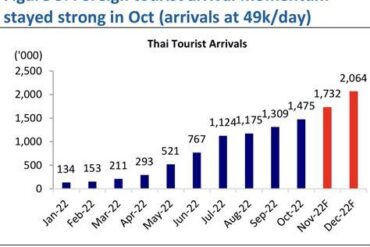
Thailand’s tourism industry, once a booming sector contributing significantly to the nation’s economic growth, is currently facing profound challenges in its recovery post-COVID-19. The sharp decline in arrivals from China, which was traditionally one of Thailand’s largest sources of international visitors, has triggered a ripple effect that is impacting Airports of Thailand (AOT)—the organization responsible for managing the country’s busiest airports, including the prestigious Suvarnabhumi Airport in Bangkok. This downturn not only threatens the tourism sector but also poses significant risks to the overall economic health of Thailand, as evidenced by substantial declines in AOT’s financial performance and stock market value.
The ramifications of the faltering tourism recovery are particularly pronounced in the duty-free market, which has historically thrived due to the influx of international travelers. AOT’s collaboration with King Power, the leading operator of duty-free shops in Thailand, has been severely affected as the number of Chinese tourists—who predominantly contribute to duty-free sales—has plummeted. Reports indicate a staggering 30% reduction in Chinese arrivals, which has directly impacted revenue from duty-free goods sold at the airports. This decline is further exacerbated by safety concerns surrounding high-profile incidents involving Chinese nationals, such as the recent viral kidnapping of a Chinese actor. Such events have led to increased caution among potential travelers, further deterring visits to Thailand.
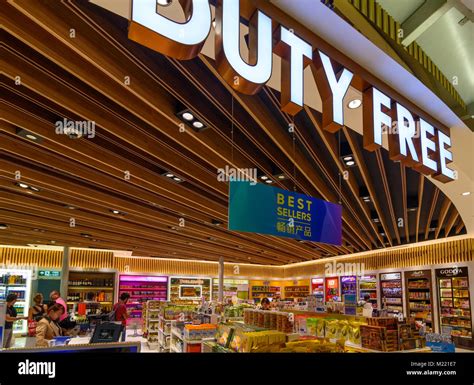
As the situation stands, AOT’s financial struggles have become glaringly apparent, highlighted by a 13% drop in net income during the past fiscal period. A significant portion of this decline can be attributed to reduced revenues from duty-free sales, which have traditionally been a cornerstone of AOT’s earnings. Adding to the woes, King Power has expressed intentions to cancel several of its concessions at Thai airports, signaling a deepening crisis in business operations. Consequently, AOT’s stock value has suffered immensely, with shares plummeting over 50% in 2025, drastically reducing its market capitalization and raising alarms about the stability and future growth prospects of both the airline and tourism sectors.
On June 20, 2025, AOT’s share price experienced a dramatic drop of 9%, marking the largest decline in Asian markets that day. This decline reflects a broader downturn in Thailand’s tourism sector, influenced heavily by lingering health concerns, particularly from key source markets like China. In the first half of 2023, AOT recorded only 28% of its pre-pandemic passenger numbers, starkly below the 52% recovery benchmark that analysts had anticipated. This significant mismatch between actual recovery figures and expectations indicates that Thailand’s rebound from the pandemic is still fraught with uncertainty and instability.
Economic analysts, including Dr. Somchai from Bangkok University, have voiced concerns regarding the prolonged impact of ongoing health uncertainties on both inbound and outbound travel. The dire situation calls for immediate and robust intervention to stimulate the tourism sector, which has been the backbone of Thailand’s economy.
In a bid to mitigate the growing crisis, the Thai government has rolled out various initiatives aimed at rejuvenating tourism, including financial incentives to attract foreign visitors and campaigns promoting domestic travel. However, these efforts have yet to yield the desired effects, as the global tourism landscape continues to grapple with unpredictability. While neighboring Southeast Asian nations have managed to see an uptick in tourist arrivals, Thailand struggles to regain its former momentum, reflecting a troubling trend that is mirrored across tourism-dependent economies in the region.
The future of Thailand’s tourism sector appears bleak, with many industry experts suggesting that a complete recovery may take longer than initially projected. The lack of consistent global health regulations and clear incentives from the government further complicate the recovery process. AOT’s declining revenues and stock performance underscore the larger issues faced by the Thai economy, which remains heavily reliant on tourism. As the sector that was once a significant contributor to the country’s GDP continues to flounder, it seems increasingly unlikely that a swift recovery is on the horizon.
The impact of decreased Chinese tourist numbers cannot be overstated; prior to the pandemic, they represented one of the largest segments of international visitors to Thailand. Their absence has had a direct and adverse effect on tourism revenue, particularly in the duty-free sector, which serves as a major source of income for AOT. The decline in Chinese tourists is not merely a statistical anomaly; it symbolizes a broader loss of confidence in traveling to Thailand, driven by both safety concerns and ongoing geopolitical tensions.
AOT’s duty-free operations, primarily managed by King Power, have been hit hard by this downturn. The request for cancellation of certain concessions at Thai airports by King Power serves as a stark indicator of the business slowdown and reflects a fundamental shift in the dynamics of the duty-free market within Thailand. With fewer international tourists arriving, the sustainability of these operations is called into question, forcing AOT to reassess its business model and strategies moving forward.
Looking ahead, the path to recovery for Thailand’s tourism sector remains fraught with challenges. While government incentives and measures to boost tourism may provide short-term relief, the overarching uncertainties surrounding global health crises, evolving travel regulations, and fluctuating tourist numbers suggest that a robust recovery will be slow and arduous. Industry experts warn that unless the government can implement more effective policies and clear strategies aimed at stabilizing the situation, the tourism sector may continue to suffer in the coming months.
AOT’s significant drop in stock value and mounting financial losses serve as a testament to the trials facing the airport operator. As Thailand’s largest airport management organization, AOT’s struggles are emblematic of the broader issues confronting the Thai tourism sector. The company’s ability to navigate these setbacks and adapt to the changing travel landscape will be pivotal in determining its future viability and success.
In conclusion, Thailand’s tourism sector stands at a critical juncture. The post-COVID recovery has lagged behind expectations, particularly due to the steep decline in Chinese tourist arrivals, which has had a direct and detrimental impact on airport revenues and duty-free sales. With AOT grappling with a staggering 50% drop in stock value and decreasing passenger traffic, the country faces an uncertain future regarding its tourism recovery. Despite government efforts to stimulate the sector, the lack of momentum in tourism growth suggests that without significant improvements in global health conditions and clearer pathways to recovery, Thailand may struggle to reclaim its status as a major global tourism hub. AOT’s leadership must confront these challenges head-on if the company—and the broader tourism sector—are to return to a trajectory of growth.