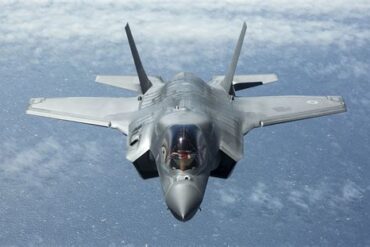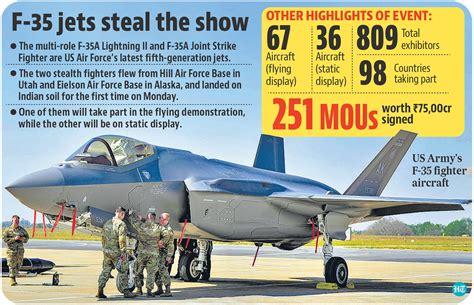
The Lockheed Martin F-35 Lightning II, once heralded as the apex of fifth-generation airpower, now stands at a critical juncture. Once a gleaming symbol of American technological dominance and a linchpin of defense diplomacy, the program is facing deep turbulence at home just as Washington presses strategic allies—particularly India—to adopt the aircraft.
As the United States Department of Defense slashes its F-35 orders for fiscal year 2025, while long-standing partners like Canada grapple with ballooning costs, critical questions are emerging in New Delhi: Is the US signaling diminished confidence in the F-35 platform, and if so, why is it continuing to pitch the jet to India?
US Procurement Cuts: A Shift in Confidence?
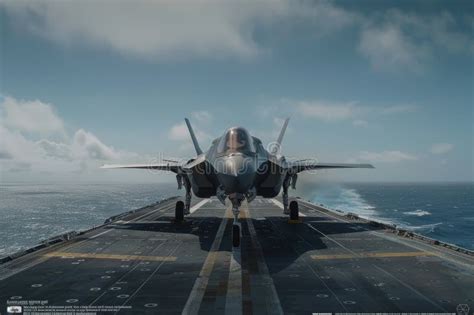
Recent US budget documents have confirmed a dramatic 50% cut in F-35 orders by the US Air Force, requesting only 24 units for FY2025—down from 48 the previous year. The US Navy and Marine Corps have also reduced their acquisition numbers. The budgetary revisions come amidst a broader 8% reduction in overall US military spending, initiated by US Secretary of Defense Pete Hegseth, with large-scale procurement programs like the F-35 being immediate casualties.
This move has sparked unease within defense circles. The F-35 program, once protected from fiscal restraint due to its centrality to US airpower doctrine, is now under direct scrutiny. While the Pentagon continues to invest billions in the jet’s development and maintenance, the declining purchase volume paints a picture of restrained enthusiasm.
Mounting International Skepticism
Beyond American shores, Canada’s F-35 order—once championed as a cost-effective leap in airpower—is now reportedly 50% more expensive than initial projections. An audit revealed surging costs due to infrastructure upgrades, pilot shortages, and delayed base readiness, raising the program’s total cost to C$27.7 billion. These revelations echo among other partner nations facing similar systemic burdens.
Investors are equally spooked. Lockheed Martin shares tumbled after news of order reductions broke, a sharp market reaction that underscores fears of contracting revenues. With the F-35 program accounting for approximately 30% of Lockheed Martin’s total income, any downward trajectory threatens to unnerve both Wall Street and Washington.
India: Torn Between Strategic Leverage and Operational Realities
Amid this financial and strategic reassessment, the US continues to extend the F-35 offer to India, positioning it as a strategic asset in South Asia’s security matrix. The overture has been reactivated under the Trump-Vance foreign policy doctrine, reaffirming India’s role as a vital counterweight to China.
Yet, India remains unconvinced. At $80 million per unit, the F-35 is among the world’s most expensive fighters. For a country seeking volume procurement to meet the operational needs of 42 combat squadrons, the economics are sobering. Compatibility challenges, technology transfer hesitations, and lengthy delivery timelines complicate the calculus.
India also recognizes that the F-35 is not just an aircraft—it’s a platform tightly enmeshed with US defense protocols. Acquiring it would likely require deep integration with American command systems, compromising India’s defense autonomy, especially when New Delhi is ramping up its own indigenous aerospace efforts.
Russia’s Strategic Gambit: The Su-57 Proposal
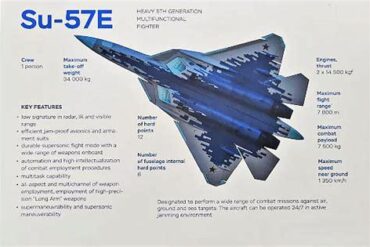
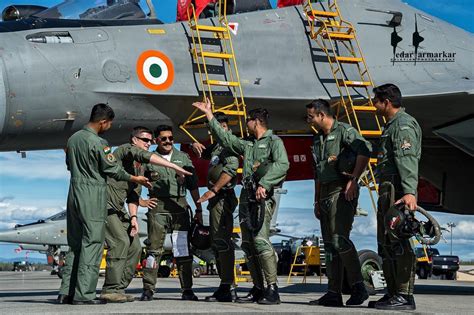
In contrast, Russia has offered India a co-production deal for the Su-57E, Moscow’s own fifth-generation stealth fighter. Russian Ambassador Denis Alipov, at the India Today Conclave 2025, made an unequivocal pitch: not only to sell the Su-57 but to co-produce it with Indian industry, integrate indigenous systems, and allow custom configuration.
The offer encompasses:
- Local manufacturing of the Su-57E using modified facilities like HAL’s Nashik plant.
- Upgrade assistance for the existing Su-30MKI fleet.
- Full technology transfer in select domains, including radar and avionics.
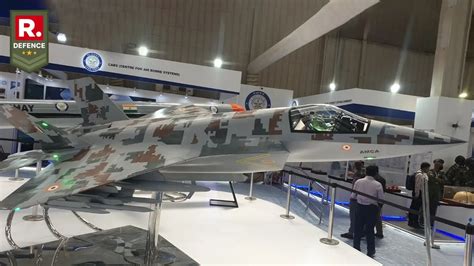
- Collaboration and knowledge-sharing in India’s AMCA project, thereby reinforcing long-term self-reliance.
This proposition aligns neatly with India’s ‘Make in India’ doctrine. With India already possessing deep familiarity with Russian airframes and operating the world’s largest Su-30MKI fleet, logistical and training synergies are inherent.
Moreover, India is currently exploring engine development collaborations with France’s Safran and the UK’s Rolls-Royce, both of whom have expressed willingness to provide full tech transfer, potentially allowing India to field a truly indigenous fifth-gen fighter.
Indian Air Force at a Crossroads
Air Chief Marshal AP Singh recently flagged the urgency of inducting 35–40 fighters annually to prevent strategic obsolescence. With only 31 active squadrons, India is far below its sanctioned strength. Over the past decade, China has inducted 435 fighters, while India has lost 151 aircraft.
To bridge this widening gap, India has adopted a three-tiered procurement strategy:
- Short-term: Rapid acquisitions of proven platforms to bolster numbers.
- Mid-term: Co-development/co-production with international partners.
- Long-term: Develop and field indigenous fighters like the AMCA.
Within this framework, the government is fast-tracking the Request for Proposal (RFP) for AMCA, expected within days, followed by pre-bid consultations. International offers are being weighed against India’s evolving industrial capacity, geopolitical alignment, and defense doctrine.
Strategic, Not Symbolic: India’s Balancing Act
India’s decision won’t merely be about performance specifications or procurement costs. The choice between the American F-35 and the Russian Su-57 represents a broader strategic posture—between tight alliance and flexible autonomy.
The F-35, with its global ecosystem and NATO-standard interoperability, brings India closer into the US-led defense network. But it also comes with strings: export limitations, maintenance dependency, and reduced maneuverability in independent policy decisions.
The Su-57 offer, while less mature technologically, allows greater customization, industry participation, and sovereignty in integration. With India’s defense ecosystem maturing and its ambitions in aerospace growing bolder, an F-35-like deal might seem less appealing than it would have a decade ago.
The Future of the F-35 in India: Mirage or Momentum?
Despite reduced orders in the US and rising skepticism globally, the F-35 retains undeniable allure. It represents the apex of stealth and sensor fusion. For India, acquiring it could instantly position the Indian Air Force among the elite few operating true fifth-generation platforms.
But the F-35’s growing list of caveats—cost, control, and commitment—could ultimately outweigh its advantages. Especially when alternatives offer not just aircraft, but strategic agency, industrial growth, and technological collaboration.
In many ways, the F-35 is no longer the uncontested future of air warfare. With emerging players like India, future combat platforms will likely need to do more than just fly stealthily—they will have to fit within complex national strategies, industrial blueprints, and sovereign defense doctrines.
As the US pares back its own F-35 enthusiasm, the optics of simultaneously urging India to buy in are growing difficult to ignore. India may still engage with the F-35 program—but not as a buyer blind to shifting winds. It will do so with eyes wide open, balancing prestige with pragmatism.