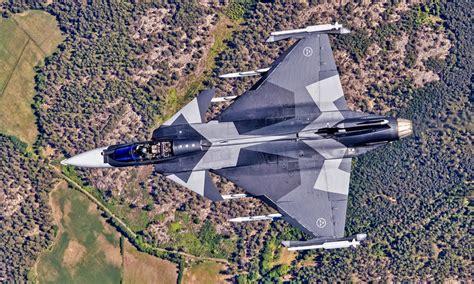
Canada’s fighter jet saga has evolved into a high-stakes geopolitical chess match—one that blends defense urgency, economic nationalism, and a subtle but unmistakable push for sovereignty. Beneath the surface of official announcements lies a contradiction that is both strategic and revealing: Canada is actively funding key components of the F-35 program while simultaneously signaling openness to abandoning much of that very deal in favor of Sweden’s Gripen.
This is not indecision. It is calculated leverage.
A Fighter Deal Under Pressure
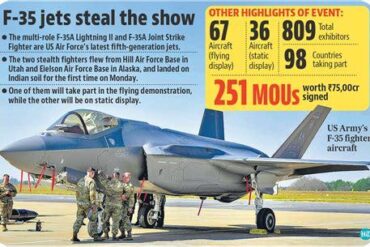
Canada’s original commitment to acquire 88 F-35A Lightning II stealth fighters was once framed as a definitive step into fifth-generation air dominance. The deal, valued initially at approximately $19 billion CAD, has since ballooned to lifecycle estimates nearing $27.7 billion. That escalation alone would trigger scrutiny in any democracy—but in Canada’s case, the pressures run deeper.
Political friction with the United States has reshaped the context entirely. Trade tensions, tariff threats, and shifting alliances have injected uncertainty into what was once considered a stable defense partnership. Yet, despite these headwinds, Canada has not walked away. Instead, it has doubled down—selectively.
Sixteen aircraft are fully funded. Long-lead components for an additional fourteen are already paid for. Thirty jets are effectively locked in.
That is not hesitation. That is commitment—just not the full commitment originally envisioned.
Why Canada Is Still Paying for the F-35
Walking away from the F-35 program is far more complicated than canceling a contract. Canada is deeply embedded in the global Joint Strike Fighter ecosystem, with over 110 domestic companies contributing to the supply chain. Every F-35 built worldwide carries more than $2.3 million worth of Canadian-made components.
This industrial integration creates a powerful incentive to stay involved. Abandoning the program entirely would not just mean losing aircraft—it would risk thousands of high-skilled jobs and sever Canada’s role in one of the most advanced aerospace programs in history.
Equally critical is timing. Long-lead items—engines, avionics, structural components—must be secured years before assembly. Missing payment windows would push Canada out of the production queue, handing those coveted slots to other nations.
So Canada continues to pay.
Not because it is fully committed—but because exiting now would be strategically and economically costly.
The Sovereignty Question No One Can Ignore
At the heart of Canada’s hesitation lies a concern that goes beyond cost or capability: control.
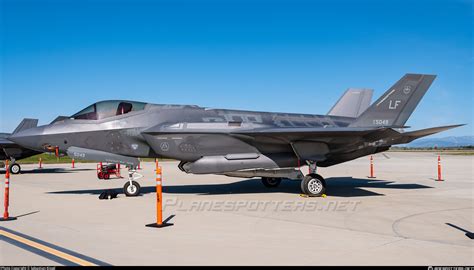
The F-35 is not just an aircraft; it is an ecosystem governed by proprietary software, centralized logistics systems, and data infrastructure controlled largely within the United States. Systems like ALIS and its successor ODIN manage everything from maintenance diagnostics to mission data.
For Canada, this raises an uncomfortable question: what happens if access is restricted?
The idea that a nation’s frontline fighter fleet could be limited—or effectively grounded—by external political decisions is not theoretical. It is a risk that defense planners must take seriously. In an era of unpredictable alliances and economic pressure tactics, technological dependence becomes a strategic vulnerability.
This is where the Gripen enters the conversation—not as a superior aircraft in raw capability, but as a fundamentally different proposition.
Gripen: A Fighter Built for Independence
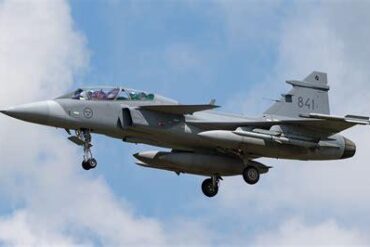
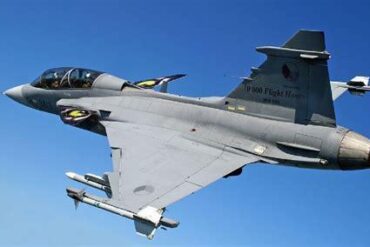
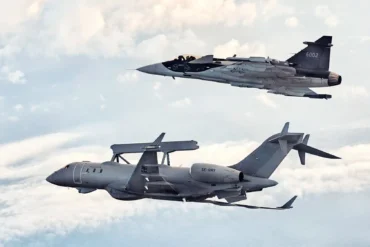
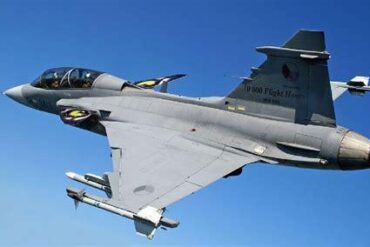
Sweden’s JAS 39 Gripen E offers something the F-35 does not: full operational sovereignty. Its software architecture is open to customization, its maintenance systems are decentralized, and its deployment philosophy is designed for resilience rather than dependence.
For Canada, this aligns with a growing desire to regain control over its defense capabilities.
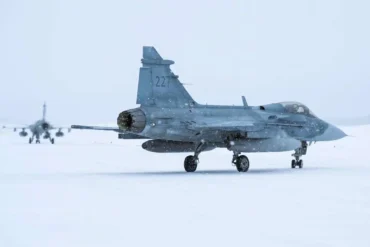
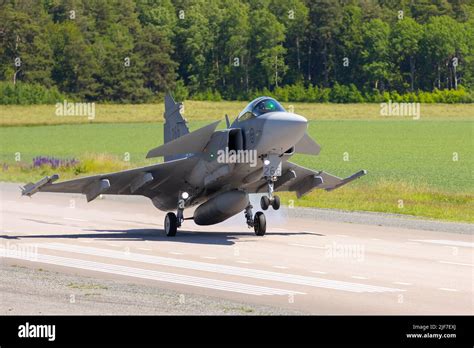
The Gripen’s operational design is particularly suited to Canada’s geography. It can operate from short, improvised runways, including highways and frozen surfaces—an invaluable trait in the vast and often remote Arctic regions. It requires minimal ground crew and can be refueled and rearmed in minutes.
This is not just convenience. It is survivability.
Performance vs Practicality
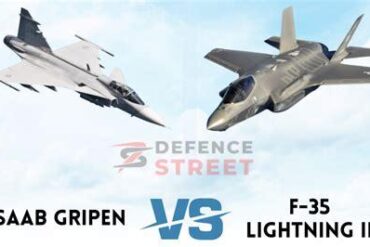
On paper, the F-35 remains the superior aircraft. In Canada’s own evaluation, it scored an overwhelming 95% in military capability, compared to the Gripen’s 33%. Its stealth characteristics, sensor fusion, and network-centric warfare capabilities place it in a class of its own.
But war is not fought on paper.
The Gripen’s strength lies in availability and cost efficiency. Reports suggest readiness rates between 70% and 80%, significantly higher than the F-35’s historically fluctuating availability, which has sometimes dipped below 50%.
In practical terms, more jets ready to fly can outweigh fewer jets with superior capabilities.
And then there is cost. The F-35’s long-term operating expenses are among the highest of any fighter aircraft ever built. The Gripen, by contrast, is designed for affordability—both in acquisition and sustainment.
For routine missions like Arctic patrols, the difference becomes even more pronounced.
The Missile Equation: Meteor vs AMRAAM
Air combat effectiveness is not defined by aircraft alone. Weapons matter—and here, the Gripen holds a unique advantage.
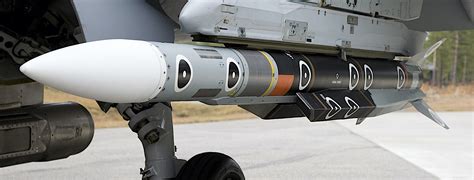
The European Meteor missile, compatible with the Gripen, introduces a fundamentally different engagement dynamic. Powered by a ramjet engine, it maintains thrust throughout its flight, allowing it to adjust speed and trajectory during pursuit. This creates a significantly larger “no escape zone”—the range within which a target cannot evade.
The F-35, for now, relies primarily on the AIM-120D AMRAAM. While highly capable, it follows a traditional boost-and-glide profile, losing energy as it travels.
The integration of Meteor into the F-35 has been delayed into the next decade. That gap matters.
For Canada, it means that a Gripen fleet could field more advanced air-to-air capabilities sooner than its stealth counterpart.
Economic Strategy Disguised as Procurement
Beyond military considerations, this decision is deeply economic.
Sweden’s offer includes a 100% industrial offset—effectively guaranteeing that every dollar spent on Gripen returns to Canada’s economy. Plans include establishing a domestic production facility, potentially creating over 12,000 jobs and revitalizing the country’s aerospace sector.
This is not just about buying jets. It is about rebuilding an industry.
The shadow of the Avro Arrow still looms large in Canadian memory. Its cancellation in the 1950s triggered a collapse of domestic aerospace innovation and a massive migration of talent to the United States.
Choosing the Gripen is, in many ways, an attempt to reverse that historical trajectory.
A Dual-Fleet Future?
Canada’s current trajectory suggests a compromise rather than a clean break.
The first batch of 16 to 30 F-35s will almost certainly enter service. They are already funded, integrated into production, and essential for maintaining interoperability with NATO allies.
But beyond that, the path diverges.
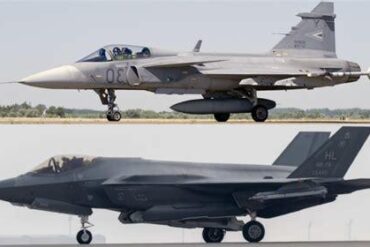
A mixed fleet—combining F-35s for high-end stealth operations with Gripens for routine missions—offers a balanced solution. It preserves Canada’s role in allied operations while granting greater autonomy and economic return.
Such an approach is not without complexity. Maintaining two different aircraft types increases logistical demands and training requirements. Yet it may be the most politically and strategically viable option.
The Arctic Factor
Canada’s unique geography cannot be overstated. Defending vast, sparsely populated northern territories requires aircraft that can operate independently, reliably, and in extreme conditions.
The F-35, with its reliance on advanced infrastructure and secure facilities, faces challenges in this environment. The Gripen, designed for dispersed operations, thrives in it.
This is not a minor detail—it is central to Canada’s defense reality.
Geopolitics Reshaping Procurement
The broader context is impossible to ignore. U.S. foreign policy shifts, including aggressive trade measures and rhetoric around economic leverage, have altered how allies perceive dependence on American systems.
Canada’s exploration of alternatives is part of a wider trend. Nations across Europe are reassessing their defense procurement strategies, seeking greater independence and diversification.
In this sense, Canada is not breaking ranks—it is adapting to a changing world.

The Strategic Balancing Act
What appears contradictory at first glance—funding the F-35 while considering the Gripen—is, in reality, a sophisticated balancing act.
Canada is preserving its position within the F-35 program, protecting its industrial interests, and securing near-term defense capabilities. At the same time, it is leveraging alternative options to negotiate better terms, reduce dependence, and potentially reshape its long-term strategy.
This is not indecision. It is strategy executed under constraint.
A Turning Point for Canadian Defense
The decision Canada ultimately makes will ripple far beyond its borders. It will influence alliance dynamics, industrial partnerships, and the future of its aerospace sector.
If it commits fully to the F-35, it deepens integration with the United States but accepts long-term dependence. If it pivots toward the Gripen, it gains autonomy but risks reduced interoperability with key allies.
A dual approach may offer the best of both worlds—but at the cost of complexity.
Conclusion: More Than Just Fighter Jets
Canada’s fighter procurement debate is not simply about choosing between two aircraft. It is about defining the country’s strategic identity in an era of shifting alliances and technological dependence.
By continuing to fund the F-35 while keeping the Gripen option alive, Canada is buying time—and leverage.
The outcome will not just determine what flies over Canadian skies. It will shape how Canada positions itself in the global defense landscape for decades to come.