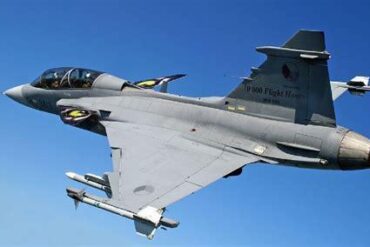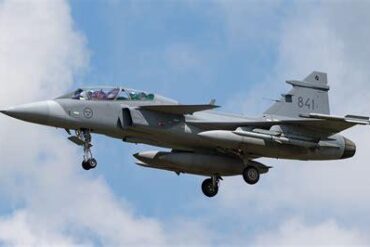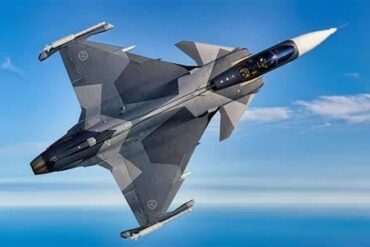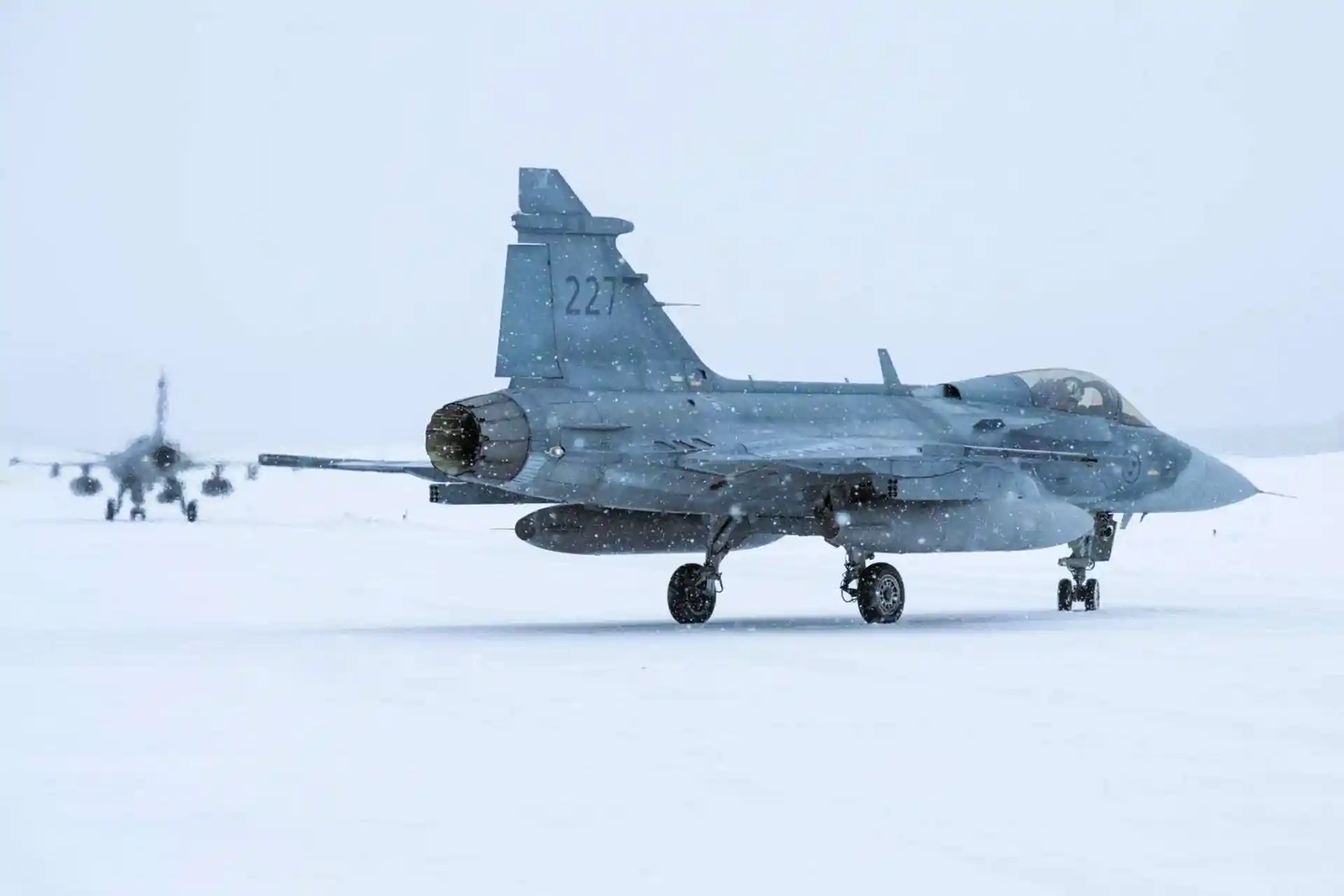
Sweden has taken a decisive step in its post-accession NATO role by assuming leadership of the Icelandic Air Policing mission, deploying JAS 39 Gripen multirole fighter jets to Keflavík Air Base. This deployment marks the first time Sweden has commanded a NATO air policing rotation as a full Ally, extending its operational responsibility into one of the Alliance’s most strategically sensitive airspaces. The mission underscores Sweden’s rapid integration into NATO’s collective defence architecture and highlights its readiness to shoulder frontline security tasks in the North Atlantic.
Confirmed by NATO Allied Air Command on 20 January 2026, the mission will begin in February, with Swedish Gripens providing continuous peacetime air surveillance and interception over Iceland. As Iceland has no standing fighter force of its own, NATO’s rotational air policing presence remains essential to maintaining air sovereignty and situational awareness across a vast and demanding operational environment. Sweden’s leadership of this mission represents both a symbolic and practical milestone, reinforcing Allied solidarity while strengthening deterrence in the High North.
For Stockholm, the Icelandic deployment is not merely ceremonial. It reflects a deliberate shift from decades of military non-alignment to active participation in NATO’s integrated air and missile defence system. Since joining the Alliance in March 2024, Sweden has moved quickly to align doctrine, command structures, and operational procedures with Allied standards. Taking command in Iceland confirms that this transition has progressed from political commitment to operational reality.
Swedish Gripens will operate under NATO command from Keflavík Air Base, a strategically located hub that has long served as a linchpin for North Atlantic air operations. The base’s proximity to key transatlantic air routes and the GIUK gap—the maritime corridor between Greenland, Iceland, and the United Kingdom—makes it critical for monitoring air and maritime movements between the Arctic and the wider Atlantic.
The Swedish Air Force contribution will consist of a Gripen fighter detachment supported by ground crews and mission specialists from Skaraborg Air Flotilla. Operating in accordance with established NATO air policing procedures, the detachment will be responsible for identifying and intercepting aircraft that approach Allied airspace without proper flight plans, transponder signals, or radio contact. These missions, while routine in execution, carry significant strategic weight, particularly given the pattern of increased Russian military aviation activity in northern European airspace.
Sweden’s selection to lead the rotation is rooted in recent operational experience. In 2025, Swedish Gripens participated in NATO air policing operations over Poland, an assignment widely viewed as a proving ground for interoperability and command integration. That deployment tested Sweden’s ability to operate seamlessly within NATO’s command-and-control framework, coordinate with Allied air forces, and execute rules of engagement under real-world conditions. According to Major General Jonas Wikman, Chief of the Swedish Air Force, the Poland mission demonstrated that Swedish units could deliver reliable, high-readiness air defence under NATO leadership, a confidence now extended to the Icelandic theatre.
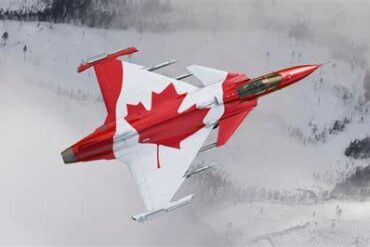
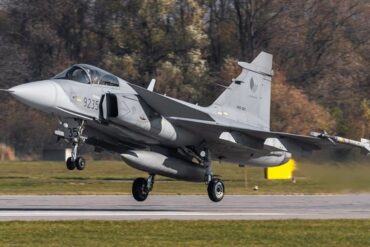
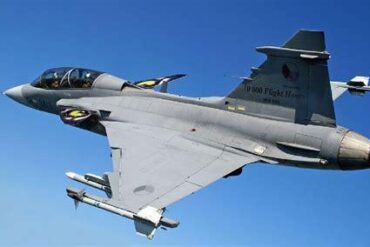
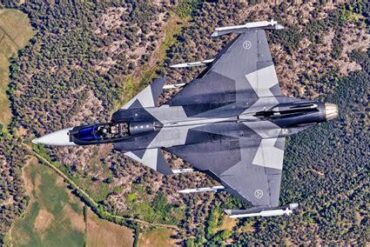
At the heart of the mission is the Saab JAS 39 Gripen, a fighter aircraft purpose-built for operations in northern climates and dispersed basing concepts. Its single-engine, delta-canard design combines agility with efficiency, while its advanced avionics suite allows pilots to manage complex air combat scenarios with a high degree of situational awareness. The Gripen C/D variant, expected to form the backbone of the deployment, can carry approximately 6.5 tonnes of external stores across multiple hardpoints, supplemented by an internal 27 mm Mauser BK-27 cannon used for warning shots and close-range engagements during air policing intercepts.
For Icelandic Air Policing, Gripens are likely to be equipped with a balanced air-to-air loadout. Beyond-visual-range missiles such as the AIM-120 AMRAAM or MBDA Meteor provide long-range interception capability, while short-range missiles like IRIS-T or AIM-9 ensure effectiveness in close encounters. External fuel tanks extend endurance, a critical factor given Iceland’s vast patrol areas and limited diversion airfields.
The aircraft’s PS-05/A radar, complemented on later variants by AESA technology, enables detection and tracking of multiple targets simultaneously. Secure datalinks and sensor-fusion systems integrate Gripens into NATO’s wider air surveillance network, allowing seamless information sharing with ground-based radar, Allied fighters, and NATO E-3 AWACS aircraft. While the mission is primarily defensive, the Gripen’s multirole design preserves flexibility, including the ability to employ precision-guided munitions or anti-ship weapons such as the RBS-15 if the security environment were to deteriorate.
Operating from Keflavík places unique demands on aircrews and aircraft alike. Iceland’s weather is notoriously unpredictable, with strong winds, icing conditions, and rapidly changing visibility. The Gripen’s short take-off and landing capability, derived from Sweden’s Bas 90 dispersal doctrine, offers a significant advantage in such conditions. Designed to operate from relatively short or austere runways, the aircraft enhances NATO’s resilience by reducing dependence on a small number of fixed bases.
From a tactical standpoint, the Swedish-led detachment will integrate into NATO’s standing Quick Reaction Alert posture. Aircraft will remain on readiness to launch within minutes, responding to unidentified or non-compliant aircraft approaching Alliance airspace. Control will be exercised through NATO’s Combined Air Operations Centre in Uedem, ensuring unified command and rapid decision-making across national boundaries.
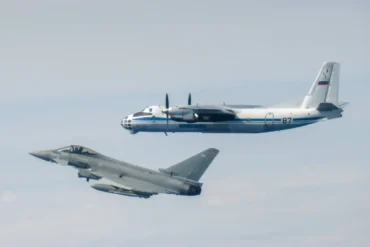
Beyond immediate operational considerations, the deployment carries broader strategic implications. The North Atlantic has regained prominence as a potential theatre of competition, driven largely by Russia’s renewed emphasis on Arctic and High North operations. The Russian Northern Fleet, based on the Kola Peninsula, remains central to Moscow’s nuclear deterrent, protected by layered air and maritime defences extending into the Barents and Norwegian Seas. Russian long-range aviation flights, often conducted without transponders or flight plans, have become a recurring feature of the regional security landscape.
NATO air policing missions have repeatedly intercepted Russian aircraft operating near Allied airspace, including intelligence-gathering platforms and strategic bombers. Incidents such as the 2025 interception of a Russian IL-20 over the Baltic Sea and the MiG-31 incursion into Estonian airspace, which triggered NATO Article 4 consultations, have reinforced concerns about miscalculation and escalation. Against this backdrop, maintaining a credible and responsive air policing presence over Iceland is essential to early warning and deterrence.
Sweden’s assumption of command also strengthens the connective tissue between NATO’s northern regions. By linking Baltic–Nordic air defence capabilities with North Atlantic surveillance, the Alliance enhances its ability to protect critical transatlantic reinforcement routes. In any major crisis, these routes would be vital for moving forces from North America to Europe, making their security a cornerstone of NATO’s collective defence planning.
The mission further aligns with Sweden’s broader defence policy trajectory. Stockholm has committed to meeting NATO’s 2 percent of GDP defence spending guideline by 2026 and has expanded investments in air, naval, and surveillance capabilities. Participation in Icelandic Air Policing complements Swedish contributions to Baltic maritime security and reinforces its role as a net security provider rather than a consumer of Allied protection.
For the Swedish Air Force, the deployment offers invaluable operational experience. Commanding a NATO mission requires not only tactical proficiency but also mastery of multinational coordination, logistics, and political-military decision-making. Operating in Iceland exposes Swedish personnel to a complex operational environment where weather, distance, and strategic sensitivity intersect, sharpening skills that will be directly applicable across NATO’s northern flank.
As Sweden’s Gripens take to the skies over Iceland, the message to Allies and adversaries alike is clear. Sweden is no longer a peripheral partner but an integrated and proactive member of NATO’s defence posture. By leading air policing operations in one of the Alliance’s most exposed regions, Sweden demonstrates both confidence in its capabilities and commitment to collective security. In an era of renewed great-power competition in the High North, the presence of Swedish fighters at Keflavík adds depth, resilience, and credibility to NATO’s air defence shield, reinforcing vigilance where it matters most.