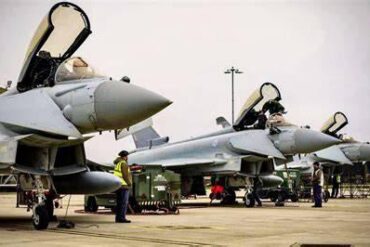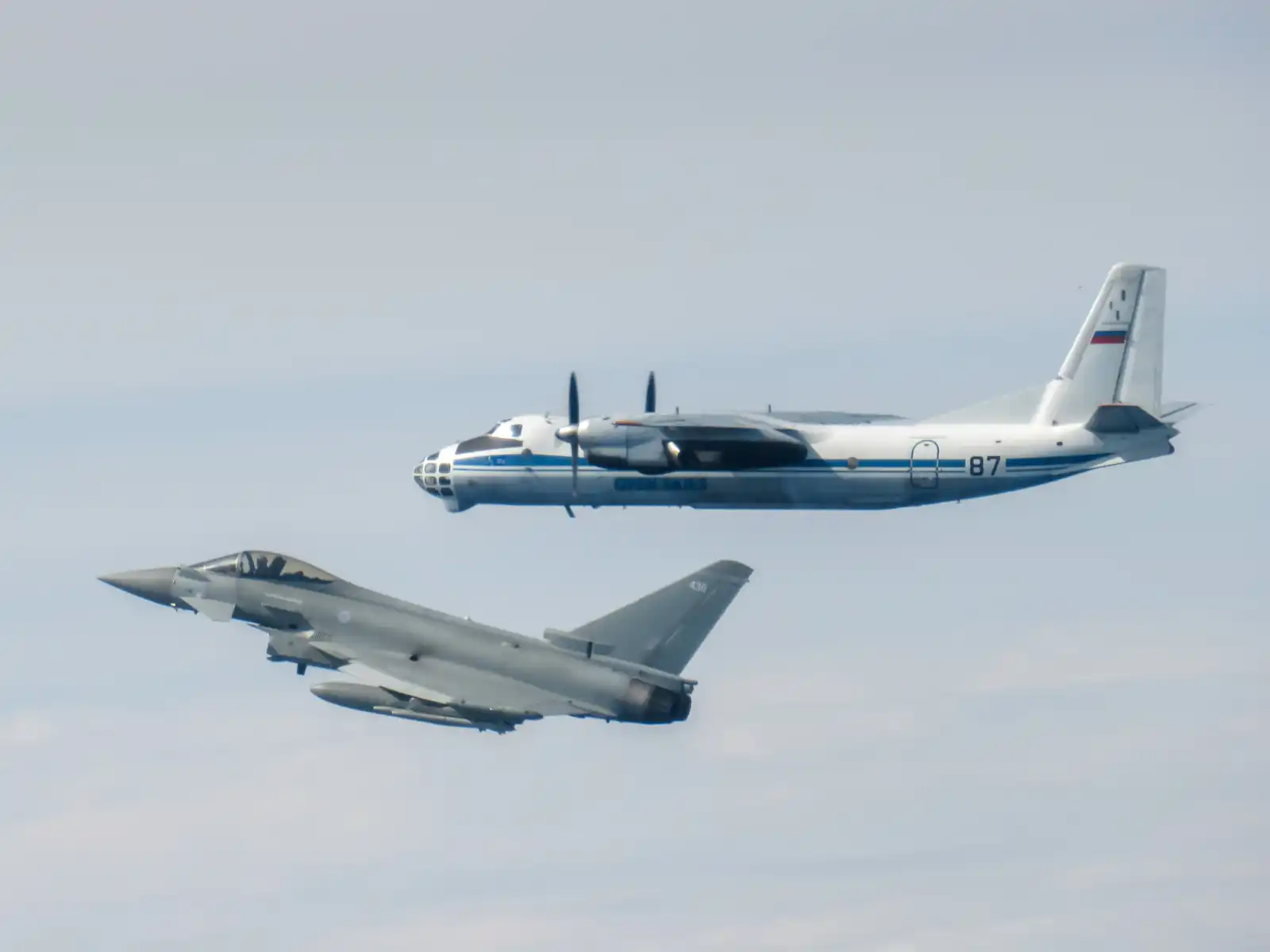
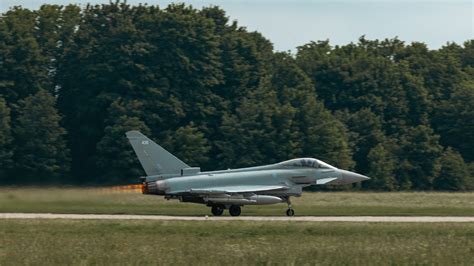
On Thursday, 5 June 2025, two Royal Air Force Typhoon FGR4 aircraft were scrambled from 22nd Tactical Air Base in Malbork, Poland, in response to an unidentified aircraft approaching NATO airspace from Kaliningrad. The rapid deployment occurred as part of NATO’s Enhanced Air Policing (eAP) mission, a persistent and evolving defensive strategy designed to ensure the integrity of Allied airspace in light of increasing regional tensions.
The Typhoons, flown by aircrew from No. II (Army Co-operation) Squadron, under the operational control of 140 Expeditionary Air Wing (EAW), were launched as part of a Quick Reaction Alert (QRA) procedure. These intercepts mark the second such incident in just three days, reinforcing the heightened operational tempo faced by RAF personnel currently stationed in Eastern Europe.
Tensions in the Baltic: The Growing Strategic Significance of Airspace Monitoring
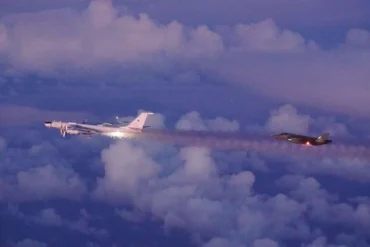
As geopolitical frictions persist between NATO and Russia, the Baltic Sea region remains a key flashpoint for aerial surveillance, reconnaissance, and potential incursions. The latest intercept involved an Antonov An-30 aircraft, codenamed CLANK by NATO. This Soviet-era twin-turboprop aerial photography aircraft had departed from Kaliningrad and was navigating close to NATO-controlled skies without transmitting a transponder signal, radio communication, or filing an official flight plan. These are clear violations of international aviation norms and raise significant safety concerns.
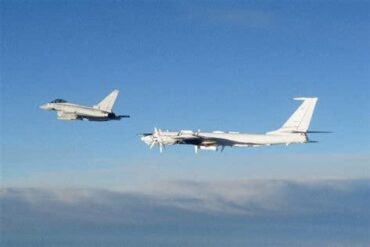
Upon interception, RAF pilots visually identified the An-30 and proceeded to shadow the aircraft—a defensive maneuver designed to mitigate risks to civilian and military air traffic in the vicinity. This protocol ensures that any potentially hazardous aircraft, especially one not compliant with Standard ICAO regulations, does not inadvertently or intentionally endanger the region’s tightly regulated air corridors.
Escalating Complexity: Second Russian Aircraft Intercepted in the Same Mission
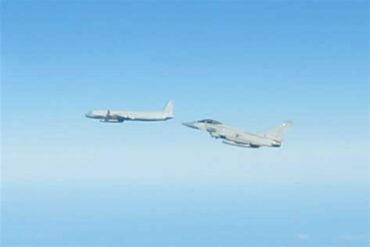
While monitoring the An-30, NATO Command re-tasked the same Typhoon pair to intercept a second aircraft detected operating within the same strategic envelope. This aircraft, identified as an Ilyushin Il-20M COOT A, is a signals intelligence (SIGINT) and surveillance platform, also of Soviet vintage. These aircraft are typically equipped with advanced sensors and communications monitoring systems, capable of collecting electronic data from military installations and transmission networks.
The presence of the COOT A so close to NATO airspace drew immediate scrutiny. As with the An-30, the Il-20M was neither communicating with air traffic control nor transmitting a SQUAWK code. These actions—or lack thereof—signaled non-compliance with international airspace conduct, granting NATO the legal justification to intercept and monitor the aircraft. The Typhoons shadowed the Il-20M until it left the area or no longer posed an operational concern.
Operational Readiness: RAF’s Critical Role in NATO’s Air Policing Effort
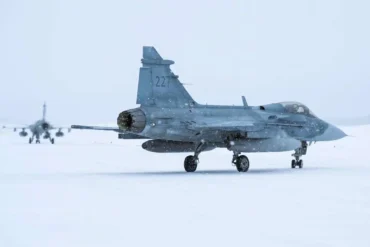
The UK’s Operation Chessman, currently active in Malbork, underscores the vital contribution of British air power to collective NATO defense initiatives. Personnel from across the RAF, including specialists in logistics, engineering, and mission support, have been embedded within 140 EAW to ensure round-the-clock operational capability. The deployment is further bolstered by NATO’s newest member, Sweden, whose regional expertise and proximity to contested airspace enhance the mission’s strategic depth.
An EAW spokesperson commented, “Today was the second time in three days that NATO has scrambled Typhoons from our base in northern Poland. NATO instructed us to scramble, intercept and identify an unknown aircraft transiting close to NATO air space. It was not communicating, SQUAWKing, nor did it file a flight plan. All aircraft must do at least two of the three in accordance with international law. Neither aircraft were complying with international law, therefore NATO can legally scramble aircraft to intercept.”
The Rules of Engagement: Legal and Tactical Foundations of Air Interception
The legal basis for air intercept missions of this kind rests on international aviation law, particularly standards governed by the International Civil Aviation Organization (ICAO). Civilian aircraft operating near controlled airspace must follow three key protocols: maintaining radio contact, broadcasting an identification SQUAWK code via transponder, and filing a recognized flight plan. Failure to meet at least two of these requirements places an aircraft in breach, allowing NATO member states to legally execute interception and identification protocols.
NATO pilots, trained extensively in Rules of Engagement (ROE) and interception tactics, are instructed to operate with a high degree of precision and restraint. While the intercept mission’s visible goal is to deter unauthorized entry, its latent function is to gather intelligence, project readiness, and maintain airspace credibility in the face of near-peer adversaries.
Strategic Implications: Messaging, Deterrence, and Regional Stability
The repeated intercepts of Russian military and reconnaissance aircraft near NATO borders are more than procedural events—they are significant geopolitical signals. They reflect a testing of NATO’s reaction times, resolve, and technical capability. By flying intelligence platforms like the Il-20M close to Allied territories, Russia is both probing defensive thresholds and attempting to collect crucial signal data on radar installations, communications relays, and QRA scramble dynamics.
In response, NATO’s enhanced air policing mission aims to deliver unambiguous messaging: the alliance is alert, capable, and unified. The RAF’s participation not only reinforces the UK’s post-Brexit commitment to European security but also demonstrates the combat readiness of the Typhoon FGR4 platform, a multirole aircraft capable of conducting air-to-air, air-to-ground, and intelligence support missions with lethal efficiency.
Typhoon FGR4: The Tip of NATO’s Spear in the Air
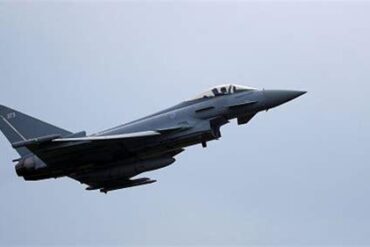
The Eurofighter Typhoon FGR4 is the RAF’s frontline air defense aircraft, known for its adaptability, speed, and advanced radar capabilities. In QRA roles, it’s equipped with Meteor and ASRAAM missiles, high-fidelity sensors, and secure data links enabling integration with other NATO assets. The aircraft’s agility and speed are critical in Baltic operations, where distances between take-off points and intercept zones can be measured in minutes rather than hours.
The FGR4’s supercruise capability, enabling it to fly at supersonic speeds without afterburners, and its integration with Link 16 and other secure communications networks, make it indispensable in missions requiring rapid identification, interception, and response. Pilots flying in these operations undergo extensive multi-national training, ensuring seamless interoperability with assets from the U.S., Poland, Germany, and now Sweden.
The Bigger Picture: NATO Cohesion and Future Air Policing Challenges
As tensions continue in Eastern Europe and Arctic regions, the tempo of NATO air policing is likely to rise. The interoperability and preparedness displayed during these recent intercepts will remain critical to NATO’s ability to defend its territorial integrity without escalation. Every intercept—particularly those involving non-compliant Russian aircraft—serves as a reminder that air superiority is not a peacetime luxury but an active, ongoing strategic necessity.
The UK’s continued investment in RAF expeditionary capabilities, forward-operating air wings, and multilateral exercises ensures that Operation Chessman and missions like it can evolve to meet future challenges. With the integration of next-generation ISR tools, AI-assisted radar filtering, and unmanned support systems, NATO’s air policing capabilities will only grow more resilient and responsive in the face of emerging threats.
In this ongoing chess game of airpower and presence, the Typhoon FGR4 remains the queen on the board—fast, precise, and always watching.