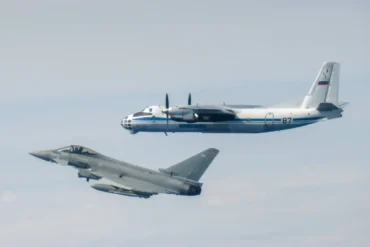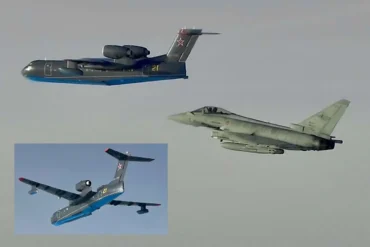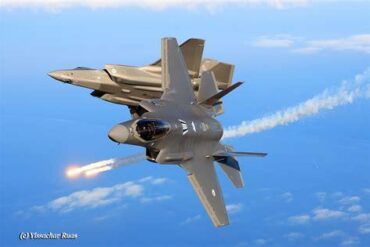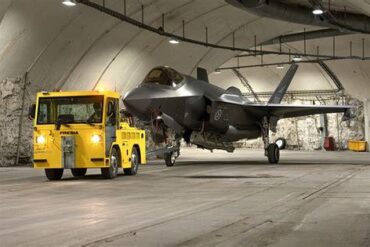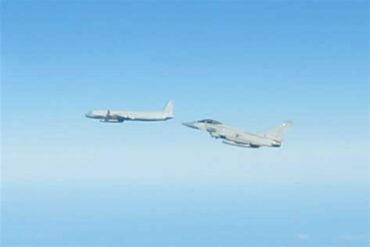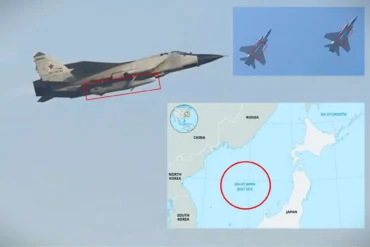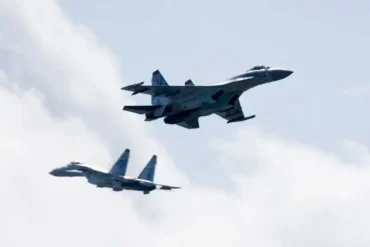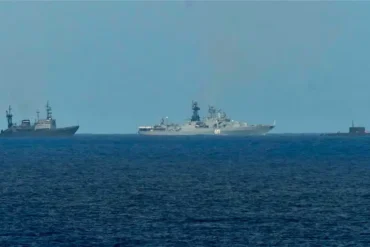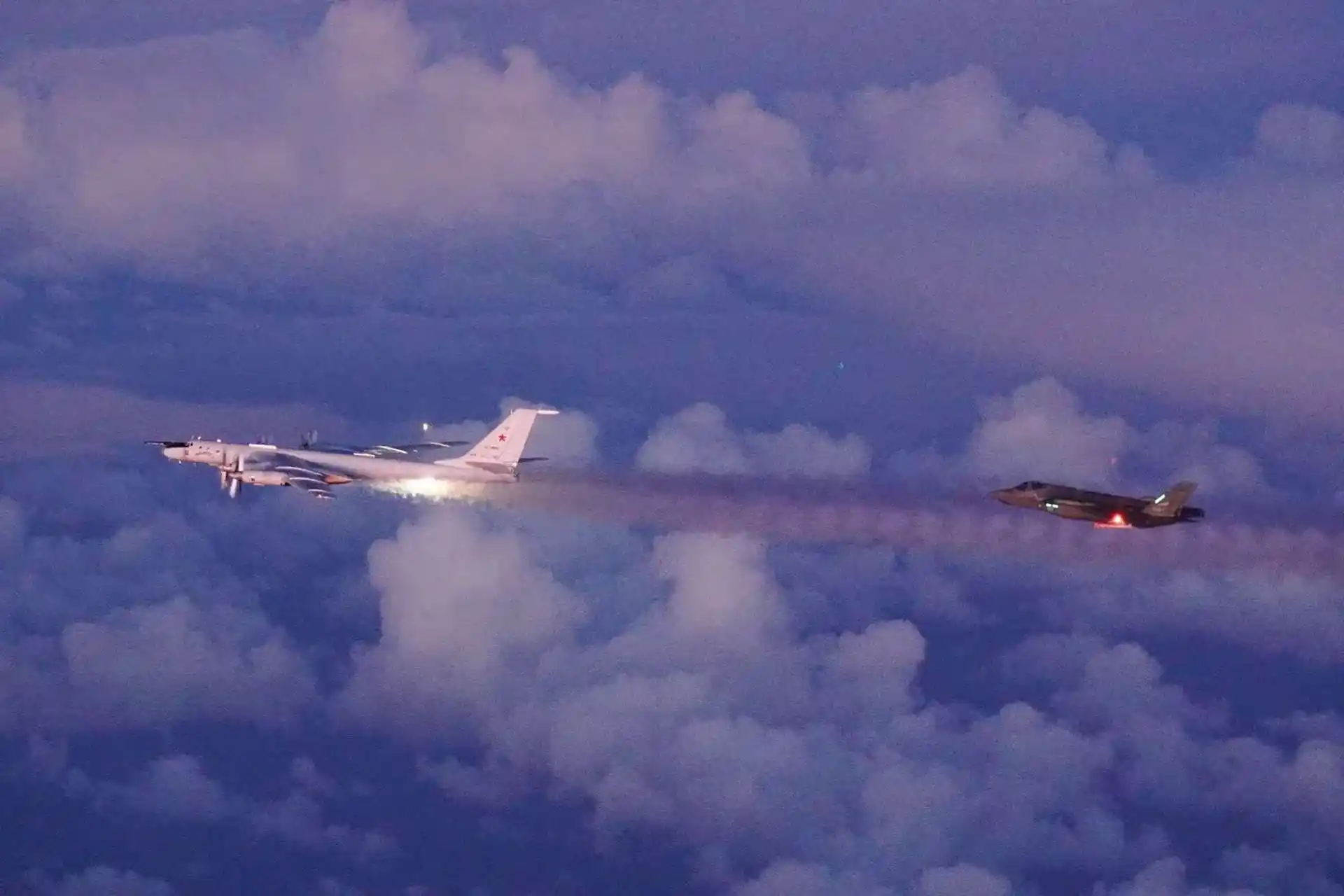
On January 6, 2026, a significant air intercept occurred high above the icy waters of the Norwegian Sea, as two Royal Norwegian Air Force F-35A Lightning II fighter jets were scrambled from Evenes Air Station. Their mission: intercept and identify a Russian Tu-142 Bear-F maritime patrol aircraft operating near NATO’s northwestern flank. This event, though deemed routine by military officials, underscores the strategic friction and persistent military activity in the High North, a region increasingly seen as a theater of great power competition.
Routine Intercepts, Real Tensions: Norway’s Role on NATO’s Northern Edge
As part of NATO’s Quick Reaction Alert (QRA) posture, Norway maintains a pair of armed and mission-ready F-35s at Evenes year-round. The Norwegian Armed Forces reported that the jets were launched within minutes after detection of the Russian aircraft by NATO’s surveillance network. The interception occurred in international airspace, with the Tu-142 remaining outside of Norway’s sovereign skies.
Despite the lack of escalation, these intercepts are not dismissed lightly. They are treated as real-time military operations, carefully monitored by CAOC Bodø (Combined Air Operations Centre), which provides command and control using radar and sensor coverage extending deep into the Arctic. The 6 January mission marks Norway’s first QRA intercept of 2026, continuing a pattern observed over recent years.
The Strategic Significance of the Tu-142 Bear-F
The Tu-142 Bear-F is no ordinary aircraft. An evolution of the iconic Tu-95 Bear bomber, the Bear-F is engineered for maritime patrol and anti-submarine warfare. With extended range and endurance capabilities, the aircraft is crucial for the Russian Navy’s Northern Fleet, tasked with monitoring and tracking NATO submarine movements, especially in the critical chokepoints of the GIUK (Greenland-Iceland-UK) gap.
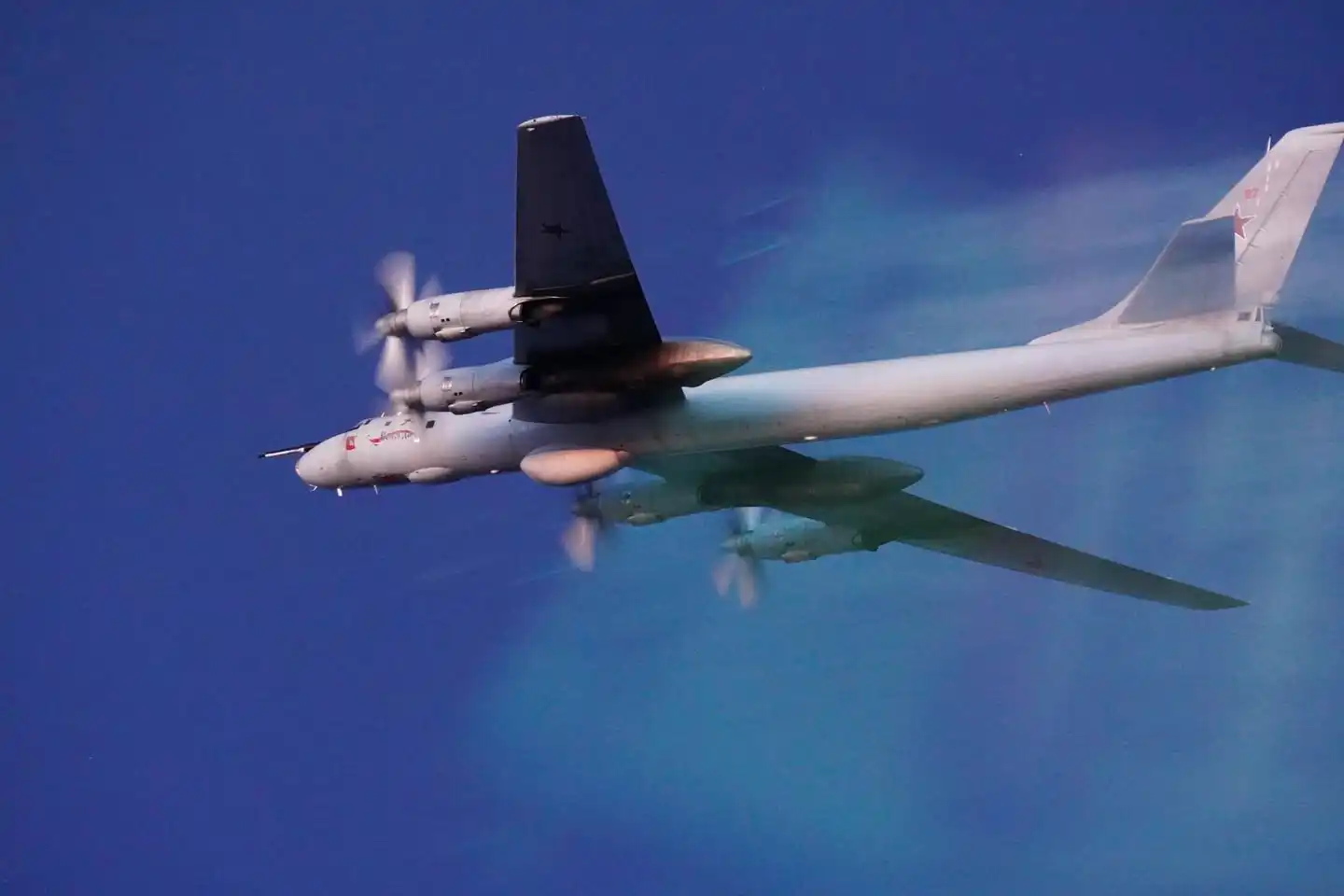
Its presence in the Norwegian Sea is routine but strategically calculated. Operating just outside NATO airspace, the Bear-F patrols often probe regional defenses, test response times, and gather signals intelligence. These long-range flights also serve internal political messaging, signaling Russian capability and intent to domestic and international audiences alike.
F-35 Lightning II: A New Era of Air Policing in the Arctic
The Norwegian Air Force’s transition to the fifth-generation F-35A has revolutionized its QRA mission. Equipped with cutting-edge AESA radar, Distributed Aperture System (DAS), and Electro-Optical Targeting System (EOTS), the aircraft is capable of detecting, tracking, and identifying contacts in even the harshest northern conditions — day or night, in snow or low visibility.
During intercepts, Norwegian F-35s carry a full combat loadout, including:
- A 25 mm internal cannon
- AIM-120 AMRAAM medium-range missiles
- AIM-9X Sidewinders for short-range engagements
This ensures that every QRA sortie is not symbolic, but a credible show of force, reinforcing deterrence and control of national and allied airspace.
2025 Statistics: A Steady Strategic Pattern
According to official data, Norway conducted 41 QRA launches in 2025, visually identifying 53 Russian military aircraft in or near its area of interest. These figures reflect a stable operational rhythm, neither escalating dramatically nor declining. This constancy suggests that both NATO and Russia are locked in a predictable strategic dance, testing boundaries but avoiding open confrontation.
While such intercepts do not constitute direct threats, they are vital for maintaining situational awareness and intelligence collection. Every intercepted aircraft is photographed, its flight profile analyzed, and its capabilities assessed — feeding into NATO’s wider understanding of Russian long-range aviation tactics.
CAOC Bodø and the Architecture of Control
The role of CAOC Bodø, located in northern Norway, is central to QRA operations. Responsible for initiating the scramble and guiding the intercept, the command center functions as part of NATO’s integrated air defense system. It synthesizes inputs from:
- Ground-based radars across Norway and Iceland
- Maritime surveillance systems
- NATO E-3 Sentry AWACS aircraft
From these assets, a comprehensive air picture is constructed, enabling rapid decisions. Major General Tron Strand, head of CAOC Bodø, emphasized that these missions “demonstrate Norwegian control in the northern areas and the ability to enforce sovereignty,” particularly as the Arctic becomes a zone of heightened geopolitical interest.
Deterrence Without Escalation: A Cold Balance in the Cold North
Despite the Bear-F remaining in international airspace, Norway’s decision to launch F-35s was deliberate. Each intercept is designed to eliminate ambiguity. The presence of armed fighters ensures Russian aircraft are monitored and shadowed closely, discouraging aggressive maneuvering and reinforcing NATO’s commitment to deterrence through readiness.
Norwegian authorities emphasize that such operations are compliant with international law and not intended as provocation. They highlight professionalism, restraint, and transparency — qualities meant to prevent misunderstandings while sending a clear strategic message.
The Wider Strategic Context: Arctic Tensions and Global Signaling
This intercept, though routine, is nested in a broader geopolitical theater. The Arctic region, once seen as a frozen buffer, is now a contested frontier. Climate change is opening new maritime routes, spurring interest in energy reserves, and increasing the visibility of great power military activity.
Russia’s Northern Fleet, headquartered in Severomorsk, operates from one of the most militarized zones on Earth. The Tu-142, operating from airfields like Kipelovo or Olenya, projects Moscow’s reach across the Barents and into the North Atlantic. In response, NATO nations like Norway have enhanced their surveillance, mobility, and rapid response capabilities.
Strategic Forecast: Intercepts as the New Normal
With 2026 just beginning, this first QRA intercept sets the tone for what is likely to be another year of closely monitored aerial cat-and-mouse above northern waters. As long as Russian patrol flights continue — and as long as NATO maintains vigilance over its airspace — these encounters will remain a recurring feature of High North security.
Norway, with its advanced F-35 fleet and strategic positioning, will continue to serve as a critical linchpin in NATO’s Arctic defense. Its QRA missions, far from ceremonial, are front-line expressions of sovereignty, stability, and technological superiority in one of the world’s most challenging and strategically vital regions.