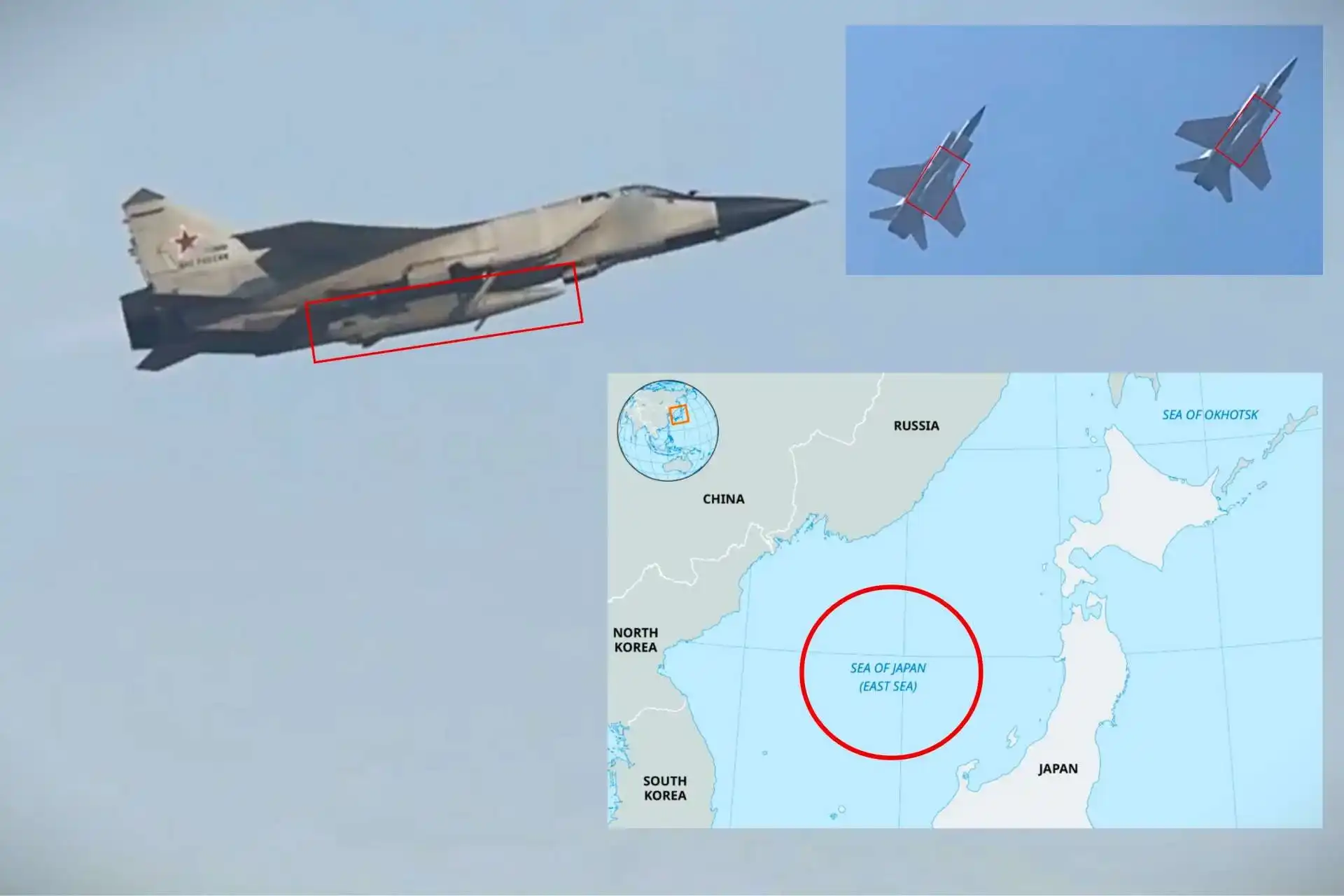
Russia’s latest aerial maneuver over the Sea of Japan has drawn sharp attention across defense circles, not because of any immediate escalation, but due to the deliberate combination of platform, weapon system, and geography. On March 17, 2026, MiG-31 aircraft armed with Kh-47M2 Kinzhal hypersonic missiles conducted a scheduled sortie over neutral waters, accompanied by in-flight refueling drills—a pairing that reveals far more than a routine training mission.
The operation was officially framed as compliant with international airspace regulations, yet its implications extend deep into the evolving dynamics of maritime strike doctrine in Northeast Asia. By showcasing both extended operational endurance and long-range strike capability, the flight underscored a strategic message: Russia is reinforcing its ability to project high-speed precision threats across contested maritime corridors.
This was not merely an aviation exercise. It was a calculated demonstration of how air-launched hypersonic systems, when paired with high-performance interceptors, can reshape engagement timelines in one of the world’s most densely monitored regions.
MiG-31 and Kinzhal: A High-Speed Strike Pairing
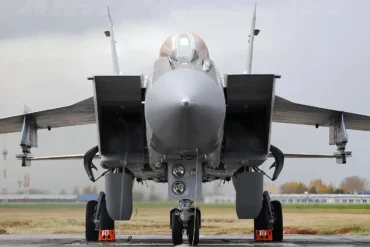
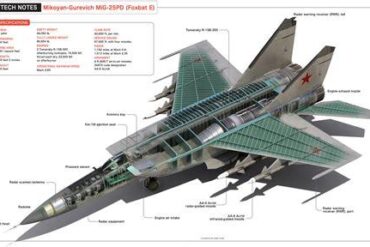
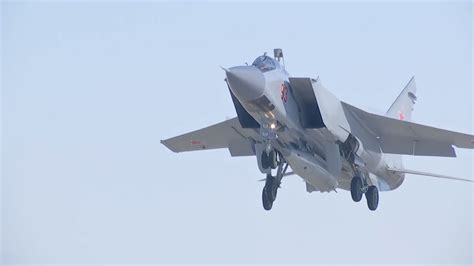
At the center of this operation is the MiG-31 “Foxhound”, a long-range interceptor originally developed during the Cold War but continuously adapted for modern warfare. Known for its exceptional speed, high-altitude performance, and extended patrol range, the aircraft provides an ideal launch platform for the Kinzhal missile, which depends heavily on initial launch conditions.
The MiG-31’s ability to reach supersonic speeds exceeding Mach 2.5 and operate at extreme altitudes allows the Kinzhal to begin its trajectory with significant kinetic energy. This translates into reduced reaction time for defenders and increased difficulty in interception. Unlike traditional ballistic missile launches from fixed positions, an air-launched system introduces mobility and unpredictability, complicating detection and response strategies.
The Kinzhal itself has been described by Russian sources as capable of reaching speeds of up to Mach 10, with a range exceeding 2,000 kilometers. It is designed to strike high-value targets, including fortified infrastructure, airbases, missile defense systems, and naval assets. When deployed from a MiG-31, it becomes part of a rapid strike architecture that prioritizes speed, surprise, and stand-off engagement.
Aerial Refueling: Expanding the Engagement Envelope
One of the most significant aspects of the March 17 sortie was the inclusion of in-flight refueling operations. While often overlooked in public discussions, aerial refueling fundamentally transforms the operational reach and flexibility of combat aircraft.
By extending flight duration, refueling allows MiG-31 crews to operate far beyond their home bases, maintain prolonged patrols, and select optimal launch points. This effectively enlarges the “engagement envelope”, making it far more difficult for adversaries to predict where a missile might be launched.
In practical terms, this means that a Kinzhal-equipped MiG-31 could approach a target area from multiple vectors, delay its strike timing, or reposition mid-mission based on evolving tactical conditions. For regional defense planners, this introduces a layer of uncertainty that demands broader surveillance coverage and faster decision-making cycles.
Strategic Geography: Why the Sea of Japan Matters
The Sea of Japan is not just a body of water—it is a strategic crossroads bordered by Russia, Japan, and the Korean Peninsula. It connects to the wider Pacific through narrow and highly significant passages such as the Tsushima Strait, Tsugaru Strait, and La Pérouse Strait.
These chokepoints are critical for both commercial shipping and military movement, making them focal areas for surveillance and defense. Operating over neutral waters in this region allows aircraft like the MiG-31 to maximize operational ambiguity while remaining within legal frameworks.
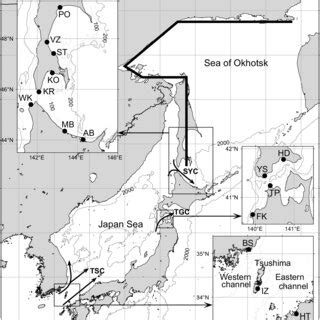
In such a constrained environment, the presence of a high-speed, missile-armed aircraft introduces complex challenges. A launch could theoretically target assets across a wide arc, forcing defenders to distribute their resources rather than concentrating them in predictable zones.
This is particularly relevant for Japan’s integrated air and missile defense systems, as well as U.S. forces operating in the region. The ability to project power from neutral airspace complicates traditional defensive postures that rely on fixed threat vectors.
Operational Doctrine: Speed Over Presence
The MiG-31–Kinzhal combination reflects a broader shift in military thinking—from persistent presence to rapid strike capability. Unlike traditional fighter patrols designed to control airspace, this pairing is optimized for quick ingress, weapon release, and immediate withdrawal.
The emphasis is not on dogfighting or sustained engagement but on compressing the decision-making timeline of the opponent. By the time a launch is detected, the window for interception may already be closing.
This approach aligns with Russia’s broader investment in hypersonic weapons, which are intended to bypass or overwhelm existing missile defense systems. The goal is to create a scenario where speed and maneuverability outpace detection and response, effectively redefining the balance between offense and defense.
Regional Security Implications
The timing and location of this sortie carry clear implications for the security environment in Northeast Asia. The region is already characterized by overlapping military developments, including Japan’s defense modernization, U.S. force deployments, and North Korea’s missile programs.
By conducting a high-profile mission involving one of its most advanced strike systems, Russia is signaling its intent to remain an active and capable player in the region. The inclusion of aerial refueling further suggests a focus on sustained operational readiness, rather than symbolic demonstrations.
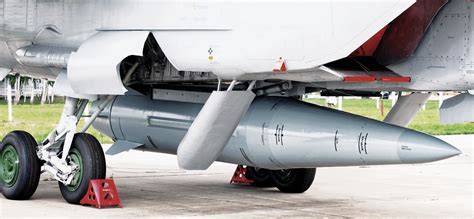
For neighboring countries, this raises important questions about early warning systems, interceptor capabilities, and the resilience of existing defense networks. Hypersonic weapons, by their nature, challenge traditional models of interception, requiring new approaches to tracking, targeting, and engagement.
A Message Beyond Routine Operations
Although officially described as a routine flight, the March 17 mission functions as a strategic signal. It demonstrates not only the technical capabilities of the MiG-31 and Kinzhal but also the operational concepts that underpin their use.
The combination of high-speed delivery, extended range, and maritime positioning highlights a clear emphasis on flexible, long-range strike options. It also reinforces the idea that modern aerial warfare is increasingly about creating uncertainty—forcing adversaries to account for multiple potential threats across wide مناطق.
In this context, even a single sortie becomes a message of deterrence and capability, illustrating how Russia can project power into critical maritime zones without crossing into escalation.
The Future of Maritime Strike Dynamics
The evolution of systems like the MiG-31–Kinzhal pairing points toward a future where air-launched hypersonic weapons play a central role in maritime strategy. As detection technologies improve and defense systems adapt, the interplay between offense and countermeasure will continue to evolve.
What remains clear is that mobility, speed, and unpredictability are becoming defining characteristics of modern strike operations. Aircraft are no longer just platforms—they are dynamic launch systems capable of reshaping the battlefield in real time.
The March 17 flight over the Sea of Japan encapsulates this shift. It is not simply about where the aircraft flew, but about what that flight represents: a refined approach to long-range strike warfare, where geography, technology, and timing converge to create a powerful strategic effect.
As regional actors continue to monitor and respond, the presence of Kinzhal-armed MiG-31s in such a sensitive corridor ensures that the balance of power in Northeast Asia remains both dynamic and closely contested.