On January 5, 2026, the Philippine government made a significant stride in maritime security by inviting Japan’s Mitsubishi Shipbuilding Co. to construct five new Teresa Magbanua-class patrol vessels for the Philippine Coast Guard (PCG). This development marks the beginning of Phase III of the Maritime Safety Capability Improvement Project (MSCIP), a robust bilateral maritime collaboration between the Philippines and Japan, propelled by rising geopolitical tensions and the need for enhanced regional maritime coverage.
Japan-Philippines Maritime Partnership Reaches New Heights
The formal bid opening, conducted by the Philippine Department of Transportation, signals Manila’s commitment to transitioning from diplomatic approvals to industrial execution. This strategic invitation to Mitsubishi is rooted in trust built through two previous procurement phases, where Japan delivered a total of twelve multi-role vessels—ten smaller Parola-class ships and two large Teresa Magbanua-class vessels.
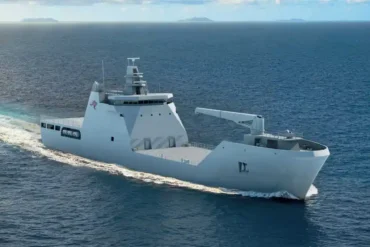
Phase III is particularly critical, not just because of the number of ships—but due to their size, range, and operational scope. Each of the five new Multi-Role Response Vessels (MMRVs) will measure approximately 97 meters, mirroring the existing Teresa Magbanua-class vessels already deployed in critical offshore operations. These patrol ships are envisioned to expand and reinforce PCG presence across the Philippines’ vast Exclusive Economic Zone (EEZ), particularly amid rising maritime tensions in the West Philippine Sea.
MSCIP Phase III: Building on a Decade of Strategic Modernization
The current initiative builds upon over a decade of capacity-building under the MSCIP, which began with the delivery of ten 44-meter patrol vessels in 2013 under Phase I. These initial acquisitions significantly elevated coastal patrol and disaster response capabilities. Phase II advanced these efforts in 2016 by introducing two 97-meter Teresa Magbanua-class vessels, the largest PCG ships to date, designed for sustained offshore coverage.
Now, Phase III doubles down on this approach by adding five more large ships, enhancing patrol persistence, geographic coverage, and fleet commonality. The vessels are intended to follow a unified configuration to streamline maintenance, training, and logistics pipelines. This not only ensures seamless interoperability but also improves long-term fleet sustainability over a 30-year service life.
Design and Capability: Enhanced Offshore Operations and Regional Deterrence
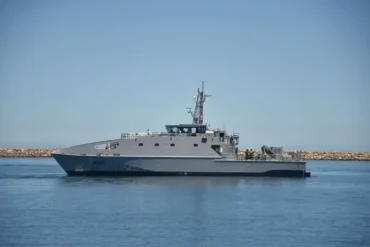
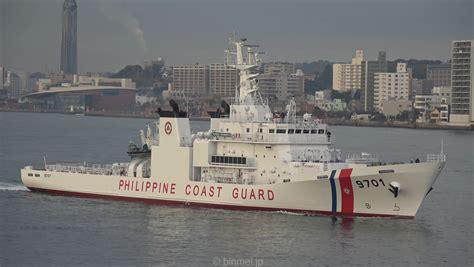
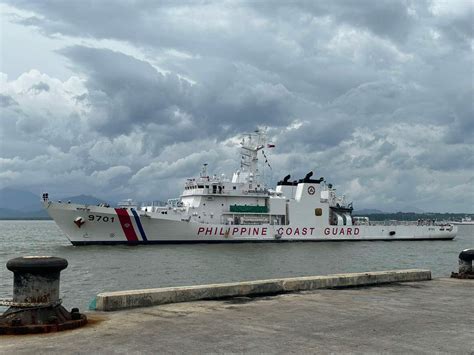
The vessels under Phase III will be closely modeled after the BRP Teresa Magbanua (MRRV-9701) and BRP Melchora Aquino (MRRV-9702)—both derived from the Japanese Kunigami-class patrol ships but uniquely tailored to meet Philippine maritime needs. Each ship will be equipped with:
- Length: 96.6 meters
- Beam: Approximately 11.5 meters
- Gross Tonnage: ~2,260 GT
- Propulsion: Twin diesel engines totaling 13,200 kW
- Speed: Up to 24 knots
- Range: Over 4,000 nautical miles
- Endurance: More than 15 continuous days at sea
What distinguishes the Philippine variant is its mission-focused layout—expanded crew accommodations, dedicated mission spaces, and a central hangar supporting Airbus H145 helicopters, thanks to a split funnel design. While the vessels omit Japan’s autocannons due to export regulations, they are configured for future armament upgrades, including 30 mm main guns, enhancing law enforcement and sovereignty assertion capabilities.
Strategic Imperatives: The Push for Offshore Coverage
The drive toward Phase III accelerated between 2022 and 2024, as strategic assessments revealed the inadequacy of just two large vessels to provide consistent coverage across the Philippines’ extended maritime jurisdiction. The country’s EEZ and continental shelf require not only presence but persistent operational patrols, especially in contested areas like the Scarborough Shoal and Spratly Islands.
In response, the National Economic and Development Authority (NEDA) approved Phase III in November 2023, which was followed by the signing of a Japanese Official Development Assistance (ODA) loan agreement in June 2024, valued at ¥64.38 billion (₱24.5 billion). The total project cost is estimated at ₱29.3 billion, with the remainder funded by the Philippine government. These figures reflect not just construction costs but also integrated logistics support, crew training, and a preventive maintenance framework modeled after earlier project phases.
Industrial Commitments and Bidding Structure
Mitsubishi Shipbuilding, the frontrunner in this endeavor, is expected to deliver the vessels under a single consolidated program, encompassing design finalization, construction, systems integration, sea trials, crew preparation, and handover. This turnkey package underscores the PCG’s intention to streamline fleet entry and operational readiness.
To ensure commitment and industrial capacity, interested parties must meet significant bidding requirements:
- Access fee for bidding documents: ₱50,000
- Bid security requirement: ¥841.845 million
- Submission deadline: February 19, 2026
The project prioritizes technical compliance before financial proposals are evaluated, highlighting Manila’s focus on quality, reliability, and long-term viability over simple cost considerations.
Operational Experience: Proving the Teresa Magbanua-Class Value
Since their commissioning in 2022, the two Teresa Magbanua-class vessels have been pivotal in asserting Philippine sovereignty and supporting humanitarian missions. For example, BRP Teresa Magbanua has:
- Conducted long-duration patrols in the West Philippine Sea
- Issued radio challenges to foreign intrusions near Scarborough Shoal
- Supported civilian resupply operations in contested zones
- Undertaken humanitarian missions and international port calls, such as in Kagoshima, Japan (June 2025)
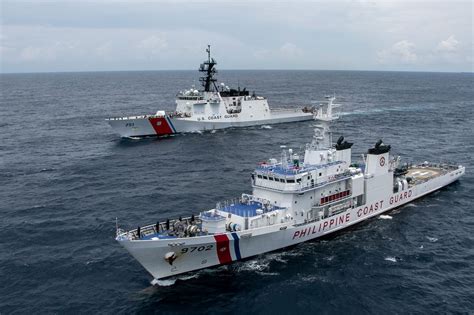
Meanwhile, the BRP Melchora Aquino has engaged in joint maritime activities with the U.S. Coast Guard and Philippine Navy, operating across regions like the Sulu Sea, often accompanied by aerial surveillance assets and surface combatants.
These missions underscore the vessels’ strategic value, enabling the PCG to respond to threats, assert control, and coordinate regionally. The platform’s success has made it a template for future PCG modernization, justifying the expansion under Phase III.
Long-Term Outlook: Regional Security and Industrial Diplomacy
The construction of five additional Teresa Magbanua-class patrol ships by a trusted Japanese partner deepens defense-industrial ties between Manila and Tokyo, serving both strategic deterrence and development diplomacy. It also positions the Philippines to evolve into a more capable regional maritime actor, with a fleet that blends Japanese engineering excellence and Philippine operational doctrine.
Moreover, this project signals that the Philippines is investing seriously in maritime self-reliance, addressing critical capability gaps with repeatable, sustainable platforms. The resulting seven-vessel offshore patrol fleet will not only secure national waters but also project stability across Southeast Asia, especially in the face of assertive regional actors.
As the 2026 bidding progresses and Mitsubishi moves toward potential contract execution, the Teresa Magbanua-class stands as a pillar of modern Philippine maritime strategy—a platform proven in operations, forged through cooperation, and poised for expansion in the coming years.