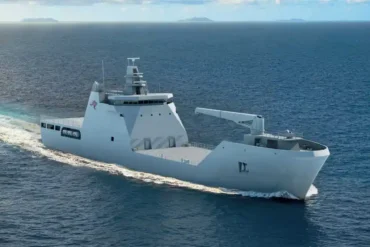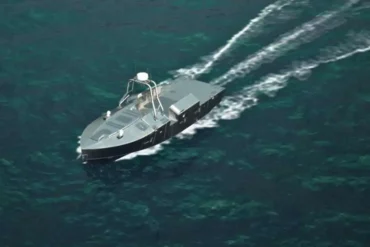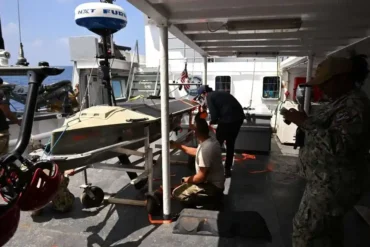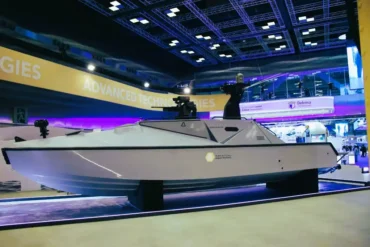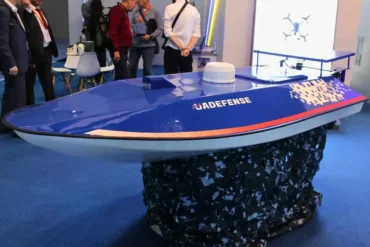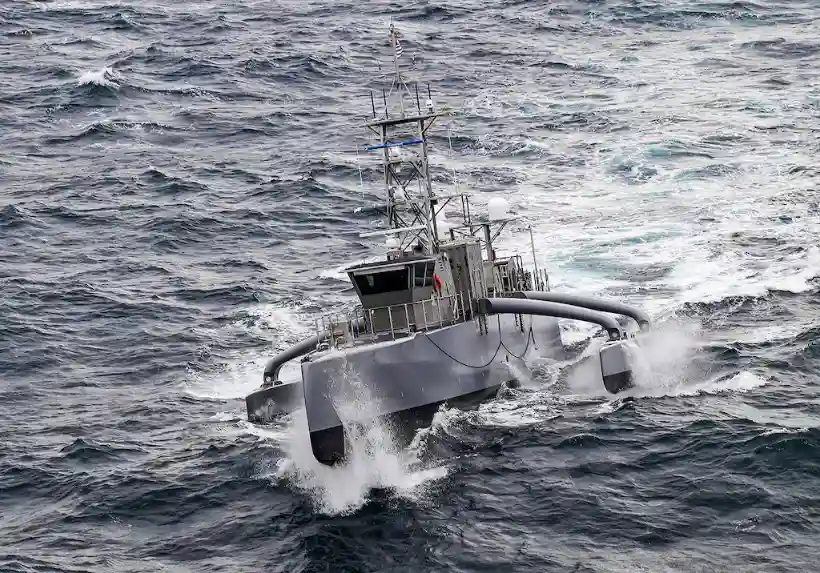
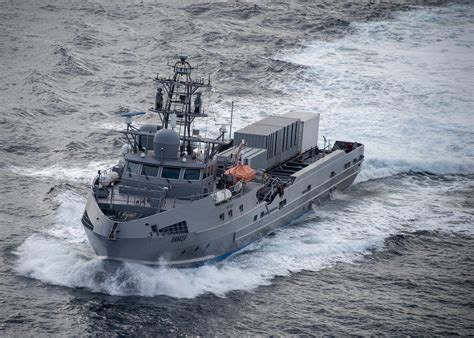
The U.S. Navy has officially unveiled its Modular Attack Surface Craft (MASC) program, a groundbreaking initiative aimed at developing a new class of fast attack unmanned surface vessels (USVs) capable of carrying long-range missile systems and other containerized payloads across vast maritime distances. This bold move underscores the Navy’s strategic pivot toward adaptable, cost-effective, and rapidly deployable platforms in the face of escalating global naval threats and persistent shipbuilding challenges.
A New Era of Modular Unmanned Warfare
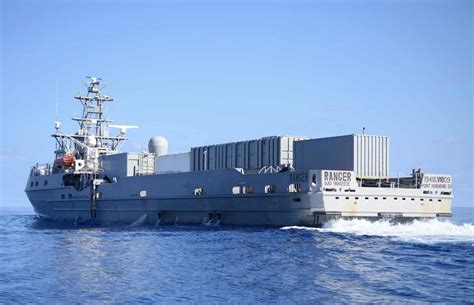
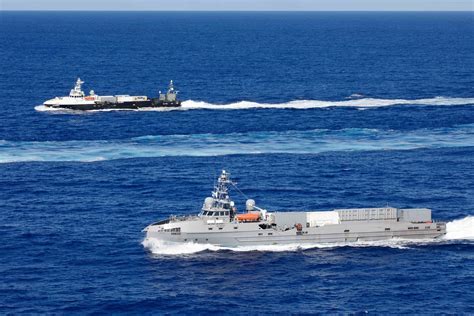
The solicitation for the MASC program, released on July 28, 2025, calls for a rugged, flexible, and high-capacity unmanned surface vessel designed to transport the equivalent of more than four 40-foot containers. This cargo capacity roughly matches the size of the Mark 70 Mod 1 Payload Delivery System, a containerized Navy anti-ballistic missile platform, signaling the service’s intent to extend lethal firepower across distributed and unmanned platforms.
By leveraging containerized missile systems, the Navy aims to bolster its strike capacity without the need for new large warships — an approach that can reduce costs, ease logistical burdens, and expand deployment options. The Navy describes the MASC concept as one that will “leverage cutting-edge technologies and modular design principles to create adaptable and resilient solutions that can effectively counter evolving threats.”
Why Modular Attack Surface Craft Matters
In recent years, the Navy has faced stalled shipbuilding programs, rising costs, and delays in fielding new surface combatants. The MASC program is designed to counter these issues by offering “non-exquisite” vessels — platforms that are easily built, rapidly repaired, and compatible with allied naval operations. This adaptability could allow for quick fleet augmentation, particularly in forward-operating areas where traditional shipbuilding infrastructure is unavailable.
Furthermore, by prioritizing modularity, these USVs could switch between mission sets, from missile launch platforms to electronic warfare systems or intelligence, surveillance, and reconnaissance (ISR) roles. This flexibility addresses the unpredictable nature of modern maritime warfare, where threats range from peer adversary fleets to dispersed unmanned systems.
Aligning with the Navy’s Long-Term Strategy
The push for the MASC program comes as the Navy’s fiscal year 2026 budget reflects an unprecedented investment in autonomous platforms. The budget allocates $203 million for surface unmanned systems, $715 million for aerial systems, and $668 million for underwater systems, signaling a multi-domain commitment to robotic warfare capabilities.
These investments align with a broader Department of Defense emphasis on “distributed lethality,” which involves dispersing firepower across numerous platforms — manned and unmanned — to complicate enemy targeting and enhance operational resilience. By deploying unmanned missile carriers, the Navy could maintain a persistent, forward-deployed strike capability without placing crews at risk.
Overcoming Persistent Shipbuilding and Maintenance Challenges
The Navy’s struggles in shipbuilding and maintenance have been well-documented. Shipyards, averaging over 107 years old, face significant modernization needs. In this context, the MASC initiative could help offset fleet readiness issues by fielding low-cost, easy-to-maintain vessels that do not require the same infrastructure or manpower as traditional warships.
In June 2025, the Naval Sea Systems Command (NAVSEA) took steps to expedite maintenance by implementing 3-D printing processes for critical destroyer components. These innovations, paired with modular unmanned vessels, could fundamentally transform how the Navy addresses repair cycles and fleet readiness.
Interoperability with Allied Forces
A key design requirement for the MASC program is compatibility with international allies. This aligns with the Navy’s growing emphasis on joint and coalition operations, particularly in contested regions such as the Baltic Sea, where robotic vessels recently participated in large-scale warfighting exercises.
The modular approach also allows partner nations to integrate their own systems into MASC platforms, facilitating deeper operational cooperation. This could prove invaluable in scenarios requiring rapid collective responses, such as deterring aggression in the South China Sea or supporting NATO’s eastern flank.
Lessons from Previous USV Deployments
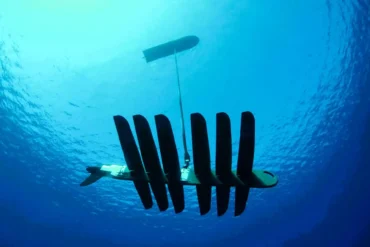
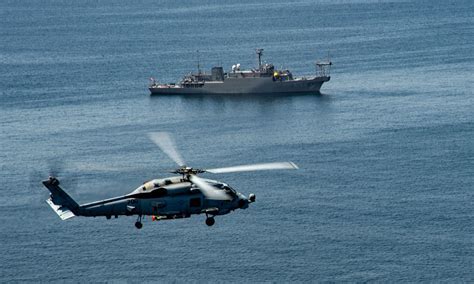
The Navy has been experimenting with unmanned surface platforms for several years, most notably through exercises such as the Unmanned Systems Integrated Battle Problem, where vessels like the Seahawk Medium Displacement Unmanned Surface Vessel have been deployed for reconnaissance and limited offensive operations. These trials have provided critical insights into autonomy software, communications systems, and integration with manned fleets, all of which will inform the MASC program’s development.
Potential Roles and Mission Sets for MASC
While the solicitation highlights containerized missile payloads, the modular design opens the door for diverse mission applications, including:
- Long-range strike operations: Deploying cruise or hypersonic missiles from unmanned platforms.
- Electronic warfare: Carrying jamming and countermeasure systems.
- ISR operations: Hosting advanced sensor suites for persistent maritime domain awareness.
- Mine countermeasures: Deploying specialized payloads for clearing sea lanes.
By adopting this multi-mission framework, the Navy can quickly reconfigure USVs to meet emerging operational demands without costly redesigns.
The Road Ahead
Although the Navy’s MASC program is still in its early stages, its implications for naval warfare are profound. By integrating containerized payloads with autonomous platforms, the Navy is not only addressing immediate gaps in strike capacity but also laying the foundation for a more agile, distributed, and resilient fleet.
As tensions rise in key maritime regions and adversaries field increasingly sophisticated naval capabilities, the ability to project power through unmanned vessels could provide a decisive strategic advantage. If successful, the MASC program may become a cornerstone of U.S. maritime dominance in the coming decades.
Conclusion
The Modular Attack Surface Craft program represents more than a procurement effort — it is a paradigm shift in how the U.S. Navy envisions future warfare. By embracing modularity, unmanned systems, and distributed lethality, the Navy is preparing for an era where flexibility, rapid deployment, and collaborative operations will define maritime power. As development progresses, the MASC initiative will be closely watched, both by allies eager to adopt similar technologies and by adversaries seeking to counter this new approach to naval warfare.