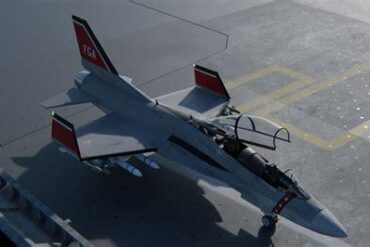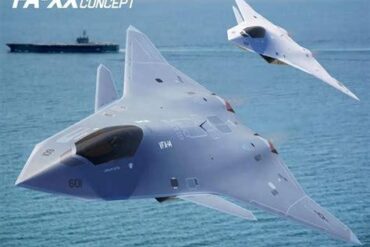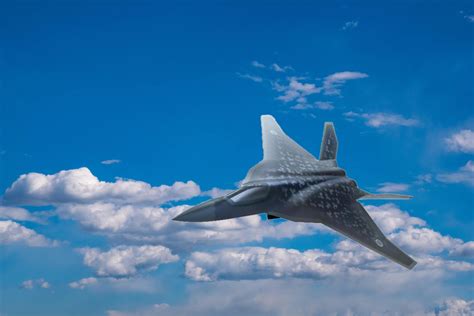
The Mitsubishi F-X, often referred to unofficially as the F-3, marks a transformative moment in Japan’s defense landscape. Developed by Mitsubishi Heavy Industries (MHI), this ambitious sixth-generation stealth fighter is designed to replace the aging F-2 by the mid-2030s. The program is the centerpiece of Japan’s renewed effort to rejuvenate its domestic aerospace industry while responding to regional security challenges. It represents not only a technical leap forward but also a symbol of strategic autonomy.
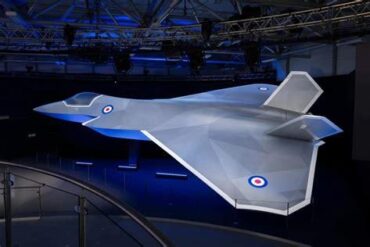
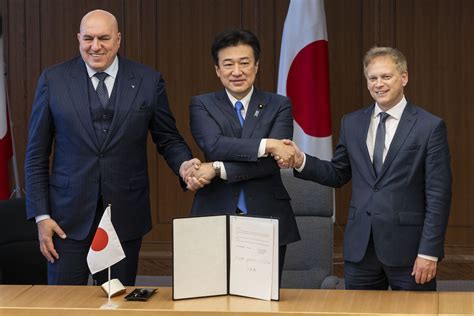
MHI was officially selected as the lead developer in October 2020. The program’s global significance expanded on December 9, 2022, when Japan merged its F-X program with the UK’s BAE Tempest and Italy’s sixth-generation initiative, forming the Global Combat Air Programme (GCAP). Under this new multinational framework, Japan retains control over airframe design, while IHI Corporation develops the engines and Mitsubishi Electric is responsible for onboard systems. This partnership strategically distributes technology development and cost burdens across multiple industrial ecosystems.
Origins and the Impact of the F-22 Export Ban
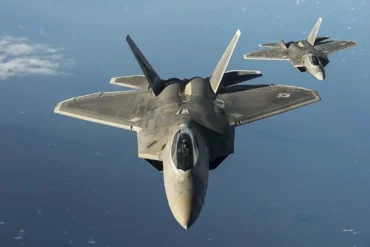
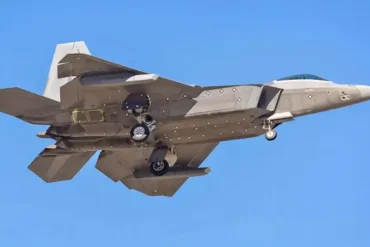
Japan’s decision to develop its own next-generation fighter originated from the United States’ refusal to export the F-22 Raptor. Citing the Obey Amendment of 1997, which restricts advanced military technologies from being shared, the US forced Japan to explore self-reliant alternatives. In response, Japan’s Ministry of Defense initiated studies between 2009 and 2010 to conceptualize a replacement for the F-2. The resulting vision, the i³ Fighter (Informed, Intelligent, Instantaneous), imagined a fighter surpassing the fifth-generation benchmark through radical advancements in electronic warfare, data fusion, and propulsion.
The Role of the X-2 Shinshin Demonstrator
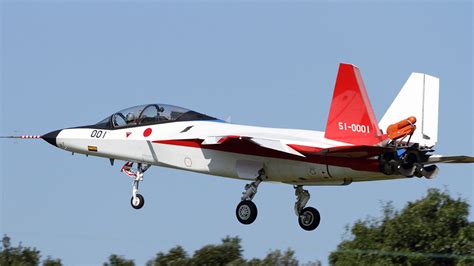
Central to validating these concepts was the Mitsubishi X-2 Shinshin. This testbed aircraft flew its first mission in April 2016, and testing extended through March 2018. The X-2 matured crucial stealth, avionics, and thrust vectoring technologies that now serve as foundational pillars of the F-X. The demonstrator’s development proved Japan’s ability to fabricate radar-evading structures and integrate flight control systems with state-of-the-art electronics.
Research Projects Supporting Development
From 2009 through 2020, Japan’s defense sector launched an expansive range of research projects. These included:
- High-temperature engine components tested between 2014 and 2015
- Aerodynamics studies to enable stealthy internal weapon deployment
- Integrated fire control systems linking manned and unmanned platforms
- Active electronic warfare defenses using gallium nitride semiconductors
- Electromagnetic weapons and high-resolution infrared imaging sensors
- Weight-saving designs using CFRP composites and advanced stress analysis
- Radome development for stealth performance and radar transparency
These long-term R\&D efforts laid the groundwork for every major subsystem in the F-X, reducing technological risks before full-scale development.
International Collaboration and Strategic Positioning
The Japanese government actively weighed foreign collaborations, engaging with Lockheed Martin, BAE Systems, Boeing, and Northrop Grumman. By 2018, however, Japan ruled out importing derivative fighters. Instead, it emphasized a homegrown platform with modular openness for selective partnerships.
This led to the formal creation of a Japan-led development program in 2019. Shortly afterward, a team was assembled under the Acquisition, Technology & Logistics Agency (ATLA), with MHI as lead contractor. By 2020, conceptual design was underway, backed by funding for digital mockups and simulations. Discussions with the UK began in earnest, culminating in the formation of GCAP in late 2022.
Design Philosophy and Structural Innovations
The F-X adopts a twin-engine layout optimized for air superiority and long-range missions. Often described as physically larger than the F-22, the aircraft is designed to accommodate higher fuel capacity and a heavier weapons load. Engineers prioritized stealth shaping from the outset, implementing serpentine inlets, internal weapons bays, and an “integrated/fastenerless structure” built from composite materials.
Electric actuators replace traditional hydraulics, simplifying internal layout while enhancing stealth and reliability. These design choices reduce structural mass by over 11% and labor hours by 66%. Innovative heat management systems using vapor-cycle cooling enable avionics to perform efficiently in confined stealth-configured interiors.
Avionics and Sensor Fusion Systems
The F-X will feature a highly networked sensor suite integrating:
- AESA radar based on the J/APG-2
- Passive RF sensors for non-emitting detection
- Infrared search and track (IRST) capabilities
- GaN-based ESM/ECM self-protection
These systems will link through real-time sensor fusion, allowing the F-X to act as both a combat platform and an airborne command node. Additionally, the RF self-defense network will employ wing and tail antennas to detect and jam threats from air-to-air and surface-to-air missiles.
Cockpit Interface and Pilot Integration
A helmet-mounted display provides a wide field of view, 3D audio, voice recognition, and multi-color symbology. This system reduces pilot workload while enhancing spatial awareness. The cockpit itself will be built for future compatibility, designed around a digital architecture that supports ongoing upgrades.
Stealth Measures and Electromagnetic Countermeasures
Beyond physical shaping, the F-X employs electromagnetic stealth enhancements. Radar-absorbing materials coat internal ducting, and carbon-based electromagnetic absorbers halve radar return signatures. Metamaterial layers and plasma-based stealth antennas further reduce detectability while maintaining sensor performance. Passive detection modes are prioritized, minimizing emissions that adversaries could exploit.
Powerplant: XF9 Engine Technology
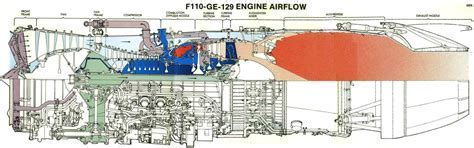
The IHI XF9 engine is engineered for both raw performance and electrical generation. With a military thrust of 11 tons and an afterburner rating exceeding 15 tons, it provides competitive output among next-gen engines. Each unit also generates 180 kW of electrical power, totaling 360 kW—critical for operating energy-intensive systems like directed-energy weapons.
Its design incorporates a reduced-diameter intake, high-temperature turbines (1800 °C), and three-dimensional thrust vector nozzles, which allow 20° deflection for superior maneuverability and stealth. A joint demonstrator program with Rolls-Royce is underway to refine engine technologies across GCAP members.
Armament and Advanced Weapons
Initial loadouts include the ASM-3 anti-ship missile, but the F-X’s weapons bay is modular and designed to accommodate future munitions. Notably, it will feature a microwave-based weapon that uses the AESA radar to direct electromagnetic pulses toward incoming missiles, neutralizing them mid-flight.
Integration of Unmanned Wingmen
The F-X program is closely tied to the development of autonomous support aircraft, commonly referred to as “loyal wingmen.” These drones will fulfill two roles: reconnaissance with sensor payloads and combat with munitions. They share a common fuselage but are optimized for their respective missions. Full integration with the F-X is planned by the 2030s.
Strategic Significance and Domestic Industry Implications
The F-X carries enormous significance beyond battlefield utility. Domestically, it aims to rejuvenate Japan’s aerospace sector, historically sidelined by reliance on US-licensed production. The F-2’s troubled co-development model underscored the limitations of foreign dependency, pushing lawmakers to support full-spectrum domestic involvement.
However, this ambition comes with risks. Japan must absorb the high financial costs and overcome technological gaps, particularly in mass production and systems integration. Yet if successful, the F-X and GCAP will secure Japan’s position as a global aerospace innovator and restore its defense industrial base.
Conclusion
The Mitsubishi F-X project is not just the development of a new fighter jet—it is a comprehensive reimagining of Japan’s defense and industrial capabilities. Through a combination of homegrown innovation, rigorous research, and strategic international collaboration, the F-X promises to place Japan at the forefront of sixth-generation air power. Its success will signal a new era for the nation’s military aviation, both in the skies and on the world stage.