Historical Context & Development Timeline
Origins of the F-22 (1970s–1980s)
The F-22 Raptor, developed by Lockheed Martin in collaboration with Boeing and General Dynamics, represents a groundbreaking achievement in modern fighter aviation. Its origins trace back to the Cold War, when the United States sought to counter advanced Soviet aircraft like the MiG-29 and Su-27. The U.S. Air Force (USAF) initiated the Advanced Tactical Fighter (ATF) program in the late 1970s to ensure air superiority in future conflicts. Initially, the program emphasized air-to-ground capabilities, but by 1982, it pivoted to focus on air superiority in response to evolving Soviet threats.
Key requirements for the ATF included stealth technology, superior maneuverability, and next-generation avionics. These features were designed to surpass fourth-generation fighters like the F-15 Eagle and F-16 Fighting Falcon.
Prototype Competition (1980s–1991)
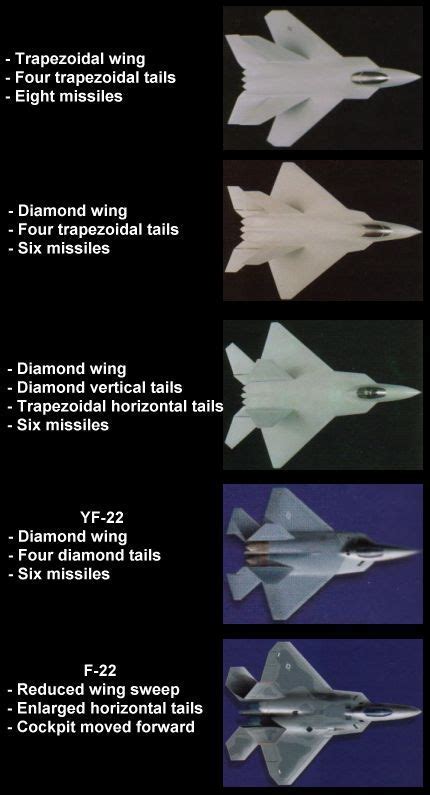
The ATF program led to a fierce competition between two prototypes: the YF-22 (designed by Lockheed Martin) and the YF-23 (designed by Northrop Grumman). In 1986, both aircraft began rigorous testing, with evaluations focusing on stealth performance, agility, and avionics integration.
By 1991, the YF-22 emerged victorious, largely due to its well-balanced stealth, agility, and advanced avionics. The USAF concluded that the YF-22 provided a more versatile combat platform, leading to full-scale development and refinement of what would become the F-22 Raptor.
First Flight & Production Timeline
The first prototype of the F-22 flew on September 7, 1997, showcasing its groundbreaking supercruise capability—the ability to sustain supersonic speeds without afterburners. The aircraft officially entered service in December 2005 as the world’s first fifth-generation stealth fighter.
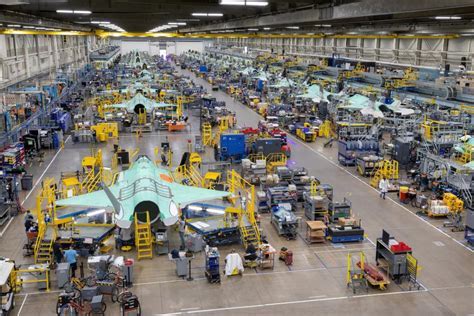
Despite its technological prowess, the F-22 faced budget constraints and cost overruns, leading to an abrupt halt in production by 2011. Only 187 operational units were built, far fewer than the originally planned 750 units. The program’s high cost—exceeding $67 billion—was a major factor in this decision.
Design & Technological Innovations
Stealth Capabilities
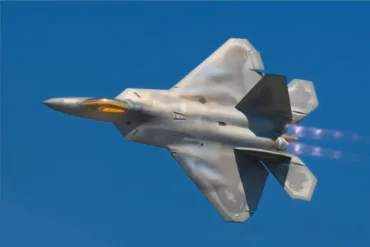
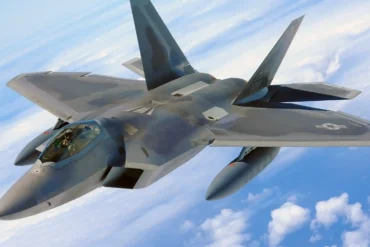
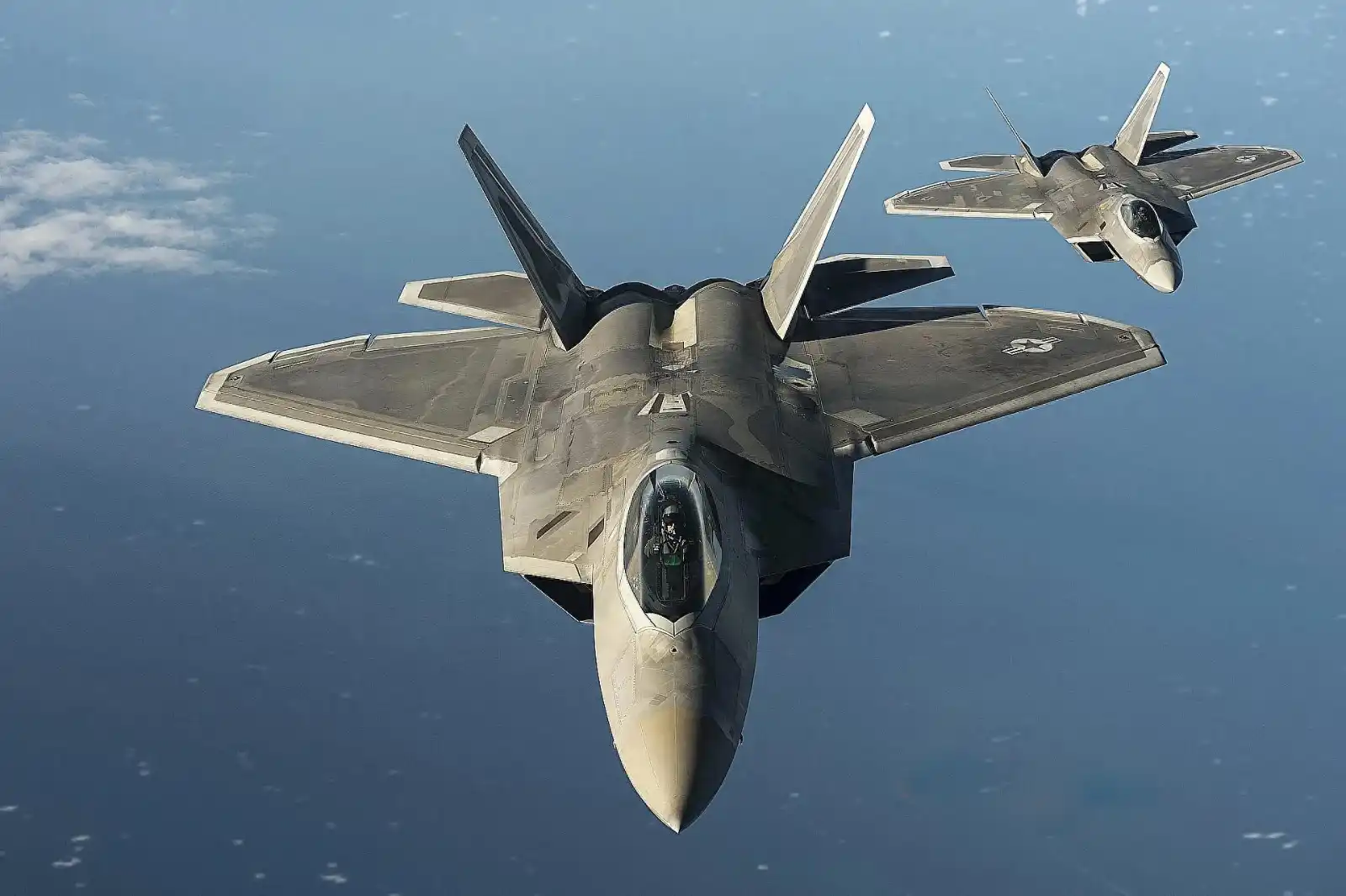
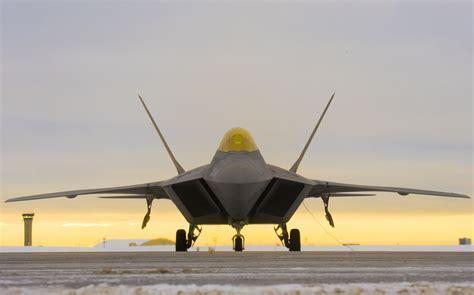
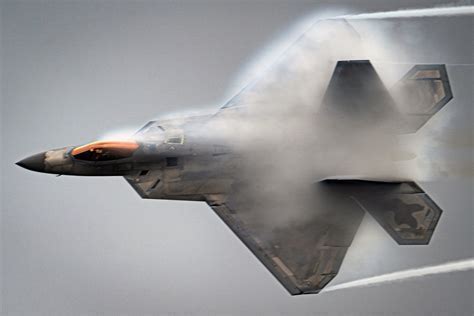
The F-22 Raptor is one of the stealthiest aircraft ever built. Its diamond-shaped airframe, S-shaped engine inlets, and radar-absorbent materials reduce its radar cross-section (RCS) to as low as 0.001–0.08 m², making it nearly invisible to enemy radar.
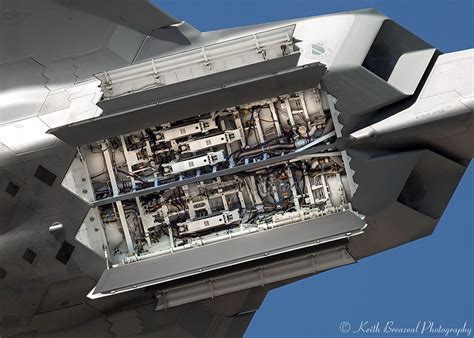
To maintain stealth while remaining fully combat-ready, the F-22 stores its weapons in internal bays, carrying AIM-120 AMRAAM and AIM-9 Sidewinder missiles without compromising its low-observability profile.
Propulsion & Performance
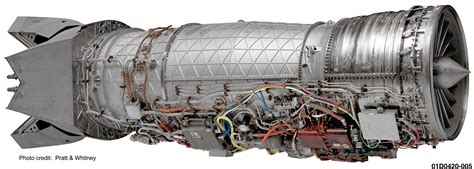
The aircraft is powered by two Pratt & Whitney F119-PW-100 engines, each producing 35,000 lbf of thrust. These engines enable supercruise at Mach 1.5+, allowing the F-22 to fly faster than previous fighters without using fuel-intensive afterburners.
Additionally, thrust-vectoring nozzles provide exceptional agility, allowing maneuvers like 60-degree angles of attack and tight 9G turns, giving the F-22 unmatched dogfighting capability.
Avionics & Sensors
The AN/APG-77 AESA radar provides long-range target tracking while remaining difficult to detect. Complementing this, the AN/ALR-94 electronic warfare suite helps counter enemy signals.
One of the Raptor’s most groundbreaking features is sensor fusion, which integrates data from multiple sources—radar, infrared, and communication links—providing unparalleled situational awareness.
Strategic Impact & Legacy
Redefining Air Superiority
In simulated combat exercises, the F-22 consistently dominates fourth-generation fighters like the F-15 and Su-27, achieving kill ratios of 144:0 against F-16s. Its combination of stealth, speed, and sensor fusion makes it nearly invulnerable to traditional air threats.
Limitations & Operational Challenges
Despite its strengths, the F-22 has notable limitations. Its range of 600 nautical miles restricts deployment without aerial refueling. Additionally, high maintenance costs and an average of 30 maintenance hours per flight hour have hindered widespread deployment.
Influence on Future Fighter Programs
The technologies developed for the F-22 laid the foundation for the F-35 Lightning II and are shaping sixth-generation fighter concepts, emphasizing AI-driven combat, hypersonic capabilities, and network-centric warfare.
Controversies & Challenges
Cost Overruns & Production Cuts
Initially envisioned as a 750-unit fleet, the program was curtailed due to ballooning costs exceeding $1.2 billion per unit (including R&D expenses). The final tally of 187 Raptors remains far below initial projections.
Export Ban & Limited Deployment
Under the 1997 Obey Amendment, the U.S. government prohibited F-22 exports to allies, fearing that its stealth technology could be compromised. This decision limited its role in coalition operations and joint military strategies.
FAQ
Why was the F-22 production halted?
Production was halted in 2011 due to budget constraints, high maintenance costs, and shifting defense priorities. The post-Cold War military landscape reduced the need for such an advanced air-superiority fighter, and funds were redirected toward the F-35 Lightning II program.
How does the F-22 compare to the F-35?
The F-22 excels in air superiority, featuring superior stealth, speed, and maneuverability. The F-35, in contrast, is a multi-role stealth fighter designed for strike missions, electronic warfare, and intelligence gathering, making it more versatile but less dominant in dogfights.
Can the F-22 Raptor be upgraded?
Yes, despite its halted production, ongoing software and hardware upgrades aim to keep the F-22 combat-relevant. These include enhanced sensor fusion, upgraded radars, and improved electronic warfare capabilities to maintain its technological edge over emerging threats.