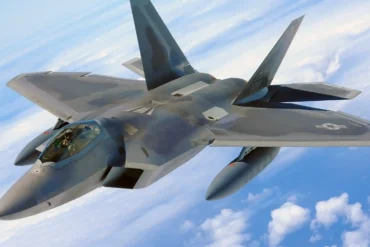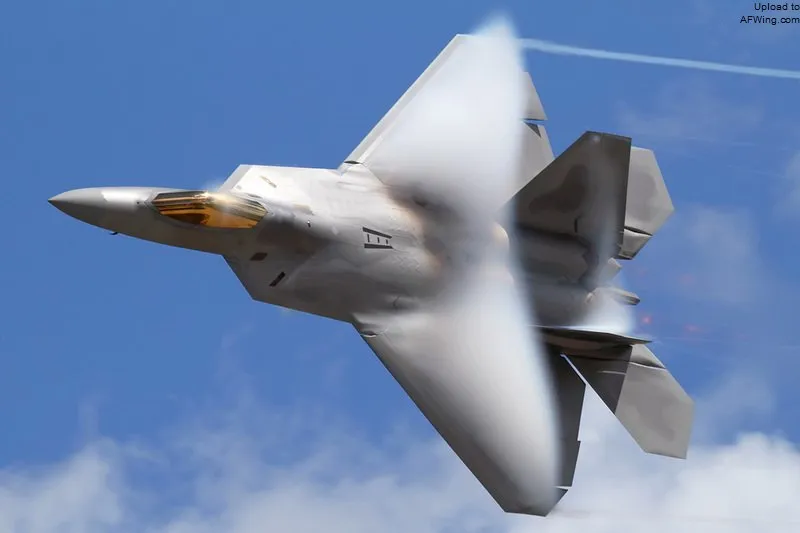
The F-22 Raptor is renowned for its extraordinary performance in various aspects of aerial combat, one of the most critical being its turn rate. This aspect of the aircraft’s agility is essential in close-range dogfights, where quick, sharp turns can determine the outcome of an engagement. In this article, we provide a detailed examination of the F-22’s turn rate, its capabilities, technological factors, and how it compares to other fighters in the field.
High-G Sustained Turn Performance
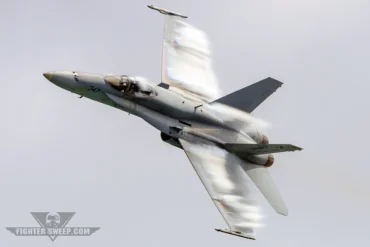
The F-22 Raptor excels in high-G sustained turns, a crucial element of its combat maneuverability. One of the aircraft’s standout features is its ability to sustain 8.5–9G turns during combat maneuvers. This capability is fundamental in high-intensity aerial engagements, where the ability to maintain tight turning radii while preserving energy efficiency is paramount.
During a 360° horizontal turn, for example, the F-22 can retain a high turn rate while slowly losing airspeed. At speeds of 740–833 km/h, the aircraft maintains its agility despite the aerodynamic drag that naturally accompanies such high-speed maneuvers. The thrust-to-weight ratio of the F-22, approximately 10:1, combined with its thrust-vectoring engines, facilitates rapid acceleration and recovery during high-G turns, allowing the aircraft to perform extremely sharp maneuvers even after significant deceleration.
This high-G sustained turn capability is particularly significant because it enables the F-22 to remain highly maneuverable in high-stress situations, such as evasive action in dogfights or engaging multiple adversaries in close proximity.
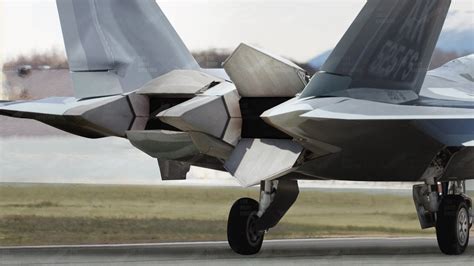
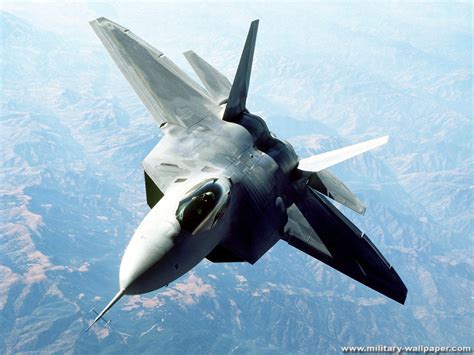
Instantaneous Turn Radius: A Key Factor in Close-Range Combat
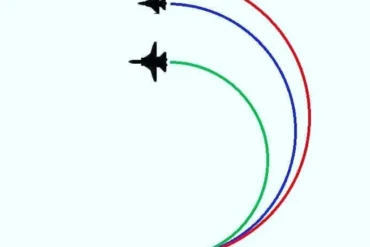
One of the most impressive features of the F-22 is its instantaneous turn radius, which measures as low as 60 meters under specific conditions. This ability far surpasses that of older fighters, such as the F-16, whose turn radius can reach up to 600 meters. The F-22’s exceptional instantaneous turn rate is facilitated by two primary technological advancements:
- Thrust vectoring: The F-22 is equipped with advanced thrust-vectoring nozzles that allow precise control of its pitch and yaw. This enables the aircraft to execute sharper, more rapid turns than conventional fighters.
- Aerodynamic design: The F-22’s diamond-shaped wings and carefully optimized control surfaces reduce drag during aggressive turns. This design helps the aircraft maintain speed and agility during sharp maneuvers, crucial for evading enemy missiles or re-engaging a target.
The combination of these features enables the F-22 to maintain an incredibly tight turn radius, which is a decisive advantage in close-quarters combat, especially when facing adversaries with less maneuverable airframes.
Maneuverability in Complex Tactics
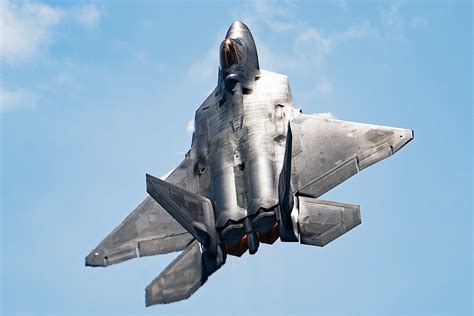
The F-22 Raptor is designed to excel in highly complex aerial tactics, where its agility and advanced flight control systems come to the forefront. One notable maneuver is the “J-turn”, a highly effective tactic for changing direction while maintaining energy and surprise. In this maneuver, the pilot initiates the turn by pulling the aircraft’s nose up to a 90° angle of attack. The aircraft is held in position for 4–5 seconds before the pilot rapidly pushes the stick forward, inducing a controlled stall. To complete the turn, the pilot applies left rudder input, pivoting the aircraft and achieving a 180° directional change.
Such maneuvers are only possible due to the F-22’s fly-by-wire system, which automatically adjusts flight controls for optimal stability even during extreme angles of attack. This system ensures that the aircraft remains stable and responsive, allowing the pilot to perform advanced aerial combat maneuvers without losing control or speed. The J-turn and other complex aerial tactics enhance the F-22’s ability to engage multiple adversaries while maintaining the initiative in a dogfight scenario.
Comparison to Other Fighters: F-22 vs. F-16 and Beyond
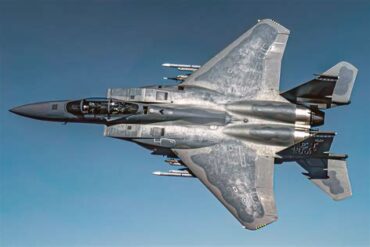
When comparing the F-22’s turn rate to that of other fighters, it becomes evident that the F-22 Raptor is a quantum leap ahead in terms of agility and maneuverability. Take, for example, the F-16 Fighting Falcon. While the F-16 can sustain a 9° per second turn rate with a 600-meter radius, the F-22 achieves much sharper turns with a radius of just 60 meters. The F-22’s superior thrust-to-weight ratio and advanced thrust-vectoring technology give it a distinct advantage in high-G turns, allowing it to maintain higher speeds and outmaneuver the F-16 in close-range combat.
The F-22 also surpasses other 4th-generation fighters, such as the Eurofighter Typhoon, in terms of both turn rate and radius. The Eurofighter, with its conventional flight controls, cannot match the F-22’s high-G capabilities or its instantaneous turn rate, despite being a formidable aircraft in its own right.
However, the true advantage of the F-22 lies not only in its turn rate but also in its combination of stealth capabilities and advanced sensor fusion. These features allow the F-22 to engage adversaries from beyond visual range (BVR), neutralizing threats before the need for close-range maneuvers even arises. While its turn rate is a critical factor in dogfights, the F-22’s ability to detect and engage targets long before visual contact is a decisive tactical advantage.
Operational Limitations of the F-22’s Turn Rate
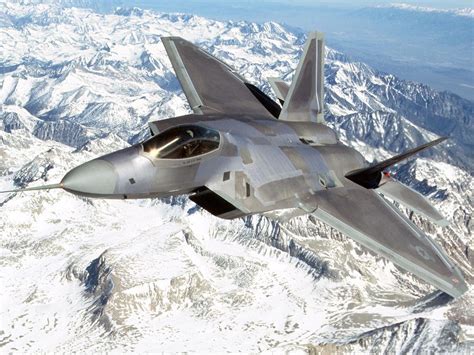
While the F-22’s turn rate and maneuverability are impressive, they are not without limitations. One of the primary drawbacks is the aircraft’s fuel consumption during high-G maneuvers. A single 360° turn at maximum G-load can consume approximately 2.8 tons of fuel, which significantly reduces the aircraft’s range and mission duration.
This limitation requires pilots to carefully balance turn intensity with the operational requirements of a mission. Prolonged high-G maneuvers may rapidly deplete the aircraft’s fuel reserves, potentially exposing it to threats or limiting its ability to conduct additional combat operations. Pilots are trained to manage this balance, ensuring that the F-22’s turn rate is leveraged effectively without compromising mission success.
Another challenge is the strain on the aircraft’s airframe during extreme maneuvers. While the F-22’s design incorporates cutting-edge materials and construction techniques to withstand high-G forces, the stresses placed on the aircraft during rapid turns can still cause wear and tear over time. This is an important consideration for the long-term operational readiness of the aircraft.
Summary: Why the F-22’s Turn Rate Matters
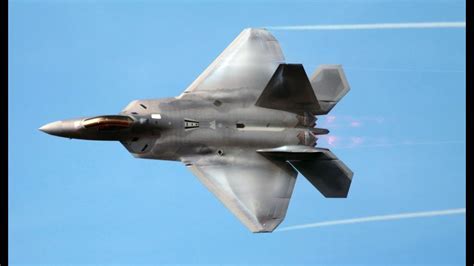
The F-22 Raptor’s turn rate is one of its defining features, providing unmatched agility in air combat scenarios. Thanks to its thrust vectoring engines, advanced aerodynamic design, and fly-by-wire flight control system, the F-22 can execute sharp, high-G turns with precision and efficiency. Its instantaneous turn radius of just 60 meters gives it a decisive advantage over older fighters, making it nearly unbeatable in close-range combat situations.
However, while its maneuverability is second to none, it is essential to recognize the operational limitations related to fuel consumption and airframe strain. Despite these challenges, the F-22’s turn rate, combined with its stealth and sensor fusion capabilities, positions it as one of the most lethal fighters in modern aerial warfare.
Frequently Asked Questions
1. How does the F-22’s turn rate compare to other modern fighter jets?
The F-22 Raptor outperforms most modern fighter jets in terms of turn rate. With an instantaneous turn radius of 60 meters, the F-22 can execute far sharper turns than fighters like the F-16 or Eurofighter Typhoon, whose turn radii can exceed 600 meters. The F-22’s combination of thrust vectoring, fly-by-wire controls, and aerodynamic design gives it a significant edge in close-range combat.
2. What is the role of thrust vectoring in the F-22’s turn rate?
Thrust vectoring plays a crucial role in enhancing the F-22 Raptor’s maneuverability. By directing the exhaust from its engines in different directions, the F-22 can control its pitch and yaw during high-G turns. This allows the aircraft to achieve sharper, more precise turns than traditional fighters with fixed nozzles, giving it an unmatched advantage in tight aerial engagements.
3. What are the limitations of the F-22’s turn rate in operational scenarios?
Despite its exceptional turn rate, the F-22’s high-G maneuvers can rapidly deplete its fuel reserves, limiting its range and mission duration. A single 360° turn at full G-load can consume up to 2.8 tons of fuel, which requires pilots to manage their maneuvers carefully to avoid compromising mission objectives or exposing themselves to threats.