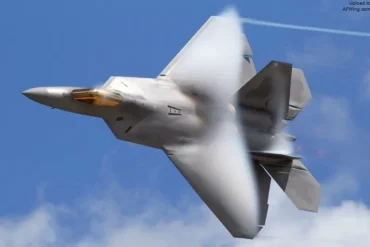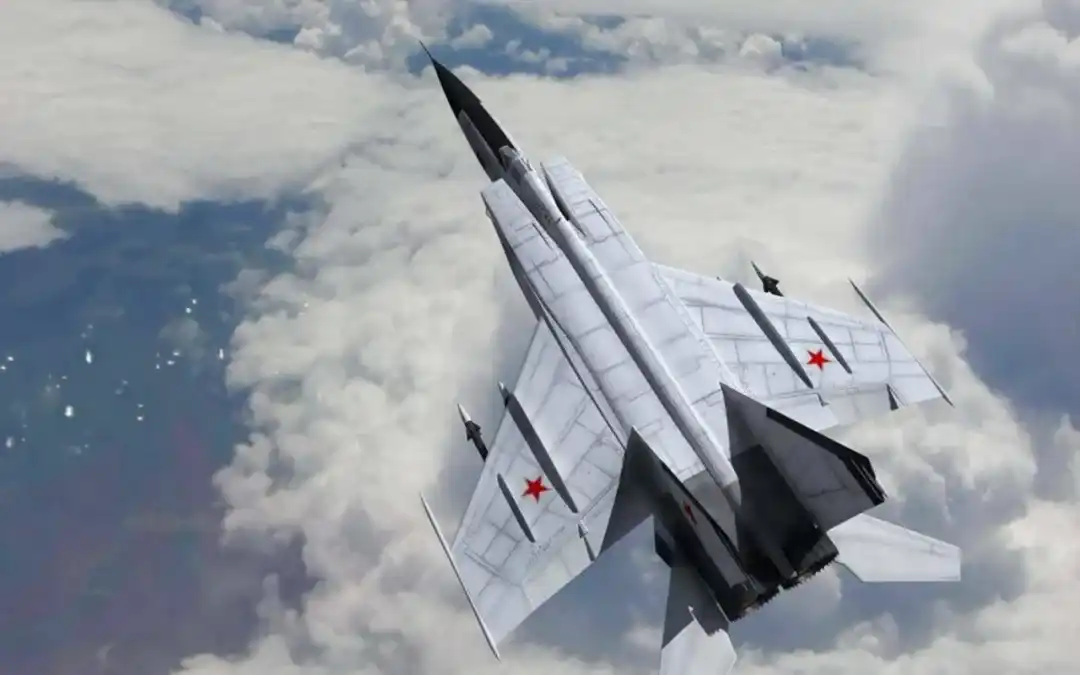
The F-15 Eagle, renowned for its combat prowess and unmatched reputation for air superiority, has become a symbol of modern air combat. Its legendary status, however, has been questioned in certain controversial incidents where it is alleged that MiG-25 Foxbat aircraft were involved in shooting down F-15s. The history of these confrontations is shrouded in uncertainty, with various claims, denials, and counterclaims that have left military historians and aviation enthusiasts with more questions than answers. This article delves deep into these controversial engagements, analyzing the key events, technical capabilities, and tactical decisions that shape the narrative of F-15s shot down by MiG-25s.
Controversial Incidents: A History of Alleged Shootdowns
1. The 1981 Syrian-Israeli Air Combat
The first major instance of controversy occurred during the Syrian-Israeli air clashes of 1981. In February and July of that year, Syrian MiG-25s engaged Israeli F-15s in the skies over the Middle East. Syrian sources claimed that in the second engagement, a MiG-25 had shot down an F-15, and they reported that the wreckage fell into the Mediterranean Sea. However, Israel strongly denied these claims, citing its F-15s’ “undefeated record” and stating that no such loss occurred.
The key controversy here revolves around the lack of solid evidence from the Syrian side. No names of the Syrian pilot involved were provided, and no physical proof such as wreckage photos or radar data were offered. Furthermore, Israeli intelligence, through Soviet communication intercepts, confirmed that the MiG-25s were the ones shot down, not an F-15. This ambiguity, paired with the absence of clear evidence from both sides, keeps the 1981 Syrian-Israeli engagements at the center of the F-15 vs. MiG-25 debate.
2. The 1991 Gulf War: The Clash of Superpowers
The Gulf War presented another high-profile confrontation between the F-15 and MiG-25, this time involving Iraq. On January 30, 1991, two Iraqi MiG-25s launched a surprise attack on a pair of U.S. Air Force F-15s, releasing R-40 radar-guided missiles. One missile successfully hit an F-15, damaging its left engine. Iraqi pilots believed they had shot down the aircraft, but U.S. sources confirmed that the F-15 returned to base after sustaining damage but was not lost.
This incident highlights the MiG-25’s potent capabilities in certain scenarios. Its high-speed, high-altitude performance (with speeds exceeding Mach 2.8) allowed it to launch surprise attacks. The R-40 missiles, with a range of up to 80 kilometers, were particularly effective at engaging long-range targets, such as bombers or fighters flying at high altitudes. However, the U.S. response was indicative of the difficulty in fully countering the MiG-25 in a short-range dogfight. Despite the claim of a hit, the F-15’s superior maneuverability and advanced electronic warfare systems ensured its survival and return.
3. Other Potential Engagements During the Gulf War
Throughout the Gulf War, there were additional incidents where Iraqi MiG-25s confronted American F-15s. Some reports suggest that MiG-25s managed to evade F-15 interceptors, further proving the MiG-25’s operational value in high-speed intercepts and strategic evasion. The MiG-25, with its long-range interception capabilities and speed, was a formidable adversary in this setting. However, the F-15’s advanced radar systems and missile technology made it difficult for the MiG-25 to achieve sustained success.
Despite these confrontations, both the F-15 and MiG-25 continued to prove their unique capabilities in combat, underscoring the complexity of air engagements during the Gulf War. The ambiguity around the exact details of some of these incidents continues to fuel debates about the MiG-25’s role in combatting Western jets.
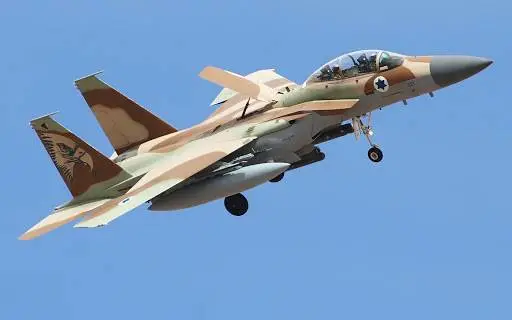
Technical Comparison: F-15 vs. MiG-25
MiG-25: A High-Speed, High-Altitude Interceptor
The MiG-25 Foxbat was designed during the Cold War as a high-speed interceptor, primarily to counter Western bombers like the B-70 Valkyrie and B-52 Stratofortress. Its performance characteristics include:
- High-Speed Performance: The MiG-25 could reach speeds of up to Mach 2.8, making it one of the fastest aircraft of its time. This capability allowed it to engage or disengage from combat at speeds that F-15s could not match.
- High-Altitude Operations: With an operational ceiling of around 80,000 feet, the MiG-25 could fly at altitudes where it was difficult for many adversaries, including the F-15, to engage effectively.
- Long-Range Missiles: The MiG-25 was equipped with the R-40 missile, which had a range of 80 kilometers, making it a threat to bombers and fighters alike. The missile’s large warhead and long range gave it the potential to deal significant damage before the enemy could even close the distance.
The MiG-25’s strengths were in long-range interception, speed, and altitude, making it a formidable opponent in certain tactical situations. However, its weaknesses lay in its poor maneuverability at lower speeds and its reliance on heavy radar and missile systems, which made it less effective in close-quarters dogfights.
F-15: An Air Superiority Fighter with Unmatched Maneuverability
The F-15 Eagle was designed to be an air superiority fighter, and its specifications reflect this role:
- Maneuverability: The F-15 boasts superior thrust-to-weight ratio and agility, allowing it to perform aerial dogfights with high precision. Its superior turning radius and ability to execute high-G turns give it an edge in close-range combat.
- Advanced Radar and Electronic Warfare: The F-15, particularly in later variants, was equipped with highly advanced radar and electronic warfare systems, including the AN/APG-63 radar. These systems allowed it to detect enemy aircraft at long range and deploy countermeasures to disrupt enemy targeting systems.
- AIM-120 AMRAAM Missiles: The introduction of the AIM-120 AMRAAM missile in the 1990s significantly enhanced the F-15’s long-range missile capabilities, making it more effective in beyond-visual-range engagements.
While the F-15 excelled in maneuverability and air superiority, its effectiveness in engaging fast, high-flying targets such as the MiG-25 was dependent on its radar systems and missile technology. In situations where the MiG-25 could dictate the terms of the engagement, the F-15’s superior dogfighting abilities were often rendered less relevant.
Tactical Analysis: How the F-15 Could Have Been Shot Down by MiG-25
While official sources have generally denied any instances of the F-15 being shot down by a MiG-25, several factors could have contributed to a successful attack in theory. The MiG-25’s tactical success in certain engagements often relied on several key elements:
1. Surprise and Ambush Tactics
The MiG-25’s ability to operate at high speeds and altitudes allowed it to perform ambush tactics effectively. By engaging in hit-and-run attacks from beyond the range of the F-15’s radar or missile systems, MiG-25 pilots could evade F-15 retaliation.
2. Electronic Warfare and Jamming
In contested environments, the MiG-25’s reliance on electronic warfare (EW) systems to jam radar and disrupt missile lock-on could level the playing field. This would give the MiG-25 an opportunity to take shots at the F-15 before the American pilot could gain a lock or react appropriately.
3. Precision Missile Attacks
Using its R-40 long-range missile, the MiG-25 could potentially strike an F-15 at a distance before it came into visual range. With sufficient radar lock and missile guidance, the MiG-25 had the potential to damage or destroy its target from a range well beyond the F-15’s missile capability at the time.
4. High-Speed Retreat
Once the MiG-25 had launched its missile, it could disengage and retreat at speeds exceeding Mach 2, well above the F-15’s cruising speed. This made it extremely difficult for the F-15 to close the distance and retaliate effectively.
Conclusion: The Legacy of the MiG-25 and F-15
The controversial claims of F-15s being shot down by MiG-25s underscore the intense rivalry between the two aircraft during the Cold War and beyond. While no definitive evidence has confirmed the loss of an F-15 to a MiG-25, the technical capabilities and unique strengths of both aircraft make these encounters fascinating to study.
The F-15 remains one of the most successful and widely used fighter aircraft in history, while the MiG-25 left an indelible mark as a high-speed interceptor that pushed the boundaries of air combat in the 20th century. The legacy of these aircraft continues to influence modern air combat tactics and the evolution of fighter aircraft design.
Key Event Timeline:
| Date | Event Summary | Outcome and Controversy |
|---|---|---|
| February 1981 | Syrian MiG-25 intercepts Israeli F-15, Syria claims to have shot down F-15. | Israel denies, citing a downed MiG-25 instead. |
| July 1981 | Another air combat between Syria and Israel, with conflicting claims. | Both sides maintain their narratives, no definitive proof. |
| January 1991 | Gulf War: Iraqi MiG-25s engage U.S. F-15s; one F-15 damaged, but not destroyed. | U.S. acknowledges damage but denies the aircraft was shot down. |
| January 30, 1991 | MiG-25s launch a surprise attack on F-15s during the Gulf War. | U.S. confirms damage, but aircraft returns to base. |
Through this analysis, it is clear that the MiG-25 was a formidable adversary, capable of challenging the mighty F-15 in certain circumstances. Yet, the myth of the MiG-25 shooting down an F-15 remains clouded in uncertainty and controversy, fueling debates on both the tactical and technological fronts of air combat.