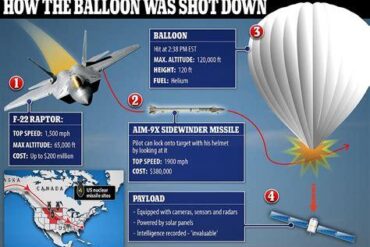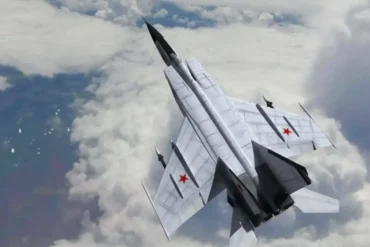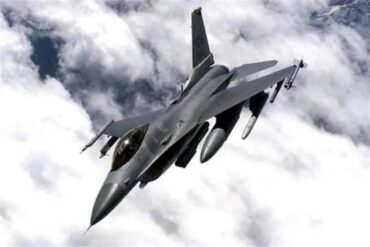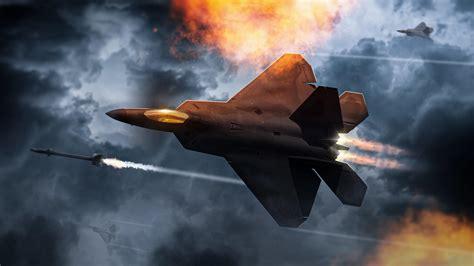
Nearly two decades ago, the F-22 Raptor emerged as the gold standard in fifth-generation air superiority, a title it continues to hold even in 2025. Developed by Lockheed Martin and inducted into service with the United States Air Force (USAF) in 2005, the F-22 revolutionized aerial warfare with its stealth profile, supercruise capability, integrated avionics, and advanced sensor fusion. Its dominance effectively rendered competitor efforts, particularly Russia’s Su-57 Felon, hollow in comparison — a reality nowhere more evident than in the story of the Indo-Russian Fifth Generation Fighter Aircraft (FGFA) program.
The Origins of a Failed Dream: Indo-Russian FGFA Agreement
In 2007, Russia and India signed a landmark agreement to jointly develop a fifth-generation fighter aircraft, ambitiously dubbed FGFA. Moscow hoped it would produce a capable rival to America’s F-22. For New Delhi, it was a high-stakes bet to leapfrog into stealth-era combat aviation, replacing its aging MiG-29s, Mirage 2000s, and Jaguars.
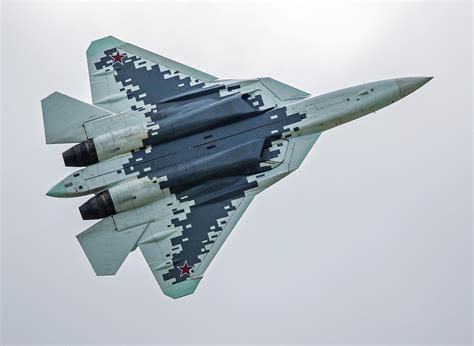
The blueprint looked promising. Both countries would share design, development costs, and intellectual property equally. India’s aerospace giant HAL would partner with Sukhoi to localize production, just as it had with the Su-30MKI. Expectations soared after the Indo-Russian BrahMos missile project’s success, adding credibility to the new venture. But beneath the high-profile announcements at Aero India 2007 lurked significant, irreconcilable differences.
Diverging Expectations and Deepening Frustrations
From the outset, India demanded a twin-seat configuration, robust technology transfer, and full access to source codes for mission systems — elements that would allow it to integrate indigenous weapons and software. Russia, however, envisioned a leaner, single-seat configuration akin to the Su-57 prototype it had already begun developing. Friction mounted as timelines were missed and cost estimates ballooned.
What began as a 2009 target for first flight with production by 2015 eventually pushed into the 2020s. By 2018, with less than tangible progress, India walked away from the $25 billion project. The formal withdrawal was a silent thunderclap in defense circles. It was also a symbolic defeat for Moscow’s ambitions — the Su-57’s credibility had been publicly undermined without a single shot being fired.
F-22’s ‘Kill Without Firing’ – A Strategic, Not Kinetic, Victory
The phrase that the F-22 “shot down” the Su-57 without firing a missile isn’t just metaphorical hyperbole. It encapsulates how the American fighter outclassed, outpaced, and outlasted its closest rival, not on the battlefield but in technological benchmarks, operational readiness, and allied influence.
India’s decision to quit the FGFA project was, in large part, shaped by comparative evaluations. Analysts noted that the Su-57 featured a radar cross-section significantly larger than Western stealth fighters. Despite Russia’s insistence on its stealth credentials, Western defense think tanks labeled it a “pseudo-stealth” platform — a damning critique. The AL-41F1 engine lacked genuine supercruise, and overall performance during limited combat deployment in Syria was lackluster.
According to Richard Aboulafia of the Teal Group, Russia had overpromised and underdelivered. Former IAF Air Marshal Anil Chopra echoed this sentiment, saying that the Felon failed to meet the minimum stealth and engine performance benchmarks. The FGFA, Chopra argued, “was nowhere close to the Raptor in any dimension.”
The Propaganda Machine: Selling a Mirage
By the time India pulled the plug, many saw the FGFA as less a combat platform and more a PR vehicle for Russian aerospace. The Su-57 had not reached serial production, and Russia’s strategic interest seemed focused more on media optics than engineering outcomes. Sources close to the Indian defense establishment revealed that Russia resisted real technology transfer, a dealbreaker for India’s Make in India ambitions.
Interestingly, the United States made no official statements on India’s withdrawal but was likely pleased. India’s exit meant Russia’s 5th-gen credibility took a global hit, and with it came the opportunity for Lockheed Martin to pitch the F-35 and other technologies to New Delhi.
Su-57’s Delayed Entry and Its Struggles
Eventually, the Su-57 Felon was formally inducted into the Russian Air Force in 2020 — 15 years after the Raptor. The program was marred by production bottlenecks, logistical failures, and later, crippling Western sanctions after Russia’s invasion of Ukraine in 2022. With limited access to high-grade semiconductors, titanium alloys, and avionics toolkits, the Su-57’s production rate became anemic.
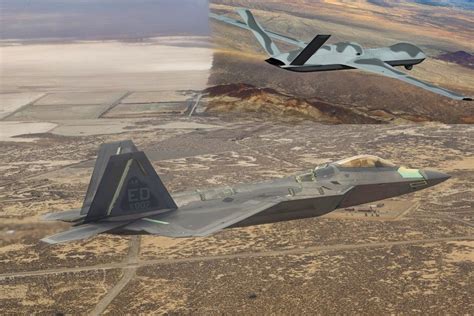
In Ukraine, the Su-57 played no prominent role in air superiority. Its deployments were sparse and confined to standoff missile launches from safe airspace, undermining its pitch as a true fifth-gen multirole fighter. Meanwhile, the F-22, despite nearing two decades in service, continued to dominate combat air patrols in Indo-Pacific and NATO theaters.
India’s AMCA Gamble and the Sixth-Gen Race
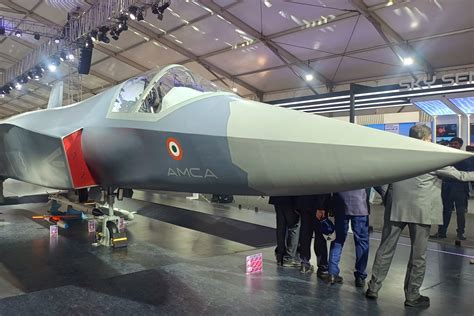
Post-FGFA, India doubled down on its indigenous Advanced Medium Combat Aircraft (AMCA), a project aimed at producing its own fifth-generation fighter by the early 2030s. Former IAF Chief RKS Bhadauria staunchly opposed acquiring interim fifth-gen imports, including the Su-57 and even the F-35, arguing that they would drain resources from AMCA.
New Delhi’s strategic calculus had shifted. It sought sovereign control over software, radar architecture, and EW suites — things neither the US nor Russia were willing to share freely. While Bhadauria praised the F-22’s performance, he believed India needed to leapfrog not just into 5th-gen parity but position itself for 6th-gen competitiveness.
F-22’s Legacy and NGAD on the Horizon
While the F-22 may retire sometime in the 2030s, it has already reshaped global aerial doctrine. The USAF has sought to retire 32 Block 20 Raptors, which serve primarily in training roles and lack modern sensors. However, Congress has resisted, emphasizing the aircraft’s symbolic and strategic value.
Meanwhile, the Next Generation Air Dominance (NGAD) platform, now identified as the F-47, is under accelerated development. Former President Donald Trump confirmed Boeing’s contract win, asserting that key production facilities were already operational. The F-47 is expected to enter serial production by 2029, heralding the dawn of sixth-generation warfare — featuring AI-enhanced autonomy, drone teaming, and directed energy weapons.
Is the Su-57 Still Relevant?
Despite its troubled history, Russia continues to market the Su-57. With China fielding over 150 J-20s, New Delhi is reconsidering its stance. As per current reports, India is weighing stealth acquisitions as part of a broader strategy to maintain air parity in the region.
Moscow claims it has fixed Su-57’s production delays, and upgrades are in the works — including a second-stage engine, the Izdeliye 30, which promises better supercruise and fuel efficiency. Ruslan Pukhov of the Centre for Analysis of Strategies and Technologies argues that India’s withdrawal was short-sighted and pressured by Washington. Yet even he admits that Russia’s credibility has taken a hit.
Conclusion: A Silent Kill
The F-22 Raptor didn’t need to engage the Su-57 in combat to prove superiority. It did so through timely deployment, real-world performance, and global strategic influence. The FGFA program’s collapse was a geopolitical kill shot, orchestrated through competence, not confrontation. As the world accelerates toward sixth-generation air dominance, the Raptor’s legacy remains intact — not just as a weapon of war, but as a symbol of aeronautical hegemony that could make adversaries abort their ambitions before the first dogfight ever begins.