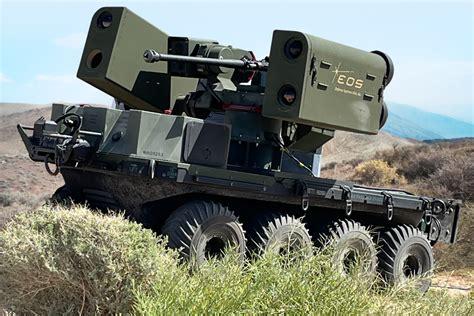
Unmanned Aerial Systems (UAS), once hailed as the undisputed vanguard of 21st-century warfare, are now facing the brunt of their own rapid success. From the skies of Ukraine and Gaza to the deserts of the Middle East and the mountain borders of South Asia, drones are being shot down at unprecedented rates, prompting analysts like Mark T. Kimmitt to ask: Has the era of drone supremacy ended? While it may be premature to write the obituary for drones, what is undeniable is the meteoric rise of Counter-UAS (C-UAS) technologies, transforming them from reactive defenses to proactive, intelligent systems capable of rewriting the battlefield.
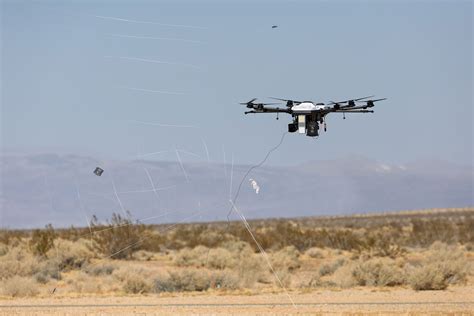
The Rise, Fall, and Adaptation of Drones
Drones earned their reputation as the iconic weapons of modern asymmetric warfare. Their success in Ukraine in 2022, and later in Hamas’ audacious attack on Israel in 2023, showcased how low-cost, AI-enhanced platforms could alter the calculus of war. Swarms of autonomous drones, laser-focused on surveillance, target acquisition, and even kamikaze-style attacks, highlighted a seismic shift in combat dynamics. Cheap, scalable, and easy to deploy, drones became the new terror of the skies.
However, this dominance triggered its own undoing. As with all revolutionary weapons — from longbows to bombers — battlefield adaptation followed swiftly. In conflicts involving India-Pakistan and Iran-Israel, or Russia’s defense against Ukrainian drone tactics, the vulnerability of drones became painfully evident. The modern battlefield, much like its predecessors, is proving that no weapon is immune to countermeasures.
C-UAS: From Detection to Destruction
Counter-UAS strategies fall broadly into two categories: drone detection and drone interception (mitigation). While detection typically involves radar and radio frequency (RF) surveillance to identify and track drone activity, interception leverages both kinetic and non-kinetic tactics to neutralize threats.
- Radar & RF Detection: These technologies can operate in urban and high-interference environments. When integrated, radar and RF provide a layered defense that extends coverage and reduces blind spots.
- Soft-Kill (Non-Kinetic) Measures: These include signal jamming, spoofing, and cyber-hijacking. By disrupting or overtaking communication between drones and operators, C-UAS platforms can either force landings or redirect drones away from sensitive zones.
- Hard-Kill (Kinetic) Measures: Projectile-based destruction using bullets, missiles, nets, or even attack drones forms this layer. The goal is simple: eliminate the physical threat.
Israel’s Iron Beam and the Era of Directed Energy Weapons
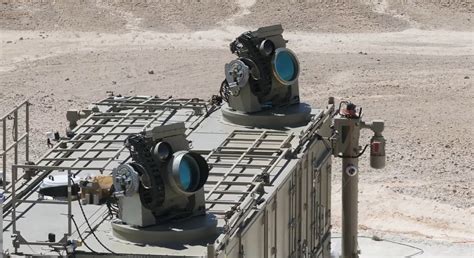
Nowhere has C-UAS technology matured as rapidly as in Israel, a nation under constant aerial threat. While the Iron Dome remains a household name, it’s the Iron Beam, a high-energy laser system developed by Rafael Advanced Defense Systems, that is changing the game.
Lite Beam, a compact 10-kW class HELWS variant, is capable of simultaneously neutralizing up to 10 low-altitude threats — including drone swarms — within several kilometers. Mounted on vehicles ranging from 4×4 light trucks to tracked armored platforms, the system delivers surgical precision by focusing heat on a coin-sized spot on incoming drones.
This integration of soft and hard kill options, paired with Israel’s multi-layered defense strategy — combining Iron Dome (short range), David’s Sling (medium range), and Arrow (long range) — offers an unparalleled airspace shield. Complementing this is an arsenal of AI-integrated radar systems, electronic jammers, and machine-learning threat assessment tools, all contributing to real-time, autonomous defense decisions.
U.S. Counter-Drone Task Force: Learning from the Past
The United States is also mobilizing. On July 2, 2025, the Pentagon announced the creation of a Joint Interagency Task Force on C-UAS, led by Gen. James Mingus. Drawing parallels to the Global War on Terror’s fight against IEDs, Mingus emphasized the urgency of a coordinated C-UAS response.
The lessons from Iraq and Afghanistan are clear: rapid technological adaptation is critical. The Mine-Resistant Ambush Protected (MRAP) vehicle emerged in response to IEDs. Today, the U.S. is investing in next-generation C-UAS platforms, with line items in the Army’s budget for agile counter-drone capabilities.
India’s Bhargavastra: Indigenous Innovation in Hard-Kill Defense
India’s private defense sector is making bold strides in this arena. Solar Defence and Aerospace Limited (SDAL) has successfully tested ‘Bhargavastra’, a cost-effective, multi-layered, counter-drone system designed to tackle swarm threats.
Tested at the Seaward Firing Range in Gopalpur, Bhargavastra relies on unguided micro-rockets to destroy drones within a lethal radius of 20 meters. It incorporates a second, guided micro-missile layer for precision strikes. Capable of operating above 5,000 meters, it’s modular, terrain-agnostic, and deployable across India’s varied combat theaters.
Its sensor suite includes radars with a 6–10 km detection range, and Electro-Optical Infrared (EOIR) systems for precise target recognition. Notably, Bhargavastra can be configured for network-centric warfare, integrating seamlessly into existing command systems via advanced C4I (Command, Control, Communications, Computers & Intelligence) architecture.
The Drone Arms Race Isn’t Over — It’s Evolving
Despite the surge in C-UAS innovation, the threat posed by drones is far from diminished. In fact, as defense systems adapt, so too do the drones. AI-powered swarm algorithms, stealth coatings, and anti-jamming protocols are already in development. The battlefield is no longer about having the most drones, but the smartest.
Kimmitt’s insight — that drone supremacy has already peaked — resonates, but it doesn’t signal obsolescence. Rather, we’re entering a new phase: a technological arms race between UAS and C-UAS systems, mirroring the missile-defense spirals of the Cold War. Drones are mutating from mere flying objects to autonomous battlefield partners, capable of deception, counter-intelligence, and coordinated assault.
Market Projections and Strategic Implications
The global anti-drone market, valued at $4.48 billion in 2025, is projected to reach $14.51 billion by 2030, growing at an astonishing CAGR of 26.5%. This growth is not simply due to increased drone deployment, but because airspace defense is no longer optional.
As both state and non-state actors weaponize commercial drone tech, airports, military bases, stadiums, and critical infrastructure are at risk. The future battlespace will not just span land, sea, and sky — it will hover in the invisible radio frequencies and AI decision loops that govern drone activity.
Conclusion: A New Warfare Epoch
The evolution of warfare is cyclical: each revolution meets its counter. Drones revolutionized combat with affordability and autonomy. Now, C-UAS platforms are revolutionizing defense with precision, adaptability, and intelligence.
The world’s most “shot down” weapon is a victim of its own success. But in this cat-and-mouse game of innovation, the battle is far from over. As new countermeasures arise, so will more advanced drones. What remains clear is that dominance in future conflicts will belong not to the side with the best drones — but to the side that best masters the dance between attack and defense in the digital sky.