Development Background and Design Features
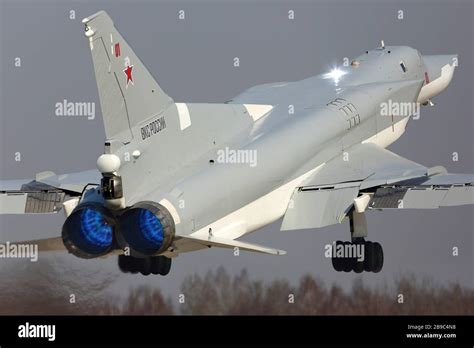
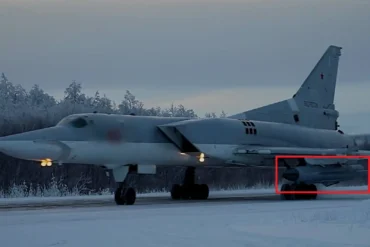
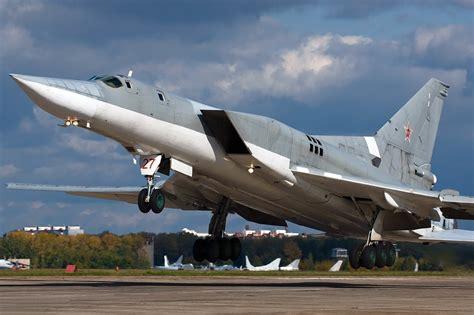
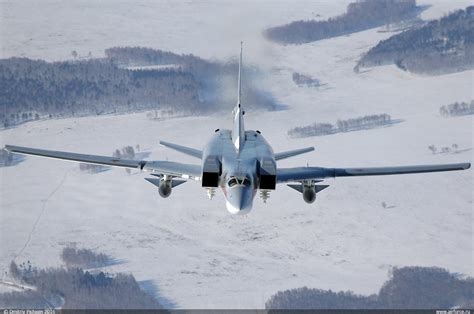
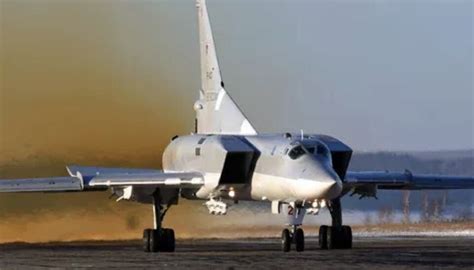
The Tupolev Tu-22M3, designated by NATO as “Backfire-C”, is a supersonic, long-range strategic bomber developed by the Tupolev Design Bureau for the Soviet Union and later the Russian Federation. Despite being nominally an upgrade to the earlier Tu-22, the Tu-22M3 is effectively a new aircraft, designed from the ground up to address the limitations of its predecessors. Introduced in the late 1970s, this formidable aircraft was built to counter NATO’s expanding air defense networks and to pose a credible threat to naval carrier strike groups.
In terms of airframe design, the Tu-22M3 employs a twin-engine, variable-sweep wing configuration, allowing it to operate at both high speeds and low altitudes. This design provides a blend of high-speed penetration at Mach 2.3 and terrain-following low-level strike capabilities, enabling it to evade enemy radar systems more effectively. The aircraft’s variable-geometry wings, which can sweep from 20° to 65°, offer improved aerodynamic efficiency, balancing speed and range depending on the mission profile.
The Tu-22M3 is powered by two NK-25 afterburning turbofan engines, each capable of producing 247.9 kN of thrust with afterburner, providing the necessary power for high-speed, long-range missions. These engines, coupled with advanced avionics, allow the bomber to operate at altitudes of up to 18,000 meters and achieve a maximum range of 6,800 to 7,000 kilometers without aerial refueling.
Technical Specifications and Weapon Systems
Airframe and Powerplant
- Dimensions: Length 42.46 meters, wingspan 34.28 meters (fully extended) / 23.30 meters (fully swept), height **11.05 meters.
- Weight: Empty weight 58,000 kg, maximum takeoff weight 124,000 to 126,000 kg.
- Engines: Two NK-25 turbofans, each producing 247.9 kN thrust with afterburner.
- Maximum Speed: Mach 2.3 (approximately 2,430 km/h) at altitude.
- Operational Range: 6,800 to 7,000 km (without refueling), with aerial refueling extending this significantly.
- Ceiling: 18,000 meters.
Avionics and Electronic Systems
The Tu-22M3 is equipped with an advanced avionics suite designed for precision strikes and long-range missions. Key systems include:
- Navigation and Attack Radar: Long-range detection radar for target acquisition and navigation.
- Electronic Countermeasures (ECM): Systems like the “L-080 Khibiny” for radar jamming and “Siren-3” radar warning receivers to enhance survivability in contested airspace.
- Autonomous Bombing System: Integrated inertial navigation and bombing system for precise targeting without external support.
Armament and Payload
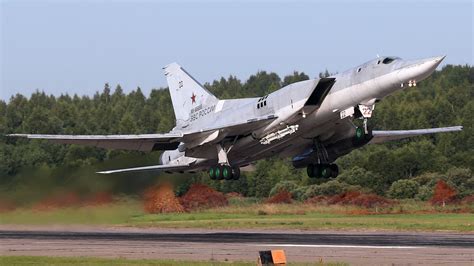
The Tu-22M3 is known for its formidable strike capability, capable of carrying up to 24,000 kg of munitions in a combination of internal and external hardpoints. Key payload options include:
- Kh-22 (AS-4 ‘Kitchen’) Anti-Ship Missile: A long-range, supersonic missile with a range of 600 km, specifically designed to target aircraft carriers and large naval vessels.
- Kh-15 (AS-16 ‘Kickback’) Air-to-Surface Missile: Shorter-range, high-speed missile optimized for hardened targets.
- Conventional free-fall bombs and nuclear payloads.
Operational History and Combat Use
Strategic Role and Deployment
As part of Russia’s strategic nuclear triad, the Tu-22M3 has been a critical component of long-range strike capabilities, capable of delivering nuclear or conventional payloads deep into enemy territory. Its speed and range make it ideal for rapid response to strategic threats, including the targeting of NATO installations and naval groups in the Atlantic and Pacific.
Combat Use and Notable Engagements
- Afghan War (1980s): The Tu-22M series, including the M3, conducted numerous bombing raids against Mujahideen positions, using FAB-3000 heavy bombs to devastating effect.
- Russian-Ukrainian War (2022-2024): The Tu-22M3 has seen extensive use, launching over 200 cruise missiles in strikes against Ukrainian infrastructure. However, on April 19, 2024, one was reportedly shot down by Ukrainian air defenses, marking the first confirmed loss of this model in combat.
Challenges and Modernization Efforts
Despite its impressive capabilities, the Tu-22M3 has faced increasing criticism for high operational costs and aging systems. The aircraft’s maintenance requirements are significant, with its production and refurbishment heavily dependent on the Kazan Aviation Plant, which suffered a major setback when attacked by Ukrainian drones in April 2024. This has further strained the operational readiness of the remaining fleet, now reduced to around 20 airworthy units.
Modernization Prospects
To extend its service life, the Russian Air Force has pursued modernization efforts, including:
- Upgraded avionics and digital flight systems.
- New, more accurate Kh-32 anti-ship missiles with enhanced range and precision.
- Structural upgrades to improve durability and reduce maintenance costs.
Conclusion
The Tu-22M3 remains a potent platform for strategic bombing, but its future is increasingly uncertain as modern air defense systems and unmanned platforms evolve. While it still serves as a symbol of Russian aerial power, its long-term viability as a frontline bomber may hinge on continued modernization and the eventual integration of next-generation technologies.