China’s military aviation program appears poised for a historic leap forward as speculation intensifies around the imminent unveiling of two highly anticipated assets: the H-20 strategic stealth bomber and the J-36 sixth-generation fighter jet. These developments, hinted at by synchronized messaging across Chinese state media platforms CCTV and Xinhua, have fueled international scrutiny and anticipation. The strategic and technological implications of these aircraft, if confirmed, signal a transformative shift in Beijing’s defense posture and long-range power projection.
H-20: China’s Long-Awaited Strategic Stealth Bomber
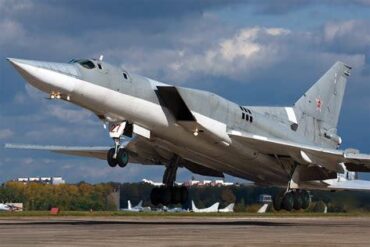
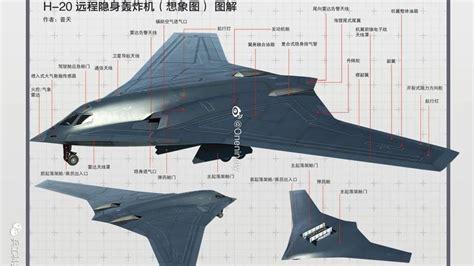
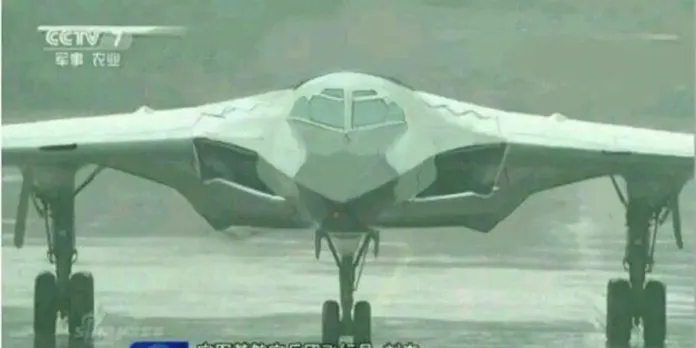
For years, the H-20 stealth bomber has hovered at the intersection of secrecy and speculation. Promised as a cornerstone in the People’s Liberation Army Air Force’s (PLAAF) drive to close the gap with American long-range strike capabilities, the H-20’s elusive nature has only added to its mystique. Official mentions have been sparse, but recent signals from both high-level PLAAF leadership and authoritative media suggest that its public debut is finally near.
As early as 2021, observant viewers of a PLAAF recruitment video noted a brief glimpse of what resembled a flying-wing aircraft, hinting at the design ethos behind the H-20. Later, in 2022, leaked images of a metallic wind tunnel model sparked discussions of a near-complete prototype. By 2024, PLAAF deputy commander Wang Wei declared that the bomber was free of “technological bottlenecks,” with test flights and production phases reportedly imminent.
Despite such optimism, the U.S. Department of Defense’s 2024 China Military Power Report injected caution into the narrative, stating that while development had advanced, a debut before the end of the decade was unlikely. However, new satellite images and field sightings, including a blurred photo of a large flying-wing aircraft reportedly undergoing test flights in early 2025, have added credibility to Chinese state media claims that the bomber is on the cusp of being unveiled.
Strategic Role of the H-20 in China’s Power Projection
The H-20 represents a fundamental shift in China’s military doctrine. With an anticipated combat range exceeding 10,000 kilometers, the H-20 is designed not merely for regional influence but for strategic intercontinental operations. This range, augmented by aerial refueling, would allow the PLAAF to strike targets beyond the second island chain deep into the Pacific and potentially reach U.S. installations in Guam and Hawaii.
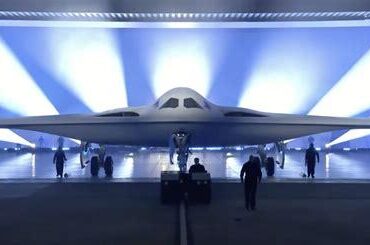
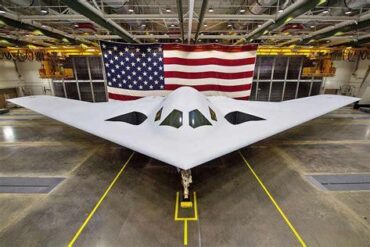
Design elements such as cranked-kite wings, serrated air intakes, and foldable V-tail surfaces echo the stealth characteristics of American bombers like the B-2 and B-21 Raider. The internal weapons bay is believed to support long-range cruise missiles, precision-guided munitions, and potentially nuclear payloads, thus giving the H-20 a dual conventional-nuclear strike role.
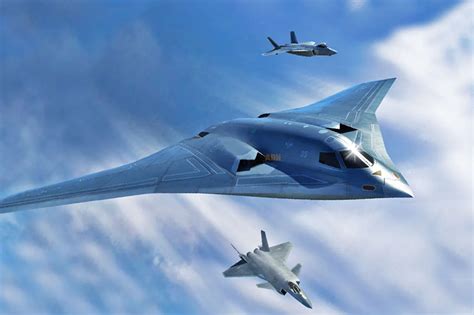
This development would complete China’s nuclear triad, enabling airborne delivery capabilities alongside land-based ICBMs and submarine-launched SLBMs. Experts see the H-20 as a strategic deterrent and a tool for counterforce operations should tensions escalate with the United States or other powers in the Indo-Pacific.
J-36: The Sixth-Generation Phantom Fighter
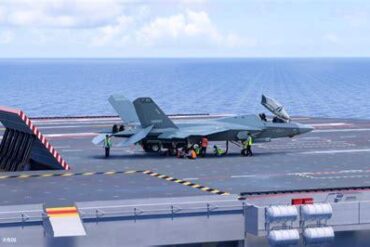
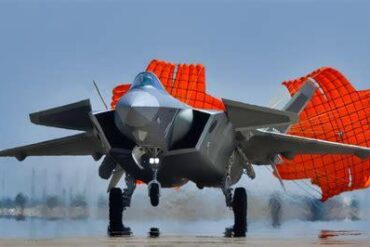
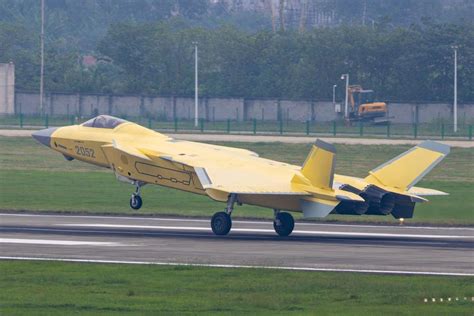
In parallel with the H-20, China’s pursuit of sixth-generation air superiority is embodied in the enigmatic J-36 fighter jet. First observed making test flights on December 26, 2024, coinciding with Mao Zedong’s birthday, the J-36’s development has been shrouded in ambiguity. However, recent sightings of a third prototype flying alongside a J-10C in December 2025, combined with Chinese media commentary, suggest that serial testing and production preparation are underway.
Produced by Chengdu Aircraft Corporation (CAC), the J-36 is often referenced in the same breath as the U.S. NGAD (Next-Generation Air Dominance) and Europe’s Future Combat Air System (FCAS). Chinese observers speculate that three distinct prototypes with varied engine intake and exhaust layouts, landing gear, and avionics may have been developed simultaneously to accelerate the finalization process.
Technical Characteristics: Engineering for Dominance
The J-36 adopts a tailless flying-wing architecture with a trijet configuration—a rare and bold design choice aimed at maximizing stealth, maneuverability, and energy efficiency. It employs blended double delta wings, radar-absorbing composite materials, and advanced cooling systems to reduce radar cross-section (RCS) and infrared signature.
Side and dorsal air intakes feed engines configured to minimize electromagnetic emissions, while the exhaust nozzles are shaped to reduce thermal visibility. These stealth optimizations suggest a platform intended for deep penetration missions, capable of bypassing hostile integrated air defense systems (IADS).
With an estimated top speed of Mach 2.5 and a combat radius of 3,000 kilometers, the J-36 prioritizes speed and range, essential attributes for operations in contested environments. Internal bays allow for modular weapons loadouts, from long-range air-to-air missiles like the PL-17, to YJ-12 anti-ship cruise missiles, maintaining stealth integrity while supporting multi-role capabilities.
Symbolism and Significance: Timing the Message
The concurrent visibility of both H-20 and J-36 developments reflects more than technical progress—it suggests deliberate signaling. In authoritarian systems like China, coordinated statements from state-run media and former military officials are rarely spontaneous. The fact that Du Wenlong, a known military analyst, openly claimed both aircraft are “coming soon” in synchronized posts by Xinhua and CCTV, is interpreted by observers as a soft announcement intended to prime domestic and international audiences.
Military aviation expert Andreas Rupprecht noted the unusual nature of the message. While Du’s opinions are unofficial, they are often used to test narratives and prepare the information space for formal state announcements. This method allows the Chinese Communist Party to maintain plausible deniability while still influencing perception.
J-36 vs. H-20: Complementary Platforms or Strategic Substitutes?
There has been considerable discussion around whether sixth-generation fighters like the J-36 could offset the strategic need for a dedicated bomber like the H-20. However, military analysts consistently argue that the roles are not interchangeable. As Song Zhongping, a former PLA instructor, emphasized: “A strategic bomber is irreplaceable. It carries out both conventional and nuclear strikes with vast payloads and range—functions a fighter jet cannot replicate.”
While the J-36 might excel in tactical superiority, electronic warfare, and deep strike roles, it cannot carry the sheer payload or deliver intercontinental deterrent effects as the H-20. Thus, the tandem development of these two aircraft appears to be part of a comprehensive modernization strategy, not a substitution scheme.
Implications for U.S. and Regional Security Architecture
The strategic implications of these two aircraft are far-reaching. If the H-20 becomes operational with the anticipated range and stealth profile, it would threaten U.S. bases across the Pacific and reshape defense postures from Japan to Australia. The J-36, meanwhile, could challenge American air dominance in East Asia, pushing the Pentagon to further invest in NGAD, loyal wingman drones, and anti-stealth radar systems.
For U.S. allies, this evolution may prompt a reevaluation of missile defense systems, aerial refueling logistics, and maritime surveillance networks. It may also encourage closer interoperability among Indo-Pacific nations, especially as China seeks to project power beyond the first island chain.
Conclusion: The Next Phase of China’s Airpower Revolution
Whether the official rollouts of the H-20 and J-36 occur within months or over the next few years, the message is unmistakable: China is closing the airpower gap. The synchronized media campaigns, visible prototype testing, and expert declarations suggest that Beijing is preparing to reshape the balance of power in the skies.
The unveiling of these platforms would mark a milestone moment not only for Chinese military aviation but for global strategic equilibrium. As we await confirmation, the world watches closely—not only to see what these aircraft look like, but to understand how they will transform the calculus of 21st-century conflict.