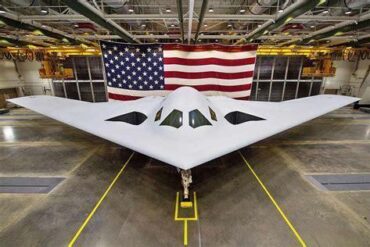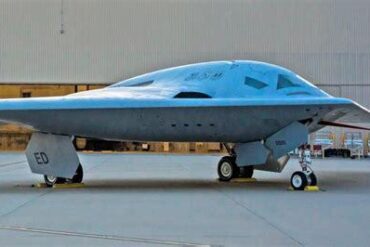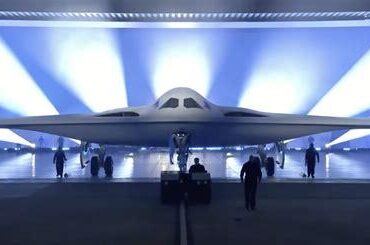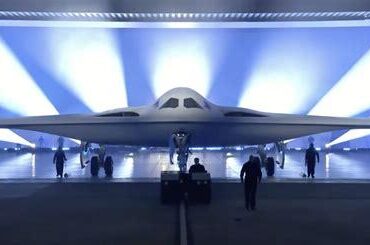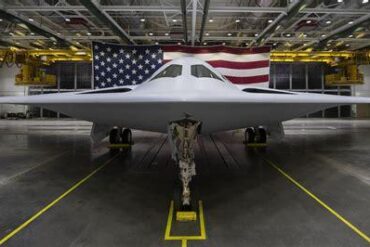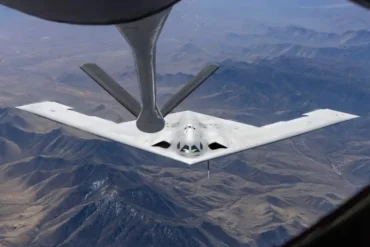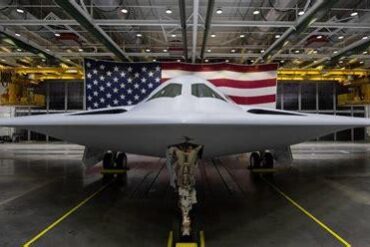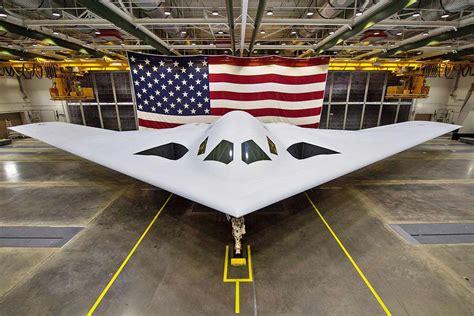
The unveiling of the Northrop Grumman B-21 Raider in December 2022 triggered a familiar reaction: visual comparisons to the B-2 Spirit, debates over range and payload, and speculation about classified performance figures. That reaction, while understandable, missed the real story. The B-21 is not simply a new stealth bomber. It is the first strategic bomber conceived, engineered, tested, and sustained as a fully digital combat system, designed to fight wars where software dominance, data resilience, and cyber survivability matter as much as radar cross-section or bomb load.
Where previous bombers were born in analog eras and later retrofitted for digital conflict, the B-21 emerged from a different philosophical starting point. It was designed for a battlespace where networks are attacked, satellites are disrupted, data is contested, and platforms must adapt faster than adversaries can redesign their defenses. Understanding why the B-21 is the first bomber truly built for digital warfare requires looking beneath its smooth flying-wing silhouette and into the invisible architecture that defines how it fights, evolves, and survives.
Designed Digitally Before a Single Piece of Metal Existed
The B-21 Raider program represents a decisive break from traditional military aircraft development. Instead of relying on sequential design stages and physical prototypes, Northrop Grumman and the U.S. Air Force built the Raider around a persistent, high-fidelity digital model that served as the authoritative source for design, testing, manufacturing, and sustainment.
This approach, often described as digital engineering at scale, allowed engineers to simulate aerodynamics, stealth characteristics, structural loads, thermal behavior, and mission-system interactions long before the first airframe took shape. Changes that once required months of redesign and revalidation could be explored virtually in hours, dramatically reducing risk and uncertainty.
Crucially, the digital model did not stop evolving once manufacturing began. It remained active, continuously refined with test data and operational assumptions. According to official disclosures, production hardware, mission software, and sensor systems accumulated more than 1,000 flight hours on a flying test bed before the B-21’s public debut, enabling early discovery of integration issues that historically plagued bomber programs late in development.
This digital-first foundation explains why Air Force officials have repeatedly emphasized the Raider’s unusually smooth transition from design to flight testing. The aircraft that rolled out in Palmdale carried far fewer unknowns than any previous bomber at a comparable stage, not because it is simpler, but because it was understood more completely before it ever left the ground.
Software-Defined Warfare at Bomber Scale
At the core of the B-21’s relevance to digital warfare is its software-defined mission architecture. Legacy bombers were built around tightly coupled hardware and avionics systems. Adding a new sensor, weapon, or data link often required physical rewiring, structural modifications, and lengthy re-certification cycles that grounded aircraft for months.
The B-21 was engineered to break that cycle. Its mission systems are built on an open-architecture framework, allowing software updates, capability insertions, and system refinements without fundamental changes to the airframe. Functions that once demanded new boxes and cables can now be delivered as code.
This matters because modern warfare evolves faster than aircraft development cycles. New electronic warfare techniques, sensor fusion algorithms, and autonomous aids emerge continuously. The Raider’s architecture allows these capabilities to be introduced incrementally, reducing downtime and keeping the fleet tactically relevant without waiting for block upgrades spaced years apart.
Each B-21 is also paired with a digital twin, a continuously updated virtual replica that mirrors the aircraft’s condition in real time. This enables predictive maintenance, allowing crews to anticipate component wear, plan interventions, and reduce unscheduled downtime. For a bomber force expected to operate globally under tight readiness demands, availability is itself a strategic capability.
Why Earlier Bombers Could Never Fully Enter the Digital Age
The contrast between the B-21 and earlier U.S. bombers highlights why the Raider represents a true generational break rather than an incremental improvement.
The B-52 Stratofortress, designed in the 1950s, was optimized for a world of analog navigation, mechanical systems, and pre-planned nuclear missions. Digital avionics and satellite connectivity were added decades later, layered onto a structure never intended for rapid software evolution.
The B-1B Lancer, entering service in the 1980s, incorporated early digital flight controls and advanced radar for low-level penetration. Yet its architecture reflected Cold War assumptions about predictable threat environments and hardware-locked systems. Modern upgrades have been extensive, but they remain constrained by design decisions made before software agility became a strategic priority.
The B-2 Spirit introduced revolutionary stealth in the 1990s, redefining deep-penetration strike. Digitally, however, it reflects its era: proprietary systems, tightly integrated hardware, and upgrades that often require long stays in specialized facilities. The B-2 accumulated digital capabilities over time; it was not defined by them from inception.
The B-21 reverses that pattern. Digital adaptability is not an upgrade path; it is the aircraft’s core identity.
Built to Fight When the Network Is Broken
Modern conflict planning increasingly assumes that GPS, satellite communications, and data links will be degraded or denied. The B-21 was designed for that reality from the outset.
Rather than relying on constant external connectivity, the Raider emphasizes onboard processing and sensor fusion. Radar, passive sensors, electronic support measures, and pre-loaded intelligence are fused locally, allowing crews to maintain situational awareness even when cut off from off-board networks.
This autonomy reflects lessons from recent conflicts where electronic warfare and cyber operations targeted the connective tissue of modern militaries. Earlier bomber concepts assumed reliable communications and centralized control. The B-21 assumes the opposite: that resilience, independence, and adaptability will decide survival.
While many technical details remain classified, Air Force officials have consistently highlighted the Raider’s ability to operate effectively in data-denied and cyber-contested environments, a defining characteristic of fully digital warfare.
Stealth as a System, Not a Coating
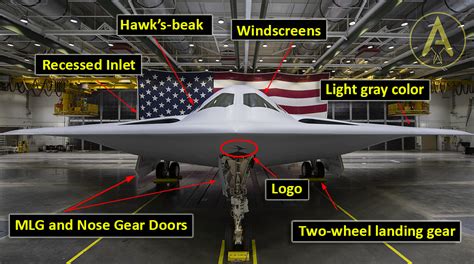
The B-21’s stealth is inseparable from its digital design philosophy. Observers at its first flight in November 2023 noted an exceptionally clean airframe, refined flying-wing geometry, and a notably quiet acoustic signature. These are visible hints of a deeper, system-level approach to survivability.
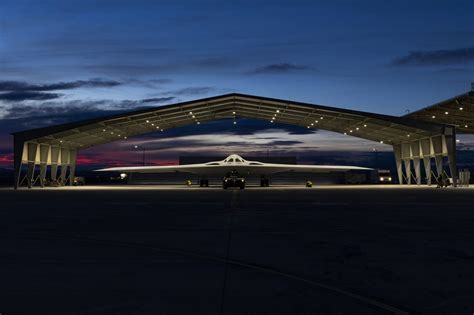
The Raider’s low observability is not based on a single breakthrough but on tight integration of shaping, materials, propulsion management, and sustainment. Inlet and exhaust design reduce radar and infrared signatures, while thermal management minimizes contrast against ambient air at altitude.
Importantly, the B-21’s stealth materials are reportedly far more durable and maintenance-friendly than those used on the B-2. Officials have emphasized that the Raider’s coatings are designed to withstand routine servicing and support multiple sorties per day without requiring climate-controlled hangars. This dramatically reduces the logistical footprint of stealth operations, especially in forward or austere locations across the Pacific.
What remains classified—payload capacity, exact signatures, propulsion specifics—matters precisely because the B-21’s survivability depends on uncertainty. Secrecy is not a marketing tactic; it is an operational weapon.
Digital Engineering as a Strategic Advantage
By 2026, the B-21 program is expected to include multiple flight-test aircraft, with envelope expansion and mission-system testing progressing faster than any previous bomber program. Low-rate initial production is already underway, and initial operational capability is projected for the 2027–2028 timeframe, with some deterrence roles potentially achieved earlier.
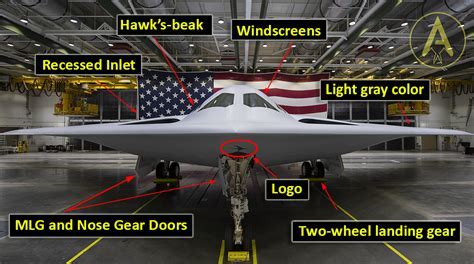
The significance of this timeline goes beyond schedules. When the first operational B-21 squadron stands up—reportedly at Ellsworth Air Force Base—the United States will field the first bomber designed for continuous evolution. Its digital architecture allows it to absorb new capabilities at the pace of software development rather than airframe redesign.
In an era where threats evolve rapidly and adversaries iterate quickly, that adaptability is decisive. The B-21 is not meant to remain static for decades; it is meant to change faster than the battlespace around it.
Why the B-21 Redefines What a Bomber Is
Calling the B-21 Raider a stealth bomber undersells its significance. It is better understood as a network-resilient, software-defined strategic platform that happens to carry bombs. Its true innovation lies not in what it looks like, but in how it was conceived and how it will evolve.
For the first time, a bomber has been built from the ground up to fight wars where data is contested, software is decisive, and adaptability determines survival. That is why the B-21 is not just the next bomber in line. It is the first bomber genuinely designed for fully digital warfare—and a clear signal of where airpower is headed next.