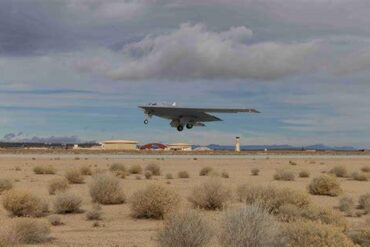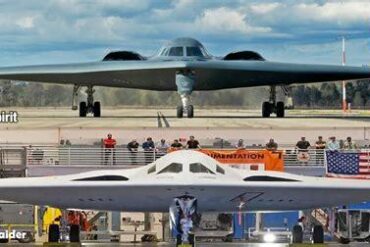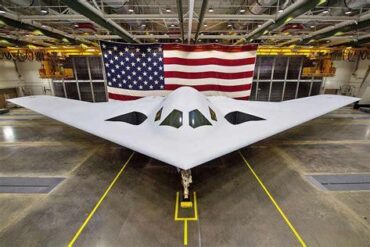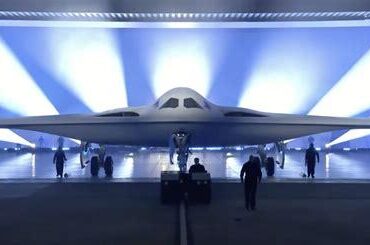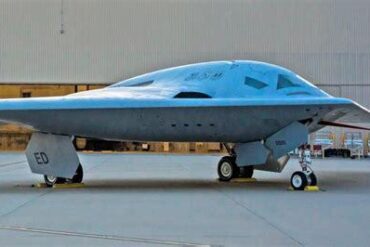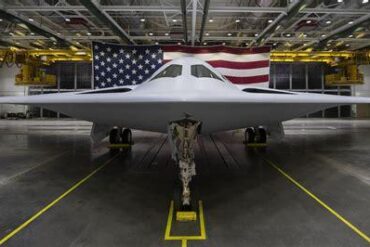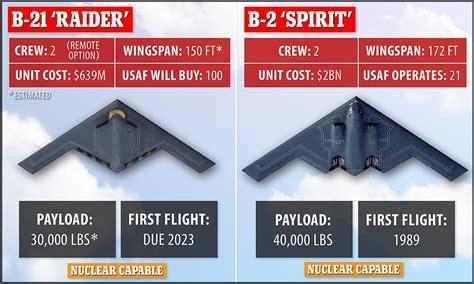
The Northrop Grumman B-21 Raider may resemble a smaller version of the iconic B-2 Spirit, but appearances are deceiving. Beneath its sleek flying-wing design lies an entirely new generation of technology that is poised to transform how the United States Air Force conducts long-range strike missions. While the B-2 revolutionized aerial warfare during the Cold War and post-Cold War era, the B-21 has been engineered for a dramatically different battlespace—one dominated by advanced sensors, artificial intelligence, integrated air defenses, and network-centric warfare.
Northrop Grumman has gone so far as to describe the B-21 as the world’s first sixth-generation combat aircraft, a designation traditionally reserved for fighter jets. The claim underscores a fundamental shift in military aviation. Unlike previous generational leaps that emphasized speed, maneuverability, or payload, the Raider’s greatest strengths lie in its software, connectivity, maintainability, survivability, and ability to generate combat power at scale.
The B-2 Spirit remains one of the most formidable aircraft ever built. Yet four decades of technological progress have enabled the B-21 to achieve capabilities that were simply impossible when the Spirit was conceived during the late Cold War.
By combining next-generation stealth, open architecture systems, digital engineering, and unprecedented networking capabilities, the Raider is set to become the backbone of America’s penetrating bomber force for decades to come.
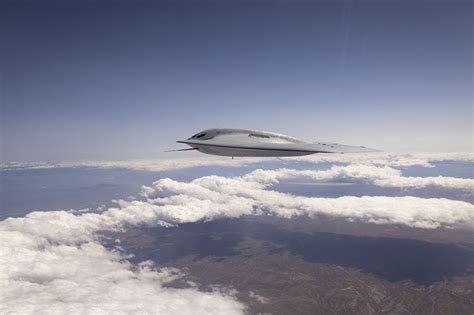
The B-21 Can Operate Without Climate-Controlled Hangars
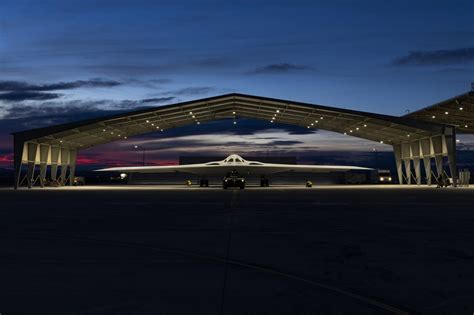
One of the most significant operational limitations of the B-2 Spirit has always been its demanding maintenance requirements. The aircraft earned the nickname “hangar queen” because its first-generation radar-absorbent materials require highly controlled environmental conditions to remain effective.
The B-2’s stealth coatings are extremely sensitive to humidity, temperature fluctuations, and adverse weather. Exposure to harsh climates can degrade the aircraft’s low-observable characteristics, forcing the U.S. Air Force to invest in specialized climate-controlled facilities. Even during overseas deployments, the service frequently transports portable air-conditioned hangars to preserve the bomber’s stealth integrity.
The B-21 Raider was designed specifically to eliminate much of this logistical burden.
Drawing upon decades of advances pioneered by the F-22 Raptor and later refined through the carrier-based operations of the F-35 Lightning II, the Raider incorporates vastly improved stealth materials capable of enduring far more demanding environmental conditions.
Modern radar-absorbent coatings are believed to be substantially more durable, less maintenance-intensive, and far more resistant to moisture, temperature extremes, and prolonged outdoor exposure. As a result, the B-21 is expected to spend considerably more time operating directly from open ramps and expeditionary airfields rather than remaining sheltered inside expensive facilities.
This capability dramatically enhances strategic flexibility. In a future conflict against a peer adversary, aircraft concentrated at a small number of large bases could become vulnerable targets. The Raider’s ability to disperse across multiple locations greatly complicates enemy targeting efforts while enabling more agile force deployment.
The B-21 Is Designed to Generate Much Higher Sortie Rates
The B-2 Spirit was conceived primarily as a strategic nuclear bomber and a first-day conventional strike platform. Its mission was straightforward: penetrate heavily defended airspace, destroy high-value targets, and open corridors for follow-on forces.
That concept worked effectively for decades. However, future conflicts against near-peer competitors such as China may not permit older bombers like the B-1B Lancer or B-52 Stratofortress to safely operate deep inside contested airspace.
Consequently, the Air Force expects the B-21 to do far more than execute a limited number of precision strikes.
Instead, the Raider has been designed to sustain a significantly higher operational tempo. It is expected to repeatedly penetrate defended airspace, attack time-sensitive targets, return, rapidly rearm, and launch again.
Achieving this capability required an entirely different design philosophy.
The B-21 incorporates advanced digital diagnostics, simplified maintenance procedures, modular components, and more durable stealth materials. These improvements reduce downtime between missions while decreasing the manpower required to sustain combat operations.
In modern warfare, victory increasingly depends on the ability to generate persistent combat power rather than relying solely on exquisite platforms. A stealth bomber capable of flying more missions with less maintenance offers commanders a tremendous advantage during prolonged high-intensity conflicts.
The Air Force’s planned procurement of at least 100 B-21s, with some analysts advocating for fleets approaching 150 aircraft, reflects this new strategic reality. Unlike the B-2, which served primarily as the spear’s tip, the Raider is intended to become the spear itself.
The Raider Was Built to Be Significantly More Affordable
Affordability may seem like an odd advantage for an aircraft expected to cost approximately $1 billion per airframe in current dollars, yet compared to the B-2 Spirit, the B-21 represents a remarkable achievement.
The B-2 program originally envisioned purchasing more than 130 production aircraft. The collapse of the Soviet Union drastically altered strategic priorities, resulting in procurement being reduced to just 21 bombers.
This severe reduction devastated economies of scale and transformed the Spirit into one of the most expensive military aircraft programs in history.
The Raider has been designed from the outset with affordability as a central requirement.
Northrop Grumman extensively employed digital engineering, advanced manufacturing techniques, and model-based systems engineering throughout development. These technologies reduced design risk, accelerated production processes, and minimized costly redesigns.
Equally important, the B-21 was engineered for lower life-cycle costs. Sustainment expenses frequently exceed acquisition costs over an aircraft’s operational lifespan. By simplifying maintenance procedures, reducing stealth restoration requirements, and enabling easier upgrades, the Air Force hopes to dramatically lower long-term operating expenses.
While no stealth bomber can ever be considered inexpensive, the Raider aims to provide significantly more combat capability per dollar than its predecessor.
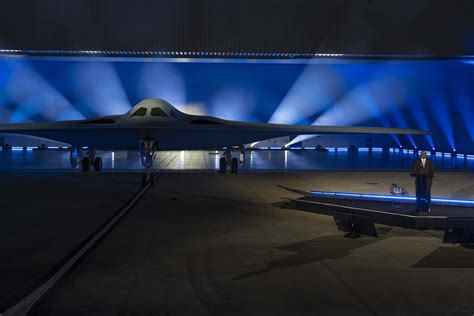
The B-21 Functions as an Airborne Network and Command Node
Perhaps the greatest difference between the B-2 and B-21 lies in how each aircraft interacts with the broader battlespace.
The B-2 largely represents the culmination of traditional stealth bomber philosophy. Although highly sophisticated, the aircraft was fundamentally designed to operate as an independent strike platform.
The B-21 embraces an entirely different approach.
Modern warfare increasingly depends upon interconnected systems exchanging information instantaneously across multiple domains. Aircraft, satellites, drones, naval vessels, ground units, and command centers must function as a single integrated force.
The Raider was designed from inception to serve as a highly networked platform capable of sharing and processing enormous amounts of information in real time.
This connectivity allows the bomber to operate not merely as a strike aircraft but as an airborne battle manager, sensor node, and command-and-control platform.
Future B-21 missions could involve directing collaborative combat aircraft, coordinating long-range strikes, distributing targeting information, and orchestrating complex multi-domain operations.
Such capabilities align closely with sixth-generation combat concepts emphasizing system-of-systems warfare.
Defense analysts have even suggested that future Raider variants or accompanying autonomous aircraft could undertake missions traditionally associated with fighters, including self-defense and limited air superiority functions.
In this sense, the B-21 represents a transition from a bomber that simply delivers weapons to a platform that actively shapes and coordinates the entire battlespace.
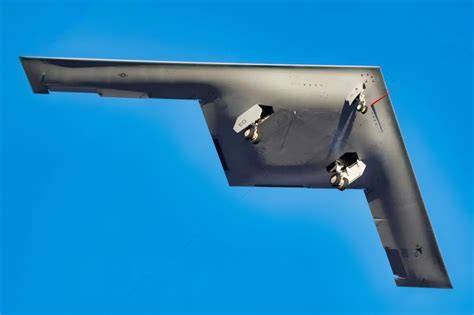
Open Architecture Allows Rapid Upgrades Throughout Its Service Life
One of the U.S. Air Force’s most important lessons from recent acquisition programs involves the dangers of proprietary systems and vendor lock-in.
Many legacy aircraft rely heavily on specialized hardware and software controlled by original manufacturers. This often increases costs, slows modernization efforts, and restricts flexibility.
The B-2 was developed during an era when such concerns received comparatively little attention.
The B-21 was intentionally designed around an open architecture framework.
Open systems permit multiple contractors to compete for upgrade programs, maintenance contracts, sensors, and software enhancements. Instead of depending exclusively on a single supplier, the Air Force gains greater control over modernization pathways.
This design philosophy provides enormous strategic benefits.
As threats evolve, new sensors, electronic warfare suites, communication systems, and mission software can be integrated more rapidly and at lower cost. Emerging technologies such as artificial intelligence and autonomous teaming capabilities can likewise be incorporated without extensive redesign.
Given that the Raider is expected to remain operational well into the second half of the twenty-first century, this adaptability may prove among its most valuable attributes.
A bomber entering service in the late 2020s must remain relevant against threats that do not yet exist. Open architecture ensures the B-21 can evolve continuously throughout its operational life.
The B-21 Is Far More Survivable Against Modern Air Defenses
When the B-2 entered service during the 1990s, its stealth capabilities were unprecedented. Few nations possessed integrated air defense networks capable of reliably detecting, tracking, and engaging such a low-observable platform.
The strategic environment has changed dramatically.
Potential adversaries now field sophisticated long-range radars, multispectral sensors, advanced surface-to-air missile systems, networked command architectures, and increasingly capable interceptors.
Although the B-2 remains exceptionally stealthy, decades of technological progress have gradually eroded its relative advantage.
The B-21 was developed specifically to restore that advantage.
Beyond simply possessing a smaller radar cross-section, the Raider incorporates four decades of advancements in low-observable design. Experts believe the aircraft features improved shaping techniques, advanced radar-absorbent materials, superior infrared signature reduction measures, and refined surface treatments that minimize radar reflections.
Even cockpit design appears optimized for stealth, with distinctive window configurations reducing seams and discontinuities that could increase detectability.
However, survivability extends far beyond passive stealth.
The Raider is also expected to employ highly sophisticated electronic warfare systems, advanced threat detection sensors, electronic attack capabilities, jamming technologies, and potentially deployable decoys.
Modern survivability depends upon frustrating every stage of the enemy kill chain—from initial detection and tracking to targeting and missile guidance. The B-21 has been engineered to excel across this entire spectrum.
In an era characterized by increasingly dense and sophisticated air defenses, these capabilities may ultimately determine whether penetrating strike operations remain viable deep into the twenty-first century.
The B-2 Spirit fundamentally changed strategic bombing. The B-21 Raider, however, is poised to redefine it entirely. By combining rugged expeditionary operations, higher sortie generation, advanced networking, open architecture, affordability, and next-generation survivability, the Raider represents not merely an evolution of the stealth bomber concept, but its complete reinvention.