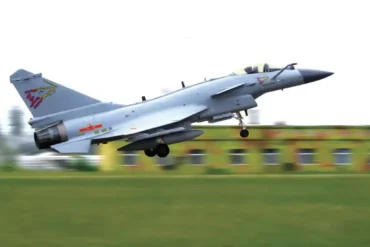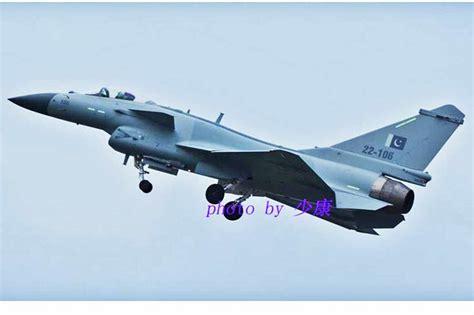
Amid rising tensions in South Asia and intensifying global scrutiny on China’s military exports, the Chengdu J-10C fighter jet has emerged as a centerpiece of Pakistan’s air defense strategy—exceeding expectations during recent high-stakes engagements. The aircraft, commonly referred to as the Vigorous Dragon, demonstrated not only technological sophistication but also combat effectiveness against more widely heralded Western platforms such as the Dassault Rafale.
The Strategic Context of the India-Pakistan Aerial Conflict
In one of the most significant aerial encounters in decades, the skies over South Asia became the arena for a silent yet telling clash between Pakistan’s Chinese-made fighters and India’s French-origin jets. Although neither side officially confirmed all details of the engagement, open-source intelligence and defense analysts agree that the dogfight occurred under beyond-visual-range (BVR) conditions, with no violation of respective national airspaces. The encounter has captivated international observers, not only due to regional implications but because it offers a rare glimpse into the capabilities of China’s exported military technology.
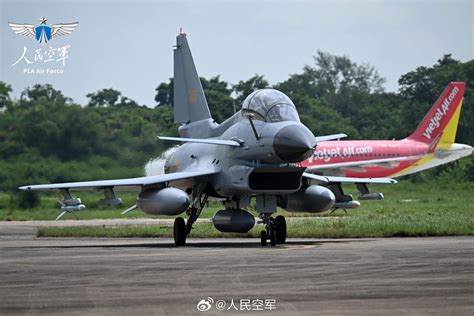
For the United States and other NATO-aligned nations, the performance of the J-10 in this skirmish was of particular interest. With increasing concerns about a near-peer conflict with China, Washington views Pakistan’s use of the J-10 as a valuable case study. That the aircraft reportedly stood its ground—if not outperformed—against India’s highly praised Dassault Rafale, challenges pre-existing assumptions about the technological disparity between Chinese and Western-designed fighters.
Chengdu J-10C: Design Influences and Technical Foundation
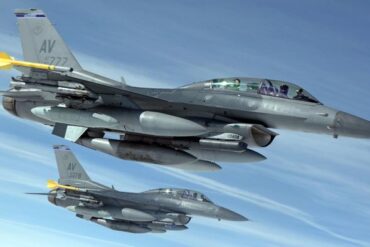
Known by NATO as the “Firebird”, the Chengdu J-10 is a single-engine, multirole fourth-generation fighter jet designed to serve as a backbone aircraft for China’s air force. The J-10’s architecture is unmistakably modern: featuring a delta wing-canard configuration optimized for agility and aerodynamic control. This configuration is reminiscent of certain European designs, such as the Saab Gripen and the Dassault Rafale, yet the J-10 bears an even closer resemblance to the Israeli IAI Lavi, which in turn was influenced by the American F-16 Fighting Falcon.
While Beijing officially denies any direct lineage, analysts and Russian aerospace experts suggest that Israel may have shared Lavi program data with China in the late 1990s. As a result, the J-10 benefits from decades of multilateral design evolution. Its airframe supports high maneuverability, rapid climb rates, and superior turn performance, making it well-suited for both BVR and within-visual-range (WVR) combat scenarios.
Engine and Performance Metrics: Raw Power Meets Precision
The J-10C variant used by Pakistan is powered by the AL-31FN Series 3 turbofan engine, a derivative of the Russian Saturn AL-31 series. This powerplant delivers 29,000 pounds of thrust, enabling the jet to achieve a maximum speed of Mach 1.8—roughly 1,350 mph—and ascend to a service ceiling of 59,000 feet.
The aircraft’s thrust-to-weight ratio of 1.04 is a key enabler of its outstanding performance envelope. With this engine configuration, the J-10 can reach its maximum ceiling in approximately one minute, an impressive feat that allows it to dictate terms in vertical combat scenarios. The aircraft is also equipped with digital fly-by-wire systems, multi-mode pulse-Doppler radar, and infrared search-and-track (IRST) sensors—features that rival many fourth-generation Western counterparts.
Weapons Suite: Lethality Across Multiple Engagement Envelopes
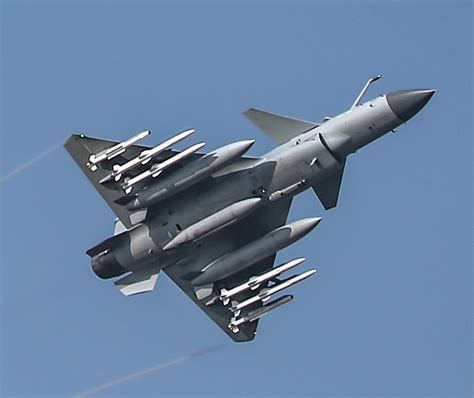
The J-10C’s combat loadout is a testament to its multirole mission flexibility. It supports up to 11 hardpoints for various combinations of air-to-air missiles, air-to-ground ordnance, and electronic warfare pods. During the BVR-centric dogfight with Indian forces, the aircraft’s PL-12 and PL-15 missiles played a crucial role.
- PL-12: A radar-guided medium-range missile comparable to the American AIM-120C AMRAAM.
- PL-15: A next-generation, long-range air-to-air missile featuring an active electronically scanned array (AESA) radar, capable of engaging targets at ranges exceeding 200 km.
For WVR engagements, the J-10C can deploy:
- PL-8: A short-range infrared-guided missile derived from the Israeli Python-3.
- PL-10: A high-off-boresight missile equipped with imaging infrared seekers and thrust vectoring.
This diverse arsenal ensures that the J-10C remains a threat across the full spectrum of aerial combat, from standoff missile duels to intense dogfights.
Avionics and Battlefield Networking: Eyes, Ears, and Data
The true strength of the J-10C lies not only in its flight performance or weaponry but in its advanced avionics suite. The aircraft incorporates:
- Active Electronically Scanned Array (AESA) radar, improving target acquisition and multi-target tracking.
- Helmet-mounted display system (HMDS), providing pilots with instantaneous control over missile cuing and targeting.
- Data link systems, enabling integration with ground control and other assets in real-time.
This network-centric capability significantly enhances situational awareness and interoperability, especially in contested or electronic warfare-heavy environments.
Pakistan’s Tactical Edge: Learning, Integrating, Dominating
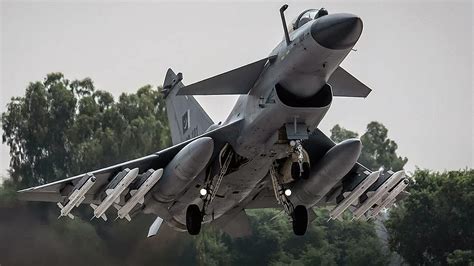
The Pakistan Air Force (PAF) has a well-established reputation for adapting quickly to new technologies and tactics. The acquisition of the J-10C represents a deliberate step toward creating a multi-layered, flexible air defense network. Unlike the legacy F-16s or JF-17 Thunder jets, the J-10C brings modern Chinese radar, propulsion, and missile technology into Pakistan’s aerial doctrine.
In contrast, India’s Dassault Rafale—while undeniably one of the most capable fourth-plus generation fighters—has encountered operational bottlenecks due to procurement delays and integration challenges. The fact that Pakistan’s J-10Cs were battle-ready and effective so soon after acquisition demonstrates both the platform’s maturity and PAF’s integration prowess.
Geopolitical Implications: Beyond South Asia’s Borders
The battlefield implications of the J-10’s performance extend well beyond the India-Pakistan dyad. For China, the successful use of the J-10C by an export client validates its growing status as a military-industrial powerhouse capable of producing effective, export-grade combat aircraft. As arms embargos and political frictions increasingly complicate Western arms deals, China is well-positioned to step in as the supplier of choice for nations seeking advanced, non-Western defense technology.
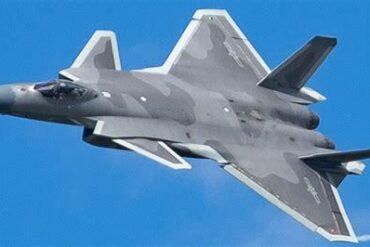
For Washington, the emergence of capable Chinese-origin fighters in regional conflicts raises serious strategic questions. If the J-10C can go toe-to-toe with the Rafale in the hands of Pakistani pilots, what does that suggest about the newer and stealthier J-20 Mighty Dragon? Pentagon analysts are reportedly scrutinizing every detail of the recent skirmish to extrapolate China’s true air combat capabilities.
A Warning Shot to Western Defense Dominance
What was once considered a lightweight multirole aircraft from an aspiring defense exporter now stands as a symbol of emerging parity in global military aviation. The Chengdu J-10C has not only met expectations but arguably exceeded them in the field—a battlefield validator of China’s industrial ambitions and Pakistan’s evolving air power doctrine.
As the world’s air forces prepare for an era marked by distributed conflict, unmanned swarm support, and networked command nodes, aircraft like the J-10C will be at the forefront. The West may still hold the edge in stealth and next-generation airframes, but the combat viability of China’s fourth-generation fighters is no longer a question—it is a proven fact.