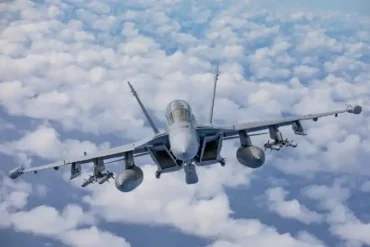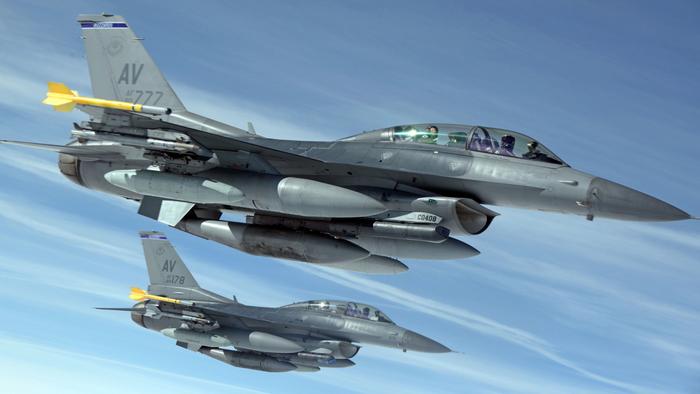
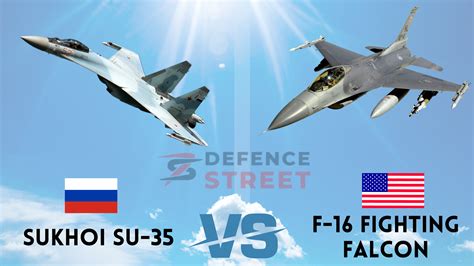
The F-16 Fighting Falcon and the Su-35 Flanker-E represent two vastly different philosophies in fighter jet design. The F-16, developed by the United States, is a lightweight, cost-effective, and highly maneuverable multirole fighter. In contrast, the Su-35, a Russian 4++ generation air superiority fighter, is built for high maneuverability, advanced avionics, and powerful weapons systems. This article provides an in-depth comparison between these two aircraft, covering design, maneuverability, radar capabilities, electronic warfare, combat performance, and strategic role.
Design and Generation Differences
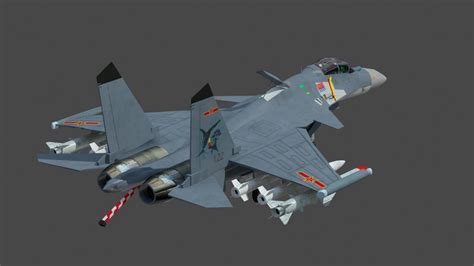
The Su-35 is a fourth-generation heavyweight fighter designed primarily for air superiority, with some multirole capabilities. It features twin AL-41F1S thrust-vectoring engines, which grant it exceptional agility. The Su-35 has a larger frame, more fuel capacity, and longer range, making it better suited for extended missions without refueling.
The F-16, in contrast, is a lightweight multirole fighter. Originally designed in the 1970s, it has undergone numerous upgrades, including the F-16AM variant equipped with the AN/APG-83 active electronically scanned array (AESA) radar. This fighter is optimized for cost-effectiveness, high sortie rates, and superior agility in within-visual-range (WVR) engagements.
Technical Specifications Comparison
| Feature | Su-35 | F-16 (Upgraded) |
|---|---|---|
| Generation | 4++ | 4th |
| Engines | 2x AL-41F1S | 1x Pratt & Whitney F100-PW-229 |
| Thrust | 29,000 lbf each | 29,160 lbf (afterburner) |
| Max Speed | Mach 2.25 | Mach 2.05 |
| Combat Range | 1,600 km | 550 km |
| Radar | Irbis-E PESA | AN/APG-83 AESA |
| Radar Detection Range | ~400 km | ~160 km |
| RCS (Radar Cross Section) | 5-10 m² | ~1.2 m² |
Maneuverability and Close-Range Combat
The Su-35 is renowned for its supermaneuverability, largely due to its thrust-vectoring nozzles, allowing it to execute extreme post-stall maneuvers like the Pugachev Cobra. This makes the Su-35 extremely difficult to track and target in a dogfight. Additionally, its large airframe and powerful engines allow it to maintain energy in high-G maneuvers.
The F-16, while lacking thrust-vectoring, compensates with its lightweight airframe and bubble canopy, which provides superior visibility. Its high thrust-to-weight ratio and excellent aerodynamics allow for superior high-speed turns and rapid acceleration. In close-range combat, an F-16 pilot with superior training could potentially outmaneuver an Su-35 pilot relying solely on aircraft performance.
Beyond Visual Range (BVR) Combat and Electronic Systems
Radar Capabilities
The Su-35‘s Irbis-E passive electronically scanned array (PESA) radar has a maximum detection range of 400 km, but in actual combat scenarios, it can lock onto enemy fighters at approximately 200 km. This is superior to the older AN/APG-66 radar found in early F-16 models. However, the F-16AM, equipped with the AN/APG-83 AESA radar, has better multi-target tracking and electronic warfare resistance, though its detection range is shorter at 160 km.
Missile Performance
- Su-35: Can carry the R-37M long-range air-to-air missile, with a staggering 400 km range.
- F-16: Uses the AIM-120D AMRAAM, with a 160 km range, but superior seeker technology and electronic counter-countermeasures (ECCM).
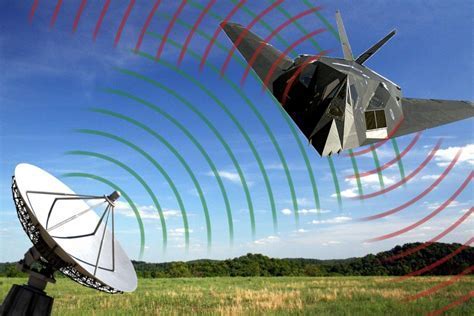
Radar Cross-Section (RCS) and Stealth Considerations
- F-16: Smaller RCS (~1.2 m²), making it harder to detect.
- Su-35: Larger RCS (5-10 m²), making it easier to track on radar.
Combat Scenarios and Strategic Role
Network-Centric Warfare and AWACS Support
- Su-35 relies on the A-50 AWACS for battlefield awareness, which enhances its effectiveness in Russian integrated air defense networks.
- F-16 benefits from NATO’s E-3 Sentry AWACS and the Link-16 tactical data link, giving it superior network-centric capabilities and real-time coordination with allied aircraft, drones, and ground-based radar.
Electronic Warfare and Countermeasures
- Su-35 uses the L-265 Khibiny-M electronic countermeasure suite, which provides decent jamming capabilities but is considered inferior to Western electronic warfare suites.
- F-16AM employs the AN/ALQ-211 Advanced Integrated Defensive Electronic Warfare Suite (AIDEWS), offering better radar jamming, missile approach warnings, and spoofing techniques.
Operational Use and Combat History
The Su-35 has seen limited combat, mainly in Syria, where it reportedly locked onto F-22 and F-35 fighters, though no direct engagements occurred. However, it has mostly faced older adversaries like Ukrainian MiG-29s rather than modern Western aircraft.
The F-16, in contrast, has a proven combat record, having been used extensively in NATO operations, Middle Eastern conflicts, and air superiority missions worldwide. However, the Ukrainian F-16s currently being delivered are older variants (F-16AM), which lack stealth coatings and some advanced avionics upgrades.
Conclusion: Strengths and Weaknesses
When the Su-35 Has the Advantage:
- Superior maneuverability and thrust-vectoring in close combat.
- Longer radar detection range and more powerful missiles.
- Greater fuel capacity for extended missions.
When the F-16 Has the Advantage:
- Smaller radar cross-section and better stealth profile.
- More advanced avionics and electronic warfare capabilities.
- Stronger support from NATO’s integrated battlefield network.
Ultimately, the winner in an F-16 vs Su-35 confrontation depends on numerous factors such as pilot training, electronic warfare superiority, missile effectiveness, and battlefield coordination.
Frequently Asked Questions (FAQ)
1. Has the Su-35 ever shot down an F-16?
No, as of now, there have been no confirmed air-to-air engagements between an Su-35 and an F-16.
2. Which aircraft is better in a dogfight?
The Su-35 holds a maneuverability advantage with thrust-vectoring, but an F-16 with an experienced pilot could still pose a serious threat due to its agility and high-speed handling.
3. Why does NATO prefer the F-16 over the Su-35?
NATO prefers the F-16 due to its interoperability, cost-effectiveness, advanced avionics, and strong electronic warfare capabilities.