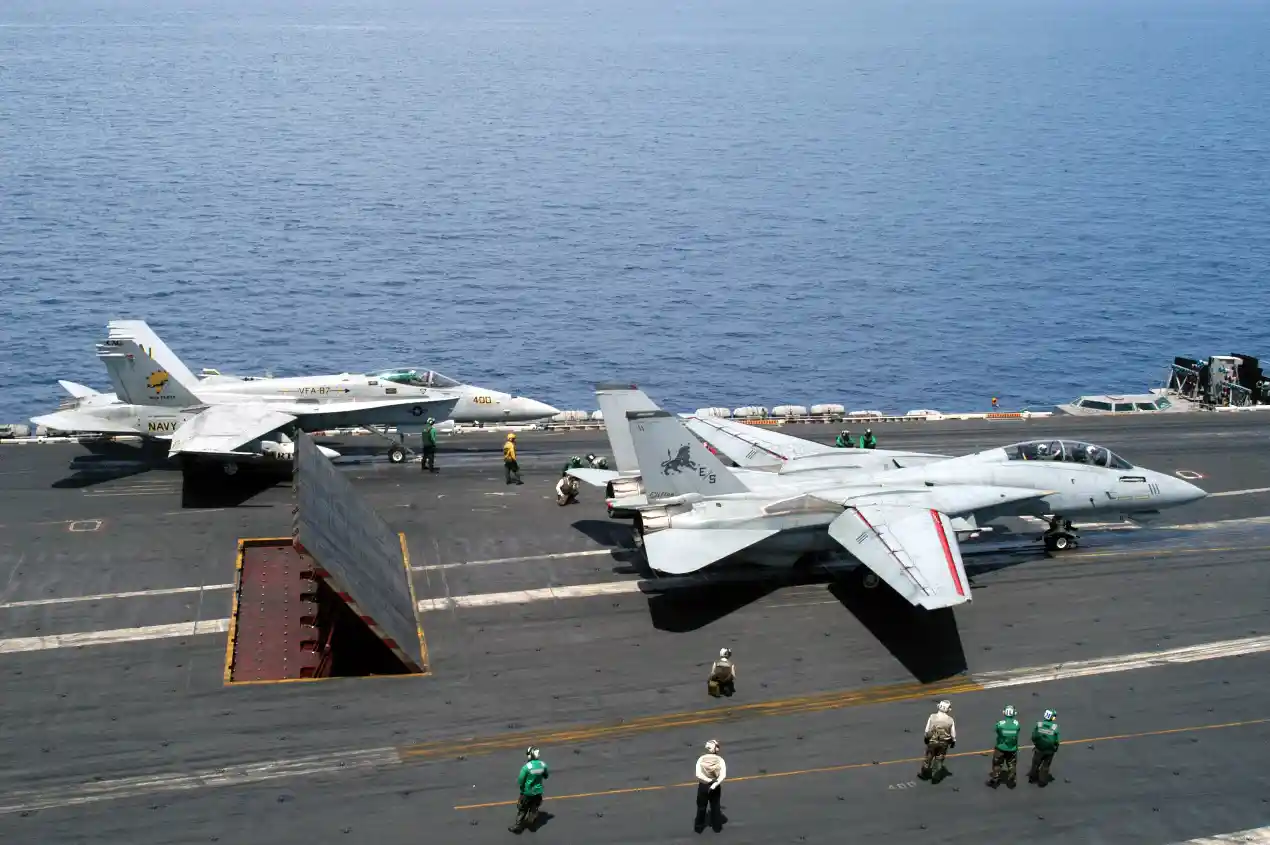
The F-14 Tomcat and the F/A-18 Hornet/Super Hornet represent two distinct eras of U.S. naval aviation. Designed with differing operational philosophies, these aircraft served as the backbone of the U.S. Navy’s carrier air wings, each excelling in specific mission sets. This comparison delves into their design philosophy, performance, capabilities, and operational history, providing an in-depth look at how they stack up against each other.
Design and Mission Roles
F-14 Tomcat: Air Superiority Interceptor
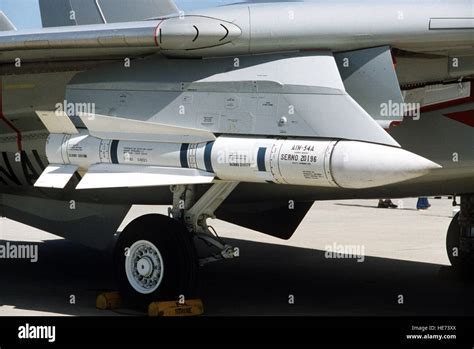
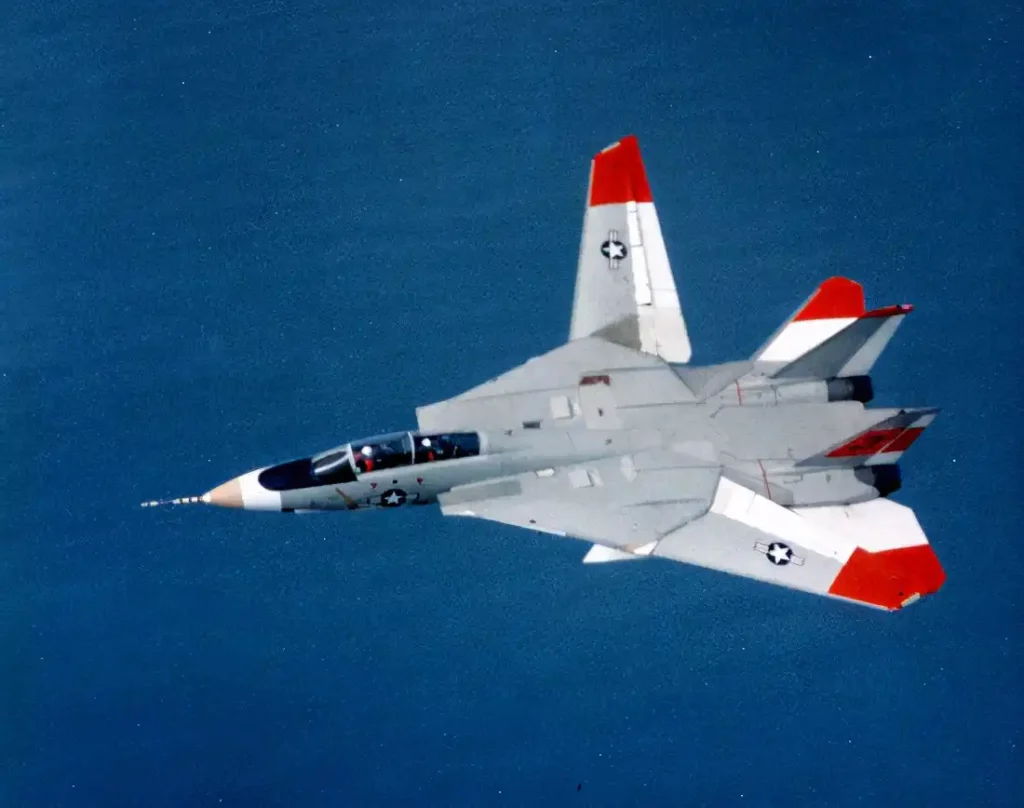
The F-14 Tomcat was developed as an air superiority fighter with an emphasis on long-range interception. Its primary mission was to defend carrier strike groups against Soviet bombers and cruise missiles. Designed with a variable-sweep wing, the F-14 was capable of both high-speed interception and low-speed dogfighting, offering versatility in air combat. The aircraft’s most formidable weapon was the AIM-54 Phoenix missile, which had a range of approximately 200 km and could engage multiple targets simultaneously.
Advantages of the F-14:
- Long-range engagement capability with the AIM-54 Phoenix missile
- Superior speed with a top velocity of Mach 2.2
- Variable-sweep wings allowing flexibility in different combat scenarios
- Advanced radar systems (AN/AWG-9) for long-range target tracking
Disadvantages of the F-14:
- High maintenance costs due to complex variable-wing mechanics
- Limited ground-attack capability
- Large size reduced its deployability on carriers
F/A-18 Hornet: Multi-Role Workhorse
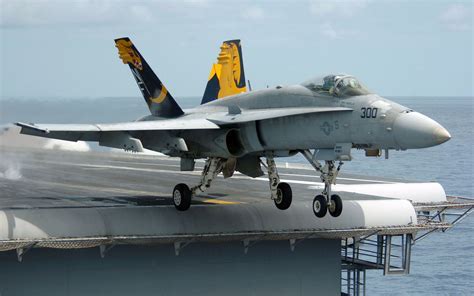
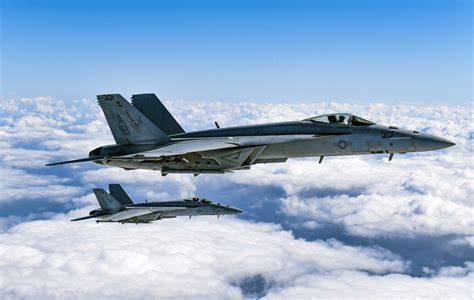
The F/A-18 Hornet was designed as a multi-role combat aircraft, capable of handling both air-to-air and air-to-ground missions. Unlike the F-14, which was optimized for air superiority, the F/A-18 was a more balanced platform, excelling in combat versatility and cost-effectiveness. Later, the F/A-18E/F Super Hornet improved upon the original design by increasing fuel capacity, enhancing avionics, and extending operational range.
Advantages of the F/A-18:
- Multi-role capability (air combat, ground strikes, anti-ship operations)
- More modern avionics with APG-79 AESA radar
- Lower maintenance requirements compared to the F-14
- Compact design allows greater deployment flexibility on aircraft carriers
Disadvantages of the F/A-18:
- Lower maximum speed (Mach 1.8) compared to the F-14
- Shorter unrefueled combat radius (740 km vs. 805 km of the F-14)
- Less effective in beyond-visual-range engagements due to lack of a long-range missile equivalent to the AIM-54 Phoenix
Performance and Technology Comparison
Speed and Maneuverability
- F-14: Maximum speed of Mach 2.2, making it one of the fastest U.S. Navy aircraft.
- F/A-18: Maximum speed of Mach 1.8, but with superior low-speed maneuverability and better flight control systems.
Combat Range and Endurance
- F-14: 805 km combat radius, designed for long-range interception without in-flight refueling.
- F/A-18: Originally had a shorter range (563 km combat radius), but the Super Hornet variant improved this to 740 km, aided by superior fuel efficiency and aerial refueling capabilities.
Avionics and Electronic Warfare
- F-14: Equipped with AN/AWG-9 radar, capable of tracking multiple targets beyond visual range.
- F/A-18: Uses APG-79 AESA radar, offering superior target tracking, electronic warfare resilience, and networked combat capabilities.
Maintenance and Cost Efficiency
- F-14: Requires approximately 50 maintenance hours per flight hour, largely due to its complex wing structure.
- F/A-18: Requires 10 maintenance hours per flight hour, making it far more cost-effective.
- Cost per unit:
- F-14D: ~$60 million (1990s value)
- F/A-18E/F: ~$70 million (modern inflation-adjusted, but with lower operational costs)
Operational History and Legacy
F-14: The Cold War Icon
The F-14 Tomcat was the premier U.S. Navy fighter from the 1970s until its retirement in 2006. Designed to counter Soviet threats, it gained legendary status through its success in the Iran-Iraq War (as part of Iran’s Air Force) and Hollywood fame via Top Gun. However, with the end of the Cold War and rising maintenance costs, the Navy phased out the F-14 in favor of the more cost-efficient and adaptable F/A-18.
F/A-18: The Modern Navy Workhorse
The F/A-18 Super Hornet continues to serve as the primary carrier-based fighter for the U.S. Navy. Its upgrades, including enhanced electronic warfare capabilities, new weapons integration, and improved range, make it suitable for modern naval combat. The Super Hornet is also being evaluated as a cost-effective alternative to the F-35C for specific missions.
F-14 vs. F/A-18 in a Hypothetical Dogfight
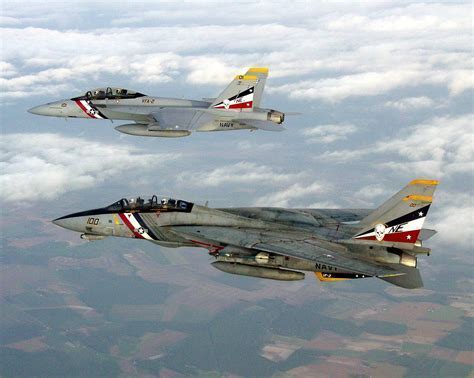
- Long-range engagement: The F-14 has the advantage, thanks to its AIM-54 Phoenix missiles.
- Close-range dogfight: The F/A-18 is superior, with its advanced flight control systems and better maneuverability.
- Electronic warfare and survivability: The F/A-18 dominates, with better radar and countermeasures.
- Fleet integration: The F/A-18 is more efficient, being easier to maintain and deploy in larger numbers.
Conclusion
The F-14 Tomcat remains an iconic air superiority fighter, excelling in long-range combat and speed, while the F/A-18 Super Hornet is a more versatile, cost-effective, and technologically advanced platform. The F/A-18’s adaptability, avionics, and maintainability make it the superior choice for modern naval operations, though the F-14 will always be remembered for its unparalleled role in Cold War air defense.
FAQ
1. Why was the F-14 Tomcat retired?
The F-14 was retired primarily due to high maintenance costs, the end of the Cold War, and the need for a multi-role aircraft that could replace both fighter and attack aircraft roles efficiently.
2. Can the F-14 Tomcat outmatch modern fighter jets?
While the F-14 had an impressive speed and weapon system, modern fighters like the F-22 Raptor and F-35 Lightning II surpass it in stealth, avionics, and situational awareness.
3. Is the F/A-18 Super Hornet still in production?
Yes, the F/A-18 Super Hornet remains in production and continues to receive upgrades, ensuring its relevance in 21st-century warfare.