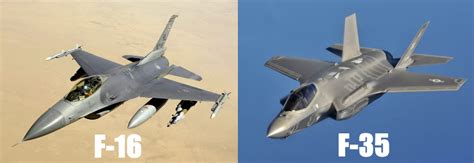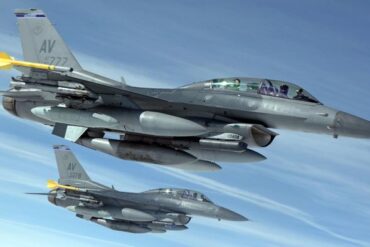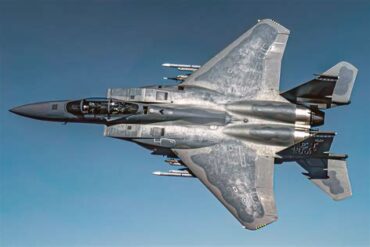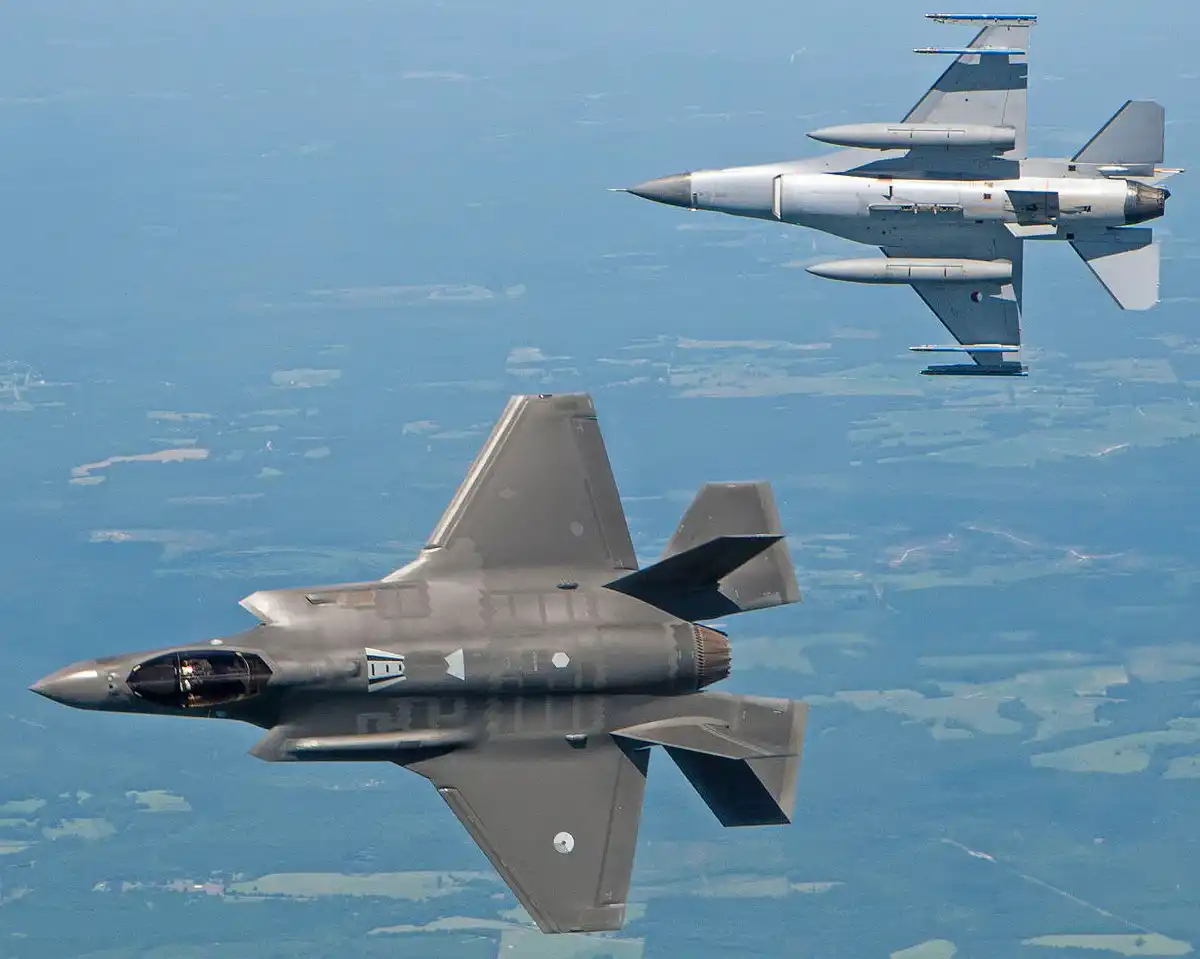
The F-16 Fighting Falcon and F-35 Lightning II represent two different generations of fighter aircraft, each with distinct capabilities, design philosophies, and operational roles. The F-16, a fourth-generation fighter, has been a cornerstone of air forces worldwide due to its affordability, versatility, and combat effectiveness. In contrast, the F-35, a fifth-generation stealth fighter, integrates cutting-edge avionics, sensor fusion, and stealth technology to dominate the modern battlefield. This analysis compares their performance, stealth characteristics, avionics, weaponry, and strategic value.
Stealth Capabilities and Survivability
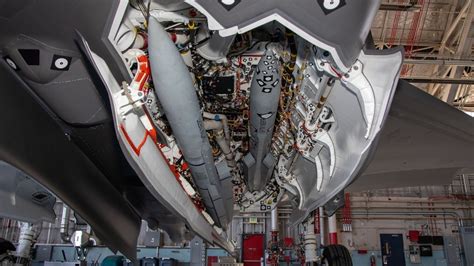
The most significant difference between the F-16 and F-35 lies in their stealth capabilities. The F-35, designed from the ground up for low observability, features an internal weapons bay, radar-absorbing coatings, and carefully designed airframe shaping to minimize radar cross-section. This allows the F-35 to engage adversaries before being detected, significantly enhancing its survivability.
On the other hand, the F-16 lacks stealth capabilities. It relies on external weapon mounts, which increase its radar signature, making it highly visible to modern air defense systems. While upgrades like electronic warfare pods and reduced radar cross-section materials have improved its survivability, it remains vulnerable compared to fifth-generation aircraft.
Speed and Maneuverability
Speed
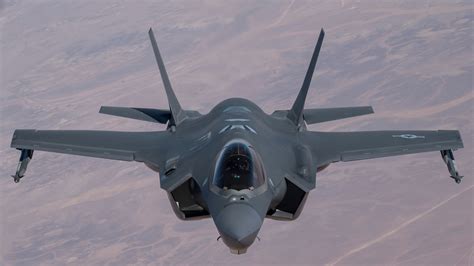
The F-16 outperforms the F-35 in raw speed, reaching a maximum of Mach 2.0 (approximately 2,400 km/h), while the F-35 is limited to Mach 1.6 (around 1,930 km/h). This gives the F-16 an advantage in intercepting high-speed threats and executing quick engagements.
Maneuverability
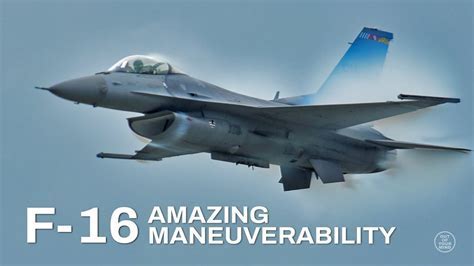
The F-16 is renowned for its agility, high thrust-to-weight ratio (1.11), and superior dogfighting capabilities. It excels in close-range aerial combat, with its bubble canopy providing excellent pilot visibility. In contrast, the F-35 emphasizes beyond-visual-range engagements and relies on its sensor fusion and stealth to avoid traditional dogfights. While its fly-by-wire system and advanced aerodynamics grant it respectable maneuverability, its thrust-to-weight ratio (1.07) is slightly lower than that of the F-16, making it somewhat less agile in close-quarters combat.
Avionics and Sensor Systems
The F-35 incorporates a cutting-edge sensor suite that includes the AN/APG-81 AESA radar, the Electro-Optical Distributed Aperture System (EODAS), and an advanced electronic warfare suite. These systems provide 360-degree situational awareness, automatic target tracking, and seamless battlefield integration.
While the F-16 has received avionics upgrades, such as the AN/APG-83 AESA radar in the F-16V Viper variant, its overall situational awareness and networked warfare capabilities are still inferior to those of the F-35. The latter’s ability to act as a battlefield information hub and share real-time data with other assets gives it a decisive advantage.
Weapons Loadout and Multi-Role Capabilities
The F-16 is a versatile multi-role fighter, capable of carrying a broad range of air-to-air, air-to-ground, and anti-radiation weapons. However, its reliance on external weapon stations increases its radar signature. It can carry up to 7.7 tons of munitions, including AIM-9X Sidewinder, AIM-120 AMRAAM, AGM-88 HARM, and JDAM precision-guided bombs.
The F-35 features an internal weapons bay for stealth operations, housing AIM-120 AMRAAM missiles, GBU-31 JDAM bombs, and other precision-guided munitions. In non-stealth configurations, it can carry up to 8 tons of weaponry using external pylons, giving it a comparable payload to the F-16 while maintaining a stealth-first approach.
Operational Costs and Maintenance
The F-16 has long been regarded as an affordable and easy-to-maintain fighter, with a per-unit cost of around $50 million and lower operational expenses. Its simple design and widespread availability make it an attractive choice for air forces requiring cost-effective fleet expansion.
Conversely, the F-35, with its advanced stealth materials and complex electronics, has a higher initial cost exceeding $100 million per unit. However, improvements in sustainment logistics and multi-nation cost-sharing have progressively reduced its long-term maintenance expenses. Despite this, its sophisticated maintenance requirements make it less suited for prolonged, high-intensity operations compared to the F-16.
Strategic and Tactical Roles
The F-35 is designed as a force multiplier, capable of penetrating heavily defended airspace, executing precision strikes, and providing intelligence support for other aircraft. Its network-centric warfare capability allows it to integrate seamlessly into modern battle scenarios.
The F-16, while still highly effective, is better suited for regional conflicts and secondary battlefield roles. With the introduction of the F-16V variant, which incorporates modern avionics, it remains a viable option for countries looking for cost-effective air superiority and ground attack solutions.
Conclusion: Complementary, Not Competing
The F-35 represents the future of aerial warfare with its stealth, advanced avionics, and battlefield networking capabilities. However, the F-16 remains an economical, high-performance fighter, particularly in asymmetrical warfare scenarios and secondary roles. Rather than a direct replacement, the two aircraft serve complementary functions: the F-35 as a high-end strategic asset, and the F-16 as a proven, cost-effective workhorse.
Frequently Asked Questions (FAQs)
1. Can the F-16 defeat the F-35 in a dogfight?
The F-16 has superior maneuverability and speed, which could give it an edge in a dogfight scenario. However, the F-35 is designed to avoid close-range engagements by utilizing stealth and advanced sensor fusion to strike before being detected. In modern combat, beyond-visual-range capability is often more decisive than dogfighting prowess.
2. Why is the F-35 more expensive than the F-16?
The F-35 incorporates stealth technology, next-generation avionics, and sensor fusion, which drive up its cost. Additionally, its multi-role capabilities, networked warfare integration, and low-observability materials require extensive research, development, and maintenance infrastructure.
3. Which countries use both the F-16 and F-35?
Several nations, including the United States, Israel, and Norway, operate both aircraft. The F-35 is used for high-end strategic missions, while the F-16 continues to serve in air superiority and ground-attack roles within the same air forces.