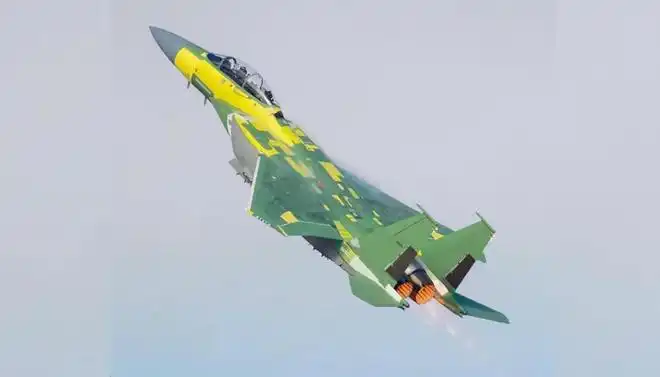
The F-15 and Su-35 are two of the most formidable air superiority fighters in the world. Each represents the pinnacle of its respective nation’s aerospace engineering, with distinct advantages and capabilities. While the F-15, developed by McDonnell Douglas (now Boeing), has long been a mainstay of the United States Air Force (USAF), the Su-35, designed by Sukhoi, is one of Russia’s most advanced multi-role fighters. This article offers an in-depth comparison of these two aircraft, examining their performance in key combat areas such as beyond-visual-range (BVR) combat, close-quarters dogfighting, radar and sensor systems, weaponry, and maintenance.
Beyond-Visual-Range Combat: The F-15’s Superiority
F-15EX: A Game-Changer in Long-Range Engagements
The F-15EX, the latest iteration of the F-15 series, has been significantly upgraded to enhance its capabilities in beyond-visual-range (BVR) combat. One of the aircraft’s most impressive features is its AN/APG-82 (V)1 Active Electronically Scanned Array (AESA) radar, which has a detection range of up to 450 kilometers. This radar system enables the F-15EX to track up to 26 targets simultaneously, attacking up to four of them at once. This is a considerable advantage over the Su-35, which is equipped with the “Snow Leopard-E” Passive Electronically Scanned Array (PESA) radar, with a range of 400 kilometers.
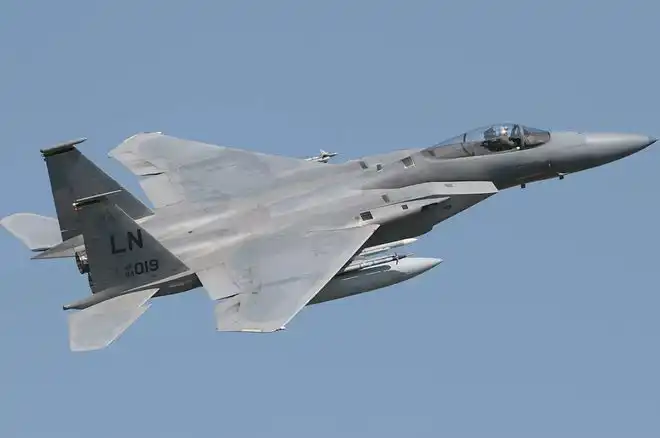
Furthermore, the F-15EX has the capability to carry up to 22 AIM-120D AMRAAM missiles, providing it with exceptional saturation attack capabilities. These missiles, with a range of 160-180 kilometers, allow the F-15EX to engage multiple targets at significant distances, ensuring a highly effective first-strike advantage in BVR combat.
Su-35: A Threat with Long-Range Missiles and Electronic Warfare
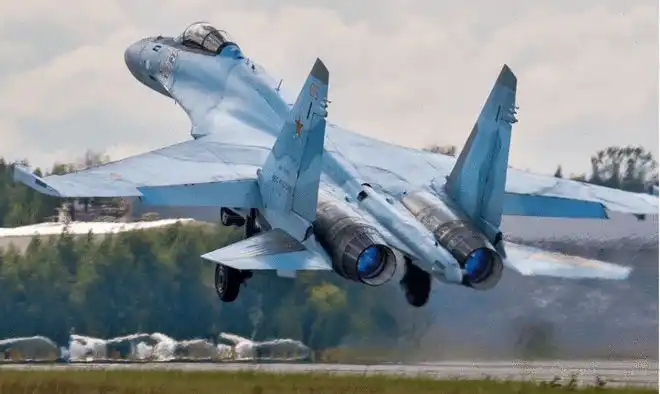
The Su-35 has its own strengths in BVR engagements, particularly in its missile capabilities and electronic warfare systems. It is equipped with the R-37M, a long-range air-to-air missile with a range of 300-400 kilometers, designed to target high-value assets such as AWACS (Airborne Warning and Control Systems). The R-37M can fly at speeds of Mach 6, dramatically reducing the response time of enemy aircraft.
In addition, the Su-35 is equipped with the L175M Khibiny electronic warfare system, which can jam enemy radar and missile guidance systems, potentially reducing the effectiveness of missiles like the AIM-120. However, while these systems are impressive, the F-15EX’s advanced radar and missile technologies, combined with the integration into the broader US Air Force network, give the F-15EX the edge in long-range combat.
The Verdict on BVR Combat
In BVR combat scenarios, the F-15EX holds the upper hand due to its advanced radar and missile capabilities, which provide greater range and targeting accuracy. However, the Su-35 can still pose a significant threat with its long-range R-37M missiles and sophisticated electronic warfare systems.
Close-Range Dogfighting: The Su-35’s Maneuverability Advantage
Su-35: Master of the Dogfight
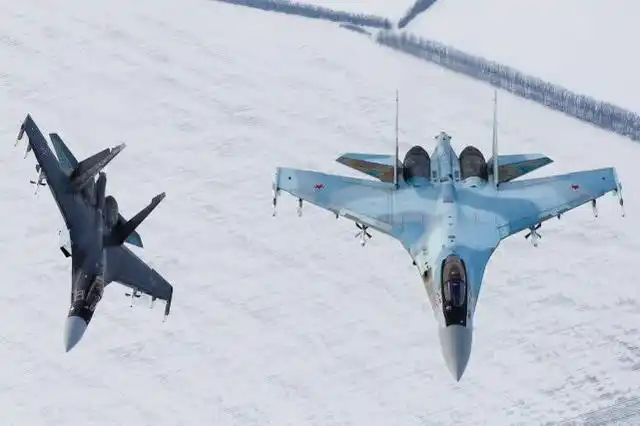
In close-quarters combat, the Su-35 has a clear advantage. Powered by the 117S vector-thrust engines, the Su-35 is capable of executing highly advanced maneuvers, such as the Cobra maneuver, which gives it unparalleled agility in low-speed dogfights. The aircraft’s helmet-mounted sights and R-73 missiles further enhance its close-range combat effectiveness, allowing it to engage targets even at high angles off the nose.
The Su-35’s maneuverability has been demonstrated in various training exercises. For example, in 2004, an Indian Su-30MKI, which shares technology with the Su-35, achieved a 4:1 kill ratio over the F-15C in simulated combat, highlighting the Su-35’s dominance in a dogfight scenario.
F-15: Strong, But Not as Agile
While the F-15C/E does have excellent thrust-to-weight ratio and wing loading that contribute to good maneuverability, it lacks thrust vectoring capabilities, which limits its ability to perform extreme maneuvers during close combat. The F-15EX has addressed some of these limitations with upgrades to its avionics and missile systems (such as the AIM-9X Sidewinder), but it still cannot match the Su-35’s agility in close-range engagements.
The Verdict on Dogfighting
In a close-quarters dogfight, the Su-35 holds a significant advantage due to its superior maneuverability and weapon integration, making it more capable in high-speed, low-altitude engagements. The F-15EX, while still formidable, faces challenges in this domain.
Radar and Sensor Systems: F-15EX’s Technological Superiority
F-15EX: AESA Radar and Sensor Fusion
The F-15EX is equipped with the AN/APG-82 AESA radar, which provides superior resistance to jamming and excellent resolution in complex environments. It allows the F-15EX to maintain situational awareness even in heavily contested electronic warfare environments. This radar is far superior to the Su-35’s PESA radar, which is more susceptible to interference in certain combat scenarios.
Additionally, the F-15EX can integrate seamlessly into a networked combat environment, sharing target data with other platforms such as the F-22 and AWACS. This sensor fusion gives the F-15EX unparalleled awareness and enables it to take advantage of the broader support network available to US forces.
Su-35: Strong in Infrared Search and Track (IRST)
The Su-35 compensates for its radar limitations with its OLS-35 infrared search and track (IRST) system, which can detect stealth aircraft like the F-22 at ranges up to 50 kilometers. The system has proven effective in detecting low-observable targets, even in environments with electronic jamming. In fact, the Su-35 was reported to have locked onto an F-22 in Syria, demonstrating its effectiveness against stealth fighters.
However, while the Su-35’s IRST system is a significant advantage in detecting stealth aircraft, it lacks the broader integration and data-sharing capabilities of the F-15EX’s radar and sensors.
The Verdict on Radar and Sensors
While the Su-35 excels in infrared detection, the F-15EX’s advanced AESA radar and sensor fusion capabilities give it a decisive edge in detecting and engaging targets across multiple domains, especially in highly contested environments.
Weaponry and Multirole Capabilities: F-15EX’s Firepower vs Su-35’s Balance
F-15EX: A True Air-to-Air Firepower Platform
The F-15EX is often referred to as a “missile truck” due to its ability to carry a large arsenal of air-to-air missiles. With the capability to carry up to 24 missiles, including the AIM-120D and AIM-9X, the F-15EX offers exceptional flexibility in terms of air-to-air combat. Additionally, it can carry AGM-183A hypersonic missiles, which add a standoff strike capability for land-based targets.
This large payload capacity allows the F-15EX to act as a highly effective platform for massed missile engagements, overwhelming enemy aircraft with multiple simultaneous threats.
Su-35: Versatility with Balanced Weapons
While the Su-35 may not carry as many air-to-air missiles as the F-15EX, it maintains a balanced multirole capability. The Su-35 can carry up to 12 air-to-air missiles, and it also has ground-attack capabilities, carrying up to 14 air-to-ground weapons, including precision-guided munitions. The Su-35’s multifunction radar enables it to conduct both air-to-air and air-to-ground operations effectively, making it a versatile platform for complex missions in both air superiority and ground attack roles.
The Verdict on Weaponry
The F-15EX has a clear advantage in terms of air-to-air missile capacity and overall firepower, making it a formidable threat in high-intensity combat scenarios. However, the Su-35 offers a more balanced approach, with a solid combination of air-to-air and air-to-ground capabilities, making it a versatile asset on the battlefield.
Maintenance and Upgradability: F-15’s Long-Term Reliability vs Su-35’s Challenges
F-15: A Proven, Long-Lasting Platform
One of the most significant advantages of the F-15 is its longevity and the ongoing “Eagle 2040” upgrade program, which continuously enhances its avionics, weapons systems, and overall capabilities. With a service life of up to 16,000 flight hours, the F-15 is one of the most reliable aircraft in operation today, ensuring long-term serviceability.
The F-15EX’s upgrades also make it highly adaptable, ensuring that it remains relevant in future combat scenarios. This adaptability is further enhanced by the availability of spare parts and ongoing maintenance programs from Boeing.
Su-35: High Maintenance, Limited Service Life
In contrast, the Su-35 faces some challenges regarding maintenance and service life. While the Su-35’s lifespan has been extended to 6,000 flight hours, it still lags behind the F-15 in terms of overall longevity. Additionally, Russian-made aircraft, including the Su-35, often face difficulties with spare parts availability due to international sanctions and logistical challenges.
The Verdict on Maintenance
The F-15EX has a clear edge in terms of reliability and service life, ensuring that it can remain operational for a longer period with relatively low maintenance demands. The Su-35, while impressive in terms of combat performance, faces more challenges in this regard.
Conclusion: The Final Verdict
Both the F-15EX and Su-35 are exceptional aircraft, each with its own strengths and weaknesses. In beyond-visual-range combat, the F-15EX’s superior radar, missile range, and data-sharing capabilities give it the edge. In close-quarters dogfighting, the Su-35’s maneuverability and infrared tracking system make it a formidable adversary. In terms of sensor fusion, the F-15EX’s advanced radar and AESA system outclass the Su-35’s passive radar, but the Su-35 excels in infrared detection.
When it comes to weaponry, the F-15EX has a distinct advantage in terms of missile capacity, but the Su-35 provides a more versatile multirole capability. Lastly, the F-15EX’s reliability and longer service life ensure its continued dominance in the skies, while the Su-35 faces some challenges with maintenance and service life.
Ultimately, the outcome of a confrontation between these two aircraft would depend heavily on operational context. The F-15EX is likely to dominate in a coordinated, networked environment, while the Su-35 could exploit its superior maneuverability and stealth detection capabilities in a more isolated, close-quarters engagement.