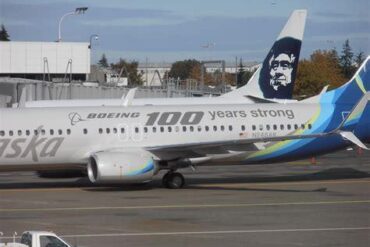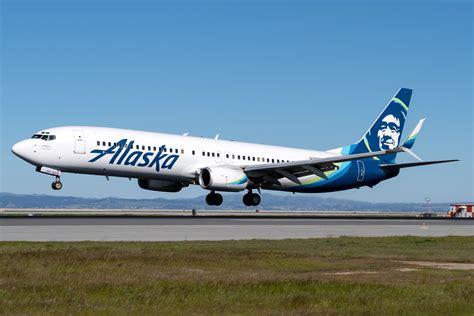
Alaska Airlines has marked a major milestone in its fleet evolution with the delivery of its 300th Boeing 737 aircraft, reinforcing a legacy deeply intertwined with Boeing’s iconic narrowbody jets. As a long-standing operator of Boeing aircraft since the 1960s, Alaska’s commitment to the 737 family continues to shape its operational backbone. Simultaneously, the airline is making ambitious strides into the future of long-haul air travel, preparing to take delivery of Hawaiian Airlines’ fourth Boeing 787-9 Dreamliner, a move made possible by Alaska’s acquisition of Hawaiian in 2024.
A Historic Relationship with Boeing
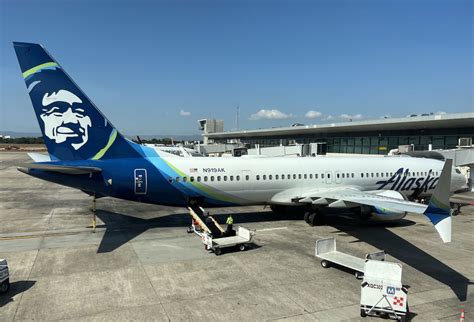
Alaska Airlines’ relationship with Boeing spans over half a century. From the introduction of its first Boeing 727 in 1966 to becoming a launch customer for the 737-900 in 2001, Alaska has built a reputation as a reliable Boeing operator. The delivery of the 300th Boeing 737, assembled just 10 miles from Alaska’s Seattle headquarters, is both a symbolic and strategic event. It underscores not just longevity but a shared regional heritage and engineering trust.
In a recent statement, Shane Jones, Alaska Airlines’ Senior Vice President of Fleet, Revenue Products, and Real Estate, celebrated the moment, reflecting on the strength of the Boeing partnership and its integral role in Alaska’s future. Today, Alaska’s fleet boasts six different 737 variants, including the 737-700, 737-800, 737-900, 737-900ER, 737 MAX 8, and 737 MAX 9. This broad deployment enables operational flexibility across short-haul, mid-haul, and transcontinental routes.
Fleet Growth Strategy and Next-Generation Aircraft
The expansion of Alaska’s 737 fleet reflects the carrier’s agile response to changing market dynamics and passenger demand. While the airline recently retired its first 737-900, it continues to modernize its fleet with the fuel-efficient MAX models. The addition of MAX 9 and MAX 8 variants signifies an intent to strike a balance between environmental responsibility and performance reliability.
Complementing its mainline operations, Alaska Air Group’s regional branch, Horizon Air, operates Embraer E175s, providing vital feeder traffic to major hubs and smaller cities alike. Together, this network ensures a well-synchronized domestic operation. But the story doesn’t end domestically. With the Hawaiian Airlines merger, Alaska is stepping into a new chapter.
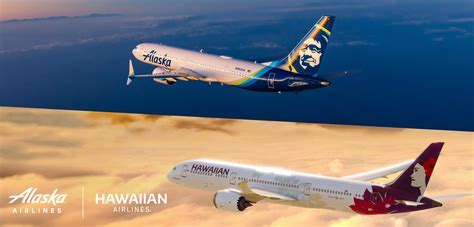
Welcoming Hawaiian’s Fourth Boeing 787-9 Dreamliner
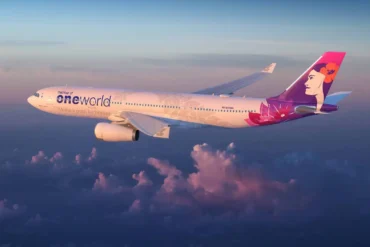
In a bold move to grow beyond its domestic roots, Alaska Airlines is preparing to induct Hawaiian Airlines’ fourth Boeing 787-9 Dreamliner into its newly integrated fleet. Prior to this acquisition, Alaska had never operated widebody aircraft. The inclusion of the Dreamliner — known for its long-range capabilities, fuel efficiency, and passenger comfort — signals Alaska’s serious intent to penetrate the international long-haul market.
According to fleet data, Alaska (via Hawaiian) has a total of nine Boeing 787-9s on order. These aircraft are set to become the backbone of Alaska’s long-haul ambitions, with plans to operate international routes from Seattle — now poised to become a transpacific and transatlantic launchpad.
Strategic Merger: A New Era of Global Connectivity
The September 2024 acquisition of Hawaiian Airlines has given Alaska not just aircraft, but also access to international route rights, trained long-haul crews, and valuable brand equity in the Asia-Pacific region. Since the merger, both carriers have coordinated closely to streamline operations, share technologies, and expand code-sharing. The cultural integration is still ongoing, but the strategic alignment has already begun to bear fruit.
Seattle-Tacoma International Airport (SEA) now plays a pivotal role in Alaska’s future strategy. Last month, Alaska inaugurated a new service between Seattle and Tokyo Narita International Airport (NRT) — its first widebody transpacific route. Following that, it announced another major route to Seoul Incheon International Airport (ICN), scheduled for launch on September 12, 2025.
Rome On the Horizon: The First European Route
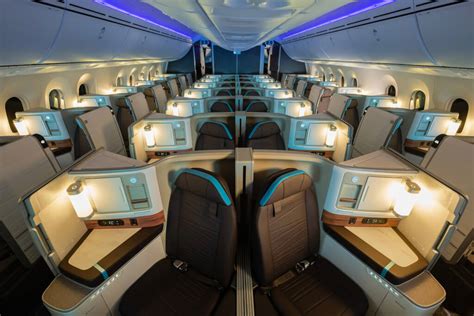
In a significant step across the Atlantic, Alaska Airlines is preparing to launch its first transatlantic service between Seattle and Rome Fiumicino International Airport (FCO) in May 2026. The route will be operated by the Boeing 787-9, configured in a three-class layout: 34 in business class, 79 in premium economy, and 187 in economy.
This new route will likely operate on a seasonal four-times-weekly schedule, targeting peak summer travel demand. Based on passenger traffic data, Rome was the largest unserved European destination from Seattle in recent years, with an estimated 43,000 round-trip passengers annually. The decision to connect SEA to Rome is not just opportunistic, but strategically calculated.
Unless changes occur, this Rome route will become Seattle’s second-longest European service, behind only Lufthansa’s flight to Frankfurt. Alaska’s move into Europe signals a clear pivot — from being a prominent domestic operator to a full-fledged international airline with global ambitions.
Building Toward 2030: Alaska’s International Vision
Looking ahead, Alaska Airlines aims to operate long-haul services to at least 12 international destinations from Seattle by 2030. The roadmap includes continued fleet integration, expanded partnerships, and network optimization that leverages both Hawaiian’s Pacific strength and Alaska’s West Coast dominance.
This growth will be supported by Boeing 787-9 aircraft, a model designed for ultra-long-haul travel with reduced noise, better fuel burn, and improved passenger comfort. Combined with the carrier’s growing MAX fleet, Alaska’s long-term strategy appears grounded in fleet commonality, economic efficiency, and geographic positioning.
Moreover, the $1 billion “Alaska Accelerate” initiative seeks to generate $500 million in synergies by 2027, spanning revenue enhancement, cost reduction, and operational alignment. These financial targets provide a clear incentive to ensure the merger’s success.
Conclusion: A Legacy Reinforced, a Future Reimagined
The delivery of the 300th Boeing 737 is not just a reflection of Alaska Airlines’ enduring reliance on Boeing—it marks a turning point as the airline steps confidently into a new global era. The acquisition of Hawaiian Airlines and the inclusion of Boeing 787-9 Dreamliners positions Alaska as a credible contender in the competitive international market.
From the iconic 737s that form the airline’s reliable core to the sleek Dreamliners ready to explore the globe, Alaska is executing a fleet evolution narrative few regional carriers have managed. What was once a West Coast-focused airline is fast becoming a transpacific and transatlantic connector, blending regional heritage with global ambition. With a strategic vision anchored in Seattle, Alaska Airlines is redefining what it means to be a legacy carrier in the modern age of aviation.