Alaska Airlines has crossed a historic milestone with the arrival of its 300th Boeing 737, a landmark that not only underscores the airline’s enduring relationship with Boeing but also signals an aggressive pivot towards global connectivity. To mark this milestone, Alaska Airlines announced three major new international routes from its Seattle-Tacoma hub to Rome, Tokyo, and Seoul—solidifying its transformation into a long-haul global carrier.

The Boeing Backbone: Alaska’s 737 Legacy
For nearly six decades, Boeing aircraft have defined the operational DNA of Alaska Airlines. Beginning with the Boeing 727 in 1966, Alaska has built a fleet strategy centered around Boeing’s narrowbody aircraft. The 300th Boeing 737 delivered in 2025 represents the culmination of that legacy, a testament to Alaska’s loyalty to the manufacturer and its vision for future expansion.
The airline currently operates six Boeing 737 variants: 737-700, 737-800, 737-900, 737-900ER, 737 MAX 8, and 737 MAX 9. While the older 737-900s are nearing retirement, newer MAX variants are leading the next chapter. With the support of its regional affiliate, Horizon Air, and its Embraer E175 jets, Alaska ensures fleet flexibility across both regional and intercontinental operations.
Enter the Dreamliner: Fueling Global Ambitions
To execute its long-haul strategy, Alaska Airlines is embracing widebody capability through the Boeing 787-9 Dreamliner. The airline’s fourth Dreamliner is set to arrive soon, with five more on order. These aircraft, introduced via Alaska’s acquisition of Hawaiian Airlines in 2024, offer the range and efficiency needed to serve destinations across Asia and Europe. Prior to the merger, Alaska operated exclusively narrowbody aircraft, making the Dreamliner a pivotal development.
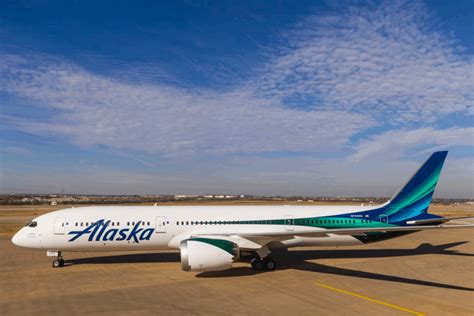
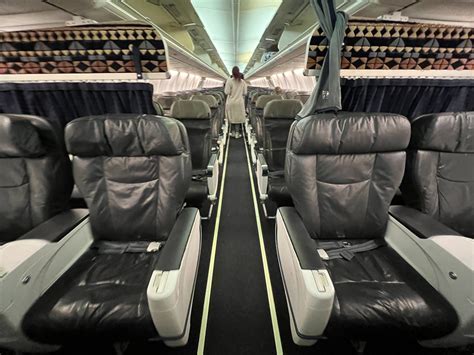
Each 787-9 is configured with 300 seats distributed across three cabins: 34 in business class, 79 in premium economy, and 187 in standard economy. This layout caters to the increasing demand for transpacific and transatlantic travel, positioning Alaska to capture premium international travelers while offering competitive economy options.
New Nonstop Connections: Rome, Tokyo, and Seoul
Alaska’s new routes from Seattle to Rome (FCO), Tokyo (NRT), and Seoul (ICN) represent a bold leap into international markets historically dominated by legacy carriers. The Tokyo route has already launched, with daily Dreamliner service linking Seattle to Narita International Airport. On September 12, 2025, the airline will begin its highly anticipated nonstop flights to Seoul, tapping into the booming U.S.–South Korea travel corridor.
Perhaps most exciting is Alaska’s entry into Europe via a new Seattle–Rome route, launching in May 2026. Scheduled for seasonal operation, this route will run four times a week and serve the highest-demand unserved European destination from Seattle. In 2024 alone, over 43,000 round-trip travelers flew indirectly between Seattle and Rome. By capturing this traffic with a nonstop offering, Alaska is creating a critical beachhead in the transatlantic market.
Rome: A Gateway to Europe
Alaska’s Rome route is more than just a new city on the map. It reflects a strategic move into the underserved U.S.–Southern Europe market, where American carriers have largely concentrated on Northern Europe. Rome Fiumicino (FCO) provides Alaska with access to an airport that is both a tourism and business hub, with connectivity to dozens of secondary cities across Europe and North Africa. This transatlantic entry is expected to lay the groundwork for potential future services to cities like Barcelona and Athens, which also show strong demand from Seattle.

Tokyo and Seoul: Tapping Into the Asia-Pacific Surge
The launch of direct flights to Tokyo Narita places Alaska Airlines in direct competition with long-standing Pacific players, but the airline is banking on its Seattle-based hub advantage and the efficiency of the 787-9 to deliver a premium yet affordable experience. As Japan continues to rebound strongly in international travel demand, Alaska’s entry here is both timely and essential.
Similarly, the Seattle–Seoul route capitalizes on the booming U.S.–Korea travel corridor. With Korea emerging as a cultural and economic powerhouse, and Incheon International Airport recognized as a global hub, Alaska’s new route is strategically poised to serve both leisure and business traffic. Moreover, Seoul provides valuable onward connectivity across Asia, especially for code-share and partner integration.
Seattle: Alaska’s Global Launchpad
These new routes reinforce Seattle-Tacoma International Airport as Alaska’s anchor for global operations. Traditionally a West Coast domestic stronghold, Seattle is being rebranded by Alaska as a transpacific and transatlantic gateway. The acquisition of Hawaiian Airlines has accelerated this transformation, integrating widebody expertise and new route authorities that Alaska previously lacked.

As global connectivity becomes a competitive advantage, Alaska is leveraging its combined network strength and operational synergies to offer seamless travel between North America, Asia, and Europe. The result is a hub strategy that brings international scale to a historically regional brand.
The Hawaiian Airlines Merger: A Game Changer
When Alaska Airlines acquired Hawaiian Airlines in September 2024, the implications were clear: it was a move aimed at international empowerment. Hawaiian’s experience with long-haul routes to Asia and Oceania immediately filled a void in Alaska’s network. More importantly, Hawaiian brought with it a fleet of widebody aircraft and international route authority, both of which are being quickly integrated into Alaska’s strategy.
The two airlines continue to operate under their own brands but share a unified strategic vision, harmonized schedules, and integrated loyalty programs. For travelers, the merger means more options, smoother connections, and a broader global footprint. For Alaska, it represents a turbocharged launch into the big leagues of international aviation.
Fleet Evolution: Efficiency Meets Reach
With the phaseout of older 737-900s and the steady induction of 737 MAX variants, Alaska’s narrowbody fleet is becoming leaner and more efficient. The 737 MAX 8 and MAX 9 offer extended range and fuel efficiency, ideal for long-haul domestic and near-international routes like Mexico and Canada. These aircraft are vital to sustaining profitability on thinner routes where widebody operations aren’t justified.
On the widebody front, the 787-9 Dreamliner is now the workhorse of Alaska’s long-haul expansion. Its impressive range, low emissions profile, and premium cabin offerings position Alaska to compete effectively against legacy carriers in the transoceanic space. The Dreamliner’s cargo capacity also opens new opportunities for freight operations across international lanes.
What’s Next for Alaska Airlines?
Beyond the initial Rome, Tokyo, and Seoul launches, industry insiders expect Alaska to announce additional international routes in late 2026, potentially including Paris, Frankfurt, or even cities in Oceania. Given its strengthened global partnerships and Boeing-heavy fleet, Alaska is well-positioned to respond to demand shifts and market gaps.
The airline’s focus on strategic growth, smart fleet planning, and hub optimization is reshaping its identity from a regional carrier into a credible global airline. If the early success of its international routes is any indication, Alaska’s leap into long-haul may not just be a bold experiment—it could be the beginning of a permanent new chapter.
Conclusion: Alaska Airlines Redefines Its Altitude
With the celebration of its 300th Boeing 737 and the advent of international services to Italy, Japan, and South Korea, Alaska Airlines is writing a new narrative—one of ambition, reach, and transformation. From its Seattle base, the airline is now connecting the Pacific Northwest to the heart of Asia and Europe, creating global pathways for passengers and trade alike.
Backed by a powerful Boeing partnership, reinforced by its Hawaiian merger, and propelled by its entry into long-haul aviation, Alaska Airlines has firmly taken flight on the global stage.