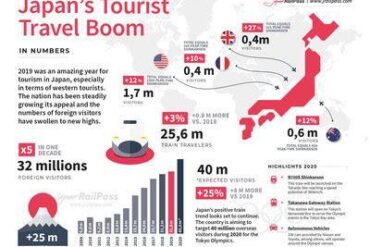
In May 2025, global air travel showcased a remarkable recovery, with Singapore, Japan, Thailand, and South Korea emerging as pivotal players in Asia Pacific’s burgeoning passenger growth. This resurgence has been fueled by surging international demand, the restoration of flight routes, and a renewed traveler confidence that has swept across the region. As pandemic-era restrictions recede, these nations have rapidly expanded their aviation networks, reinstating long-haul services that cater to an eager populace ready to explore once more. At the same time, France, Italy, and Spain have also played a crucial role in Europe’s aviation recovery, thanks to the onset of the summer travel season, a significant uptick in inbound tourism, and heightened travel activity in vibrant cities such as Paris, Rome, and Barcelona. Collectively, these seven countries have significantly contributed to a 5 percent year-on-year rise in global air traffic, underscoring their importance in the ongoing resurgence of the aviation sector.
The global air travel industry maintained its upward trajectory in May 2025, reflecting total demand climbing by 5 percent compared to the same period in 2024. This data, released by the International Air Transport Association (IATA), highlights continued momentum in international air travel, even amidst regional variances. Notably, North America recorded a slight downturn in traffic, which contrasts sharply with the robust recovery seen in Asia and Europe. Measured in revenue passenger kilometers (RPK), the 5 percent increase in global travel demand was mirrored by a corresponding 5 percent growth in available seat kilometers (ASK), indicating that airlines have adeptly kept pace with rising demand by expanding capacity proportionately. However, the overall load factor—an essential measure of how efficiently airline capacity is utilized—dipped slightly to 83.4 percent, just 0.1 percentage points lower than in May of the previous year.
Asia Pacific Takes the Lead in Global Recovery
The Asia Pacific region has emerged as the primary driver of May’s growth, registering an impressive 9.4 percent year-on-year increase in RPK. This remarkable performance reflects the ongoing resurgence of cross-border travel demand, particularly as countries across Asia further ease entry restrictions and reestablish air links severed during the pandemic years. Airlines within this vibrant zone have responded assertively to the surge in demand, ramping up operations and restoring long-haul services that connect key hubs such as Singapore, Tokyo, Bangkok, and Seoul to the rest of the world. The region’s recovery continues to gain momentum and remains a central pillar in the rebound of global aviation.
Airline traffic soaring in Asia
Conversely, North America was the only major region to register a year-on-year decline in traffic, with total RPK in North America falling by 0.5 percent compared to May 2024. This decline included a 1.7 percent drop in domestic US travel, a trend that stands in stark contrast to the global recovery and signals potential underlying challenges, such as inflationary pressures, airfare sensitivity, or shifting consumer travel patterns. The drop in North American figures has created a noticeable divergence in global aviation performance, with other regions maintaining or accelerating their recovery trajectory. Industry analysts suggest that this decline may be temporary, influenced by seasonal fluctuations or macroeconomic headwinds affecting US consumer travel spending.
International Travel Fuels Global Growth
International air travel has emerged as the leading contributor to the overall growth in demand last month, with RPK for international routes rising by 6.7 percent year-on-year, outpacing the 6.4 percent increase in capacity. This balance helped push international load factors to 83.2 percent, an encouraging sign for airlines looking to optimize operations and maintain profitability amid a competitive post-pandemic environment. The surge in international demand reflects growing traveler confidence, particularly for long-haul leisure travel and business trips across Europe, Asia, and the Middle East. Eased entry protocols, increased connectivity, and robust summer travel demand in the northern hemisphere have all contributed to this remarkable rebound.
European carriers have also reported a positive month in May, posting a 4.1 percent rise in passenger traffic alongside a 4.8 percent boost in capacity, resulting in a load factor of 84 percent. Although the load factor slightly decreased by 0.6 percentage points compared to May 2024, the region still maintains one of the highest seat utilization rates globally. As Europe enters the peak of its summer travel season, airlines are benefiting from a surge in both inbound and outbound travel, with major cities such as Paris, Rome, and Barcelona experiencing high volumes of tourist traffic. Additionally, increased inter-European travel and low-cost carrier activity have helped sustain growth.
The Role of Singapore, Japan, Thailand, and South Korea
Singapore, Japan, Thailand, and South Korea have fueled Asia’s air travel growth with rising international demand. These nations have not only restored previous flight routes but have also actively expanded their aviation networks to accommodate the eager travelers returning to the skies. The pent-up travel interest stemming from the pandemic has led to increased booking numbers, with airlines quickly adapting to the changing landscape. The rapid recovery of these countries serves as a testament to their strategic investments in aviation infrastructure and their proactive measures to ensure a safe and welcoming environment for international travelers.
As the summer travel season heats up, these Asian nations stand poised to capitalize on the influx of tourists. With world-class airports and a reputation for efficiency, they are set to attract visitors looking for both leisure and business opportunities. The collaboration between airlines, tourism boards, and governments in these countries has been instrumental in reinforcing traveler confidence, ensuring that safety protocols remain a priority while delivering exceptional service.
Travelers enjoying the summer in Europe
France, Italy, and Spain: Leaders in European Recovery
Meanwhile, France, Italy, and Spain have emerged as leaders in Europe’s aviation recovery, bolstered by the summer travel season. These countries are witnessing a sharp increase in inbound tourism, which has contributed significantly to their economic recovery. Cities like Paris, Rome, and Barcelona are bustling with tourists eager to experience their rich history, culture, and cuisine. The vibrant atmosphere and numerous attractions have drawn travelers from around the globe, further enhancing the importance of these destinations in the aviation landscape.
Airlines operating within Europe have adapted their strategies to meet the increased demand, with many offering competitive fares and flexible booking options. This adaptability has proven crucial in attracting both leisure and business travelers, as the aviation market becomes increasingly competitive. Furthermore, the resurgence of low-cost carriers has made air travel more accessible, encouraging spontaneous trips and boosting overall passenger numbers.
Industry Resilience Amid Mixed Signals
Despite the uneven performance across regions, IATA’s latest report underscores the resilience and adaptability of the global airline industry. By closely aligning capacity with demand, carriers have managed to maintain healthy load factors and avoid significant overcapacity—a critical balance in an industry sensitive to fluctuations in both costs and consumer behavior. The performance seen in May 2025 illustrates that while global travel continues to recover steadily, regional differences persist and must be navigated carefully.
The disparity between booming Asia Pacific travel and declining North American demand may prompt carriers to adjust route strategies and fleet deployment in the coming months. As the year progresses, continued growth in international markets, coupled with improving global economic conditions and strong summer travel trends, is expected to further strengthen air travel performance. However, ongoing challenges such as fuel price volatility, geopolitical tensions, and regional economic instability could temper some of the gains.
With the world’s skies growing busier and demand patterns evolving rapidly, the aviation sector’s recovery journey in 2025 remains dynamic, promising, and closely watched. The interplay of these factors will undoubtedly shape the future landscape of air travel, making it an exciting time for both industry stakeholders and travelers alike.