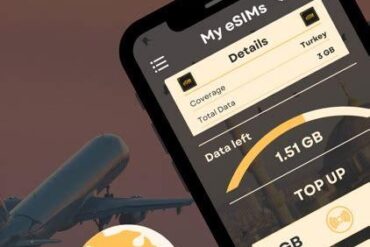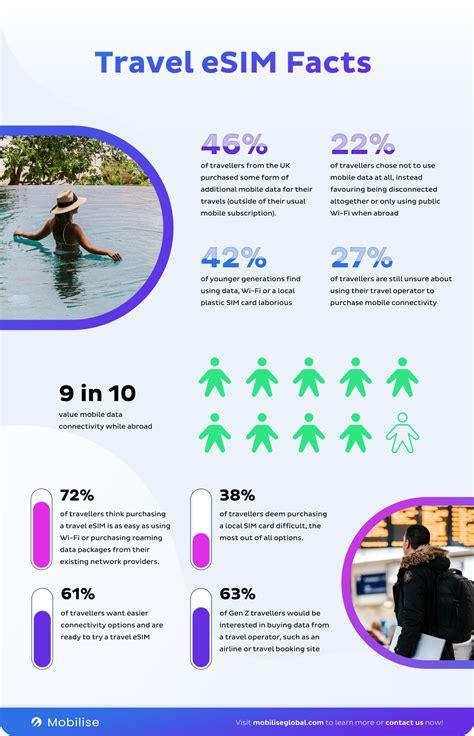
World travelers, particularly those hailing from major economies such as the United States, United Kingdom, and China, are increasingly expressing interest in Travel eSIM technology. A comprehensive study by Proximus Global reveals that, although current adoption rates remain low, the industry stands on the brink of a transformative shift driven by evolving consumer demands. This presents a promising opportunity for mobile operators, travel firms, and forward-thinking businesses to capitalize on.
Despite its potential, awareness surrounding eSIM technology is surprisingly limited. The research, conducted in collaboration with the globally recognized analytics firm YouGov, surveyed over 6,500 adults across the three influential markets. The findings highlight a significant gap in understanding, with only 33% of consumers worldwide being familiar with eSIM technology. Alarmingly, 42% of respondents were uncertain if their mobile devices even supported eSIM capabilities. The situation is particularly pronounced in the United States, where a staggering 52% of participants reported having no knowledge about eSIM technology, underscoring a substantial opportunity for consumer education and market expansion.
China has emerged as a leader in eSIM adoption among the surveyed countries, with 27% of Chinese respondents indicating prior experience with eSIM usage. In contrast, the figures for the US and UK are notably lower, reflecting a significant market potential waiting to be tapped. Despite these modest statistics, the inclination towards adopting eSIM solutions for travel purposes is exceedingly high. Nearly half (49%) of respondents globally expressed enthusiasm about adopting eSIM technology specifically for travel-related needs. This enthusiasm is particularly strong in the UK and China, where interest levels soar to 56% and 60%, respectively, indicating a robust regional appetite and readiness for eSIM adoption.
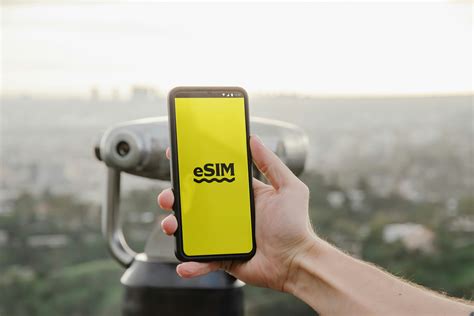
Another pivotal insight from the Proximus Global survey is the remarkable flexibility consumers exhibit regarding where they would purchase their eSIMs. A notable 36% of respondents stated they would be open to acquiring eSIM services from unconventional retail channels, including supermarkets, airlines, or online travel websites. This highlights a unique cross-industry opportunity. Companies such as Revolut, NordVPN, and Carrefour have already ventured into this space, providing tailored Travel eSIM solutions and capturing early market share. For travel businesses and traditional retailers, the message is clear: entering the eSIM marketplace now not only offers a lucrative standalone product but also enhances opportunities for cross-selling and increased customer engagement.
Industry experts strongly advocate for immediate action and education concerning this emerging market trend. Surash Patel, Chief Revenue Officer at Proximus Global, emphasizes the urgency for businesses to recognize and swiftly leverage the surge in consumer demand for eSIM solutions. He suggests that companies poised to offer eSIM technologies will likely dominate future market share. This opportunity extends beyond telecom companies; any business with a sizable customer base can introduce and benefit from eSIM offerings with minimal complexity.
Echoing Patel’s insights, Jorn Vercamert, Chief Product Officer at Proximus Global, identifies two critical strategic areas for businesses to pursue: the development of innovative services tailored to travelers’ needs and proactive consumer education. By bridging the existing awareness gap and clearly communicating the tangible benefits of Travel eSIM technology, businesses can fully exploit this expanding, lucrative market.
Government agencies, including the U.S. Federal Communications Commission (FCC), the UK’s Office of Communications (Ofcom), and China’s Ministry of Industry and Information Technology (MIIT), have acknowledged the growing importance of supporting innovative telecommunications solutions like eSIMs. These regulatory bodies provide guidance to ensure consumer protections while fostering competitive marketplaces, facilitating the accelerated adoption of this technology. In the United States, FCC initiatives actively encourage telecommunications companies to modernize and expand eSIM capabilities. Ofcom in the UK has established regulatory frameworks designed to simplify and streamline consumer adoption. Meanwhile, MIIT in China is backing substantial infrastructural investments in mobile connectivity technologies, directly benefiting the expansion and integration of eSIM technology.
To seize the moment, strategic recommendations for travel industry stakeholders include:
- Developing easy-to-access and customer-friendly eSIM offerings specifically designed for frequent international travelers.
- Expanding consumer awareness campaigns emphasizing convenience, cost savings, and seamless global connectivity.
- Forming strategic partnerships or joint ventures with retailers, airlines, hospitality brands, and digital platforms to broaden distribution channels.
By acting promptly, travel industry leaders and innovative retailers can successfully transform consumer excitement about Travel eSIM technology into tangible market development and increased revenues. Indicators suggest that those who swiftly respond to evolving consumer preferences will emerge as key players in the rapidly developing global travel connectivity market.