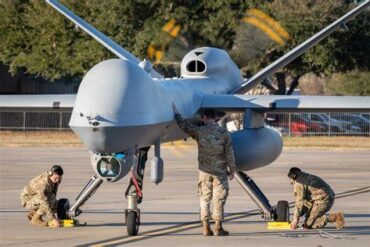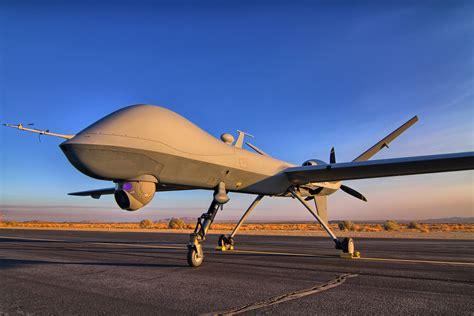
The United States is bolstering its strategic surveillance presence in East Asia with the deployment of the MQ-9A Reaper drone to Gunsan Air Base in South Korea. This marks a significant shift in Washington’s tactical footprint in the Indo-Pacific, signaling a heightened level of alertness and deterrence against escalating threats posed by North Korea’s weapons development and China’s growing maritime assertiveness in the Yellow Sea.
The deployment, set to commence in the second half of 2025, will operate under a rotational framework, marking the first operational deployment of the Reaper in South Korea outside of training or exercise scenarios. According to a South Korean military source, the Reaper will remain in the country for several months, enhancing real-time ISR (intelligence, surveillance, reconnaissance) coverage of a highly volatile geopolitical theatre.
The Strategic Importance of Gunsan Air Base
Gunsan Air Base, located approximately 178 kilometers south of Seoul, houses the 7th Air Force under United States Forces Korea (USFK). It serves as a critical hub for both regional air operations and rapid tactical deployment. The selection of Gunsan for the MQ-9A Reaper’s rotational operations is far from incidental. Its proximity to the Demilitarized Zone (DMZ) and strategic waterways like the Yellow Sea allows for enhanced surveillance coverage of not just North Korean ballistic activity, but also Chinese naval movements, especially in contested maritime zones.
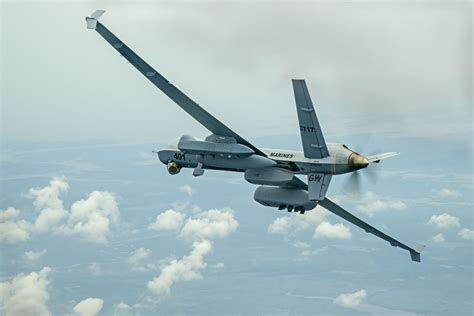
Given the air base’s current role and infrastructure, integrating a Reaper drone into the station’s operations enables seamless remote split operations, where missions are flown by pilots stationed elsewhere, while a limited team handles on-ground logistics and takeoff/landing procedures. This minimizes U.S. military footprint while maximizing operational reach.
MQ-9A Reaper: Surveillance and Strike Capabilities
The MQ-9A Reaper, developed by General Atomics Aeronautical Systems, is among the most advanced drones in the U.S. arsenal. Unlike traditional reconnaissance drones, the Reaper offers both multi-role surveillance and precision strike capabilities, making it invaluable in a region increasingly defined by fast-evolving tactical threats.
At the heart of the Reaper’s appeal is its endurance and payload flexibility. The aircraft is capable of flying missions up to 1,600 nautical miles with the aid of external fuel tanks and a water-alcohol injection system. This operational range makes it ideal for long-duration patrols over the Korean Peninsula, the Yellow Sea, and potentially even Taiwan Strait operations.
Its arsenal is equally formidable:
- AGM-114 Hellfire laser-guided missiles
- GBU-12 Paveway II laser-guided bombs
- GBU-38 JDAM (Joint Direct Attack Munition)
- GBU-49/GBU-54 for high-precision targeting
Each munition is chosen to offer precision with minimal collateral damage, particularly essential when dealing with dense population centers or targeting mobile missile launchers in North Korea.
Watching the Yellow Sea: Surveillance Aimed at China
China’s increasing naval activity in the Yellow Sea has been a mounting concern for regional powers. With growing frequency, the People’s Liberation Army Navy (PLAN) conducts exercises, maritime air patrols, and amphibious drills within proximity to South Korean Exclusive Economic Zones (EEZs). The Reaper’s deployment, while not officially labeled as a counter-China initiative, directly increases U.S. aerial monitoring of these activities.

Using multi-spectral targeting systems, the Reaper can provide real-time intelligence feeds on Chinese ship formations, aircraft patterns, and any unauthorized encroachments. This intelligence is crucial not only for U.S. planning but also for South Korea’s maritime security posture, helping both nations coordinate better response frameworks.
North Korea: An Unpredictable and Immediate Threat
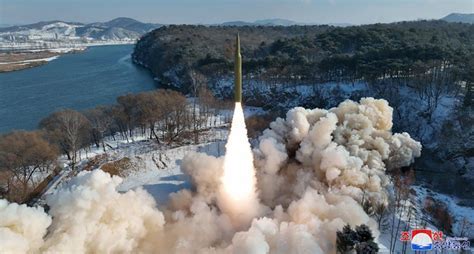
The immediate concern for Washington and Seoul remains North Korea’s weapons program, especially its ballistic missile launches, nuclear tests, and artillery positioning near the DMZ. The Reaper’s ISR capacity allows for round-the-clock monitoring of critical military infrastructure, including missile development sites in Yongbyon and mobile launcher movements in South Hamgyong Province.
Equipped with electro-optical/infrared imaging systems and synthetic aperture radar (SAR), the MQ-9A can detect vehicle movement, heat signatures, and terrain anomalies that might indicate preparations for a launch. Additionally, should conflict escalate, its strike capabilities allow for time-sensitive targeting of high-value military assets with minimal lag between detection and engagement.
Modular Design, Maximum Versatility
Another hallmark of the Reaper’s deployment is its modular architecture. Mission-specific sensor and weapon packages can be swiftly swapped depending on the operation profile. For South Korea, this could mean:
- Combat Search and Rescue (CSAR) support in potential flashpoints along the DMZ.
- Laser Target Designation for coordinated airstrikes by manned aircraft.
- Convoy Escort along strategic roads near forward-deployed bases.
- Raid Surveillance on suspected infiltration routes from North Korea.
This adaptability makes the MQ-9A a force multiplier, not merely a passive intelligence collector.
Diplomatic and Strategic Messaging
While U.S. Indo-Pacific Command has refrained from publicly confirming the operational specifics, the strategic messaging behind this deployment is unequivocal. In the words of a senior U.S. defense official familiar with the matter, the move is part of “strengthening bilateral deterrence and operational readiness in a dynamic regional security environment.”
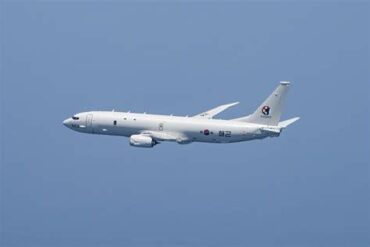
The Reaper’s presence underscores a broader pivot to persistent ISR capabilities across East Asia. It complements other U.S. assets such as E-8 JSTARS, RC-135 Rivet Joint, and even P-8 Poseidon maritime patrol aircraft, all of which operate in overlapping zones of interest. Together, they provide an integrated mosaic of intelligence that supports pre-emptive planning and rapid response options.
Risks, Vulnerabilities, and Strategic Trade-offs
Despite its advanced capabilities, the MQ-9A is not without vulnerabilities. The drone lacks onboard defensive systems, and its high-altitude operations still expose it to surface-to-air missile (SAM) threats, particularly from China’s HQ-9 or North Korea’s KN-06.
The U.S. mitigates these risks through:
- Remote Split Operations, minimizing the number of U.S. personnel in harm’s way.
- Altitude and stealth-based route planning to avoid SAM detection envelopes.
- Limiting operations near contested ADIZ (Air Defense Identification Zones) during periods of heightened tension.
Moreover, the drone’s deployment could provoke political fallout. Beijing may perceive it as an act of militarization and respond with increased military drills or diplomatic pressure on Seoul. Similarly, Pyongyang may seize the opportunity to justify its weapons development or conduct provocations to test allied resolve.
Conclusion: A Calculated Move in a High-Stakes Game
The rotational deployment of the MQ-9A Reaper to Gunsan Air Base represents more than just a tactical adjustment—it’s a strategic recalibration. It reflects the growing need for real-time, persistent surveillance in an era where North Korea’s unpredictability and China’s maritime assertiveness are redefining East Asia’s security calculus.
This move enhances both intelligence fidelity and strike readiness, ensuring that the U.S. and South Korea can better deter, monitor, and respond to dynamic threats. While it introduces new risks and geopolitical sensitivities, the advantages—persistent ISR, surgical strike capability, and reduced troop exposure—make it a critical component in maintaining regional stability.
The skies over the Yellow Sea and Korean Peninsula will no longer be passive theaters. With the MQ-9A Reaper on patrol, the message is clear: the United States is watching, ready, and present.