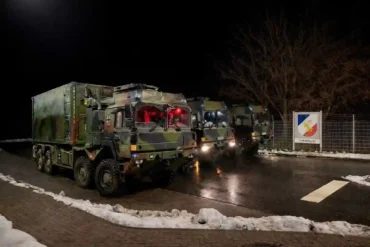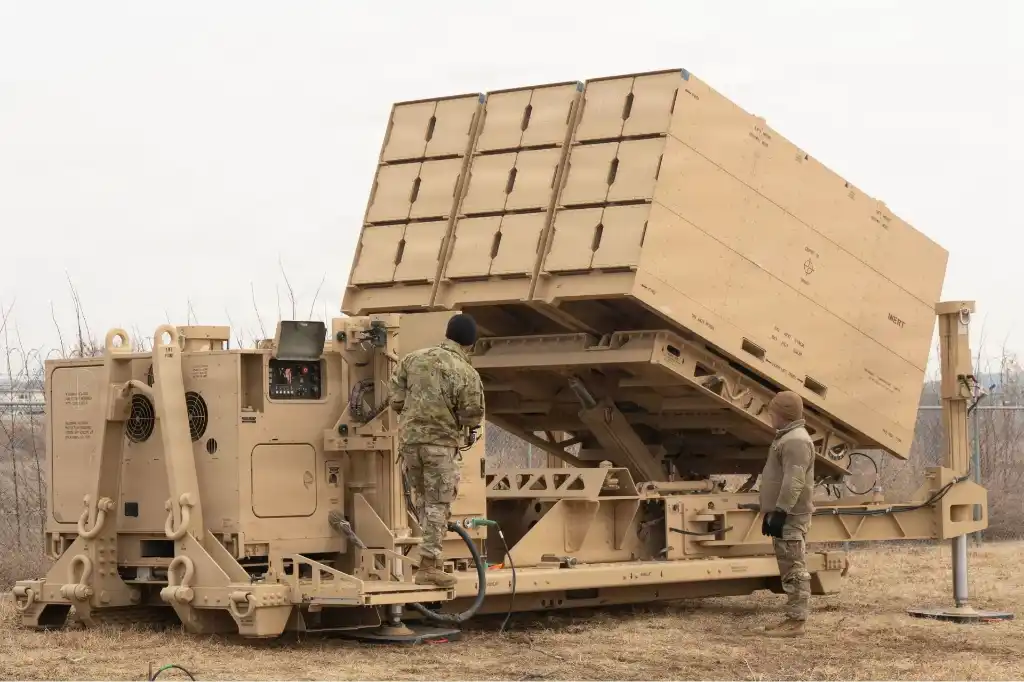
The evolving character of modern warfare is less about singular, high-value strikes and more about coordinated, multi-vector attacks designed to overwhelm defenses through sheer complexity. Against this backdrop, the U.S. Army’s deployment of the Indirect Fire Protection Capability Increment 2 (IFPC Inc 2) to South Korea marks a decisive shift toward adaptive, networked air defense systems capable of countering both traditional missile threats and the rising tide of unmanned aerial systems.
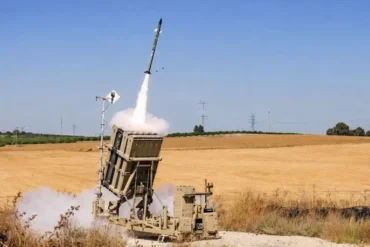
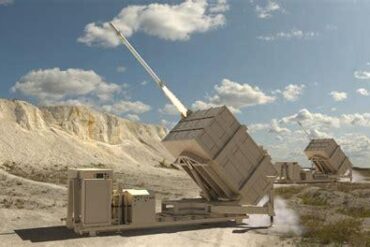
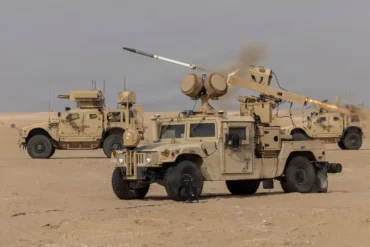
During Freedom Shield 2026, a large-scale joint exercise, U.S. forces positioned IFPC Inc 2 at Camp Humphreys on March 16. This deployment was not a symbolic move but a live operational experiment, aimed at validating how the system performs when integrated into a broader, layered defense architecture. Simultaneously, joint drills involving Patriot and Avenger systems unfolded at Osan Air Base, illustrating a coordinated effort to refine multi-layered interception strategies under realistic combat conditions.
What emerges from this activity is a clear doctrine: no single system can handle the full spectrum of modern aerial threats. Instead, survivability depends on how effectively multiple systems can communicate, share targeting data, and distribute engagement responsibilities in real time.
IFPC Inc 2: Filling the Critical Gap in Air Defense
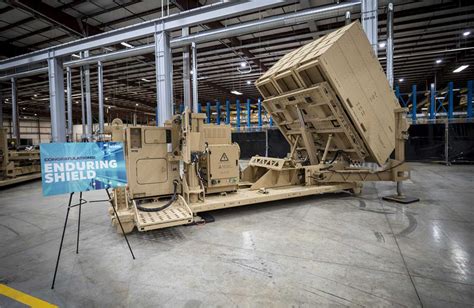
The IFPC Inc 2 system occupies a strategic middle ground that has long been a vulnerability in U.S. air defense. Traditional systems like Patriot excel at intercepting ballistic missiles and high-end threats, while short-range systems handle immediate, low-altitude dangers. Yet, the surge in subsonic cruise missiles and drone swarms exposed a dangerous gap—one that IFPC is explicitly designed to close.
Unlike legacy systems built for single-purpose engagements, IFPC Inc 2 operates on an open architecture framework, allowing it to integrate multiple interceptor types depending on mission requirements. This flexibility is not just a technical detail; it is a survival mechanism in an era where adversaries deliberately mix cheap drones with more sophisticated weapons to strain defensive resources.
The system can deploy the AIM-9X Sidewinder, equipped with an advanced imaging infrared seeker, capable of engaging targets at ranges between 20 and 30 kilometers. Originally designed for air-to-air combat, the missile’s adaptation for ground-based defense highlights a broader trend: repurposing proven technologies to meet new tactical realities. Additionally, compatibility with the AGM-114L Longbow Hellfire provides further versatility, particularly against slower or lower-altitude targets.
The Power of Integration: IBCS and Network-Centric Warfare
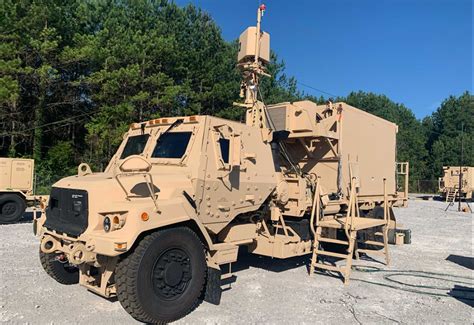
If IFPC Inc 2 is the muscle, then the Integrated Battle Command System (IBCS) is the nervous system. This digital architecture connects radars, launchers, and command nodes into a single, unified network, enabling a level of coordination that would have seemed almost science fiction a generation ago.
In practical terms, this means a radar system can detect a threat and pass that data instantly to the most optimally positioned interceptor—even if it belongs to a different unit or system. The result is faster reaction times, reduced redundancy, and smarter use of limited interceptors.
Consider the implications. Instead of each battery acting as an isolated defender, the entire network behaves like a distributed organism, dynamically assigning targets based on availability and effectiveness. This approach dramatically increases resilience against saturation attacks, where multiple threats arrive simultaneously from different directions.
Layered Defense in Action: Patriot, Avenger, and IFPC Synergy
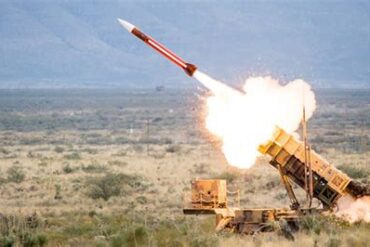
The exercises at Osan Air Base demonstrate how layered defense is not just theory but a carefully orchestrated operational reality. At the top tier, the MIM-104 Patriot system provides long-range interception, capable of engaging ballistic missiles and high-speed aircraft at distances exceeding 70 kilometers. Its AN/MPQ-65 radar tracks multiple targets simultaneously, forming the backbone of strategic air defense.
Below this layer, IFPC Inc 2 handles medium-range threats, particularly cruise missiles and drones that slip beneath the engagement envelope of Patriot systems. This division of labor is crucial. Using Patriot interceptors against low-cost drones would be akin to using a precision scalpel to chop firewood—effective, but wildly inefficient.
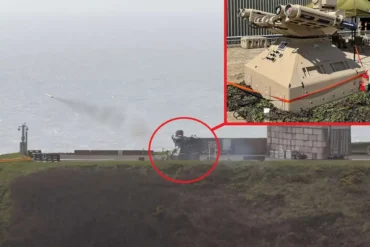
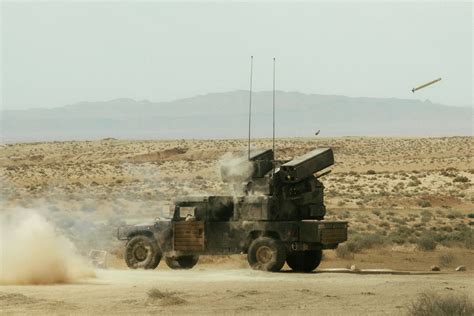
At the lowest tier, the Avenger system, mounted on a High Mobility Multipurpose Wheeled Vehicle, provides mobile, close-range protection using FIM-92 Stinger missiles. With an engagement range of 4 to 6 kilometers, it acts as the final shield around critical assets.
This three-layer structure creates multiple engagement zones, forcing adversaries to contend with overlapping defenses rather than a single line of resistance. It is defense in depth, executed with digital precision.
Countering Drone Saturation and Preserving Strategic Assets
Modern conflict has introduced an uncomfortable economic truth: offense is often cheaper than defense. A swarm of inexpensive drones can force defenders to expend costly interceptors, rapidly depleting inventories. This asymmetry has been observed in multiple theaters, where combined salvos of drones and missiles have tested even the most advanced defense systems.
IFPC Inc 2 directly addresses this imbalance by offering a cost-effective interception layer. By engaging lower-tier threats before they reach high-value systems like Patriot, IFPC helps preserve these critical assets for scenarios where they are truly needed—namely, intercepting ballistic missiles or advanced cruise threats.
This is not merely about efficiency; it is about sustainability in prolonged conflict. A defense system that runs out of interceptors is no defense at all. IFPC’s role, therefore, is as much about resource management as it is about tactical capability.
Strategic Implications for the Indo-Pacific Theater
The deployment of IFPC Inc 2 in South Korea carries implications far beyond the Korean Peninsula. The Indo-Pacific region is characterized by dense threat environments, where potential adversaries possess a wide array of missile and drone capabilities. In such a setting, static, single-layer defenses are increasingly obsolete.
By integrating IFPC into a broader networked architecture, the U.S. Army is effectively future-proofing its air defense strategy. The system’s modular design allows for rapid adaptation as new threats emerge, whether they involve hypersonic glide vehicles, stealthy cruise missiles, or autonomous drone swarms.
The deeper pattern here is unmistakable. Warfare is evolving toward systems that behave less like standalone machines and more like interconnected ecosystems, where information flows as rapidly as the threats themselves. IFPC Inc 2 is one piece of that ecosystem—a bridge between raw firepower and intelligent coordination.
And in a world where the sky is no longer just contested but crowded, that bridge may prove to be the difference between being overwhelmed and staying one step ahead.