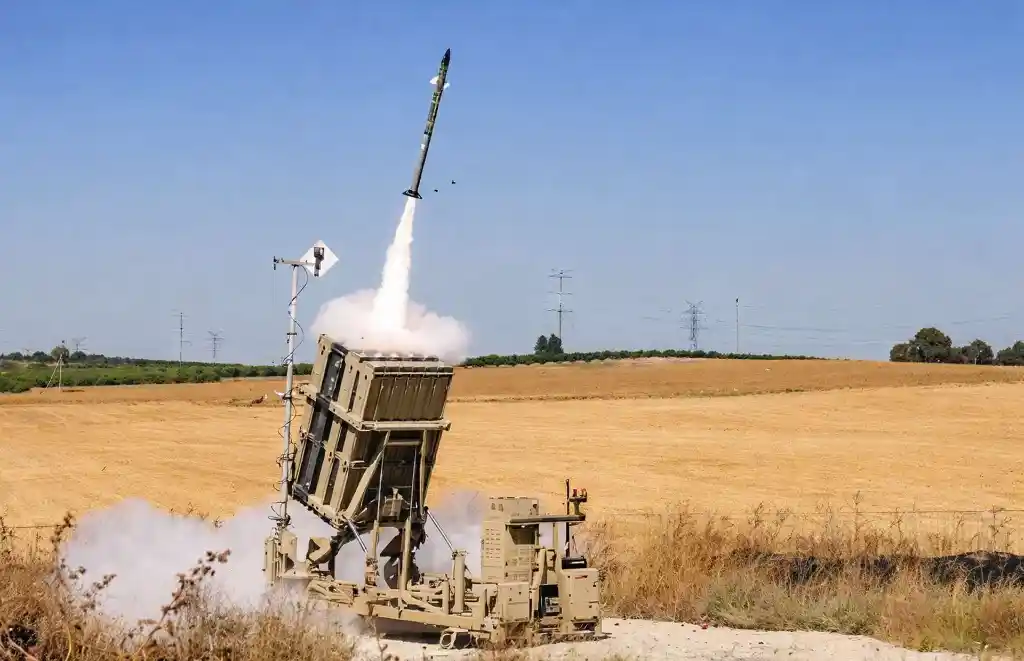
The U.S. Army has taken a decisive step in strengthening its layered air and missile defense architecture by selecting Rafael Systems Global Sustainment (RSGS) for Phase 1 of the Indirect Fire Protection Capability Increment 2 (IFPC Inc 2) Second Interceptor effort. The selection introduces a Tamir-based interceptor—derived from Israel’s combat-proven Iron Dome system—into one of the Army’s most strategically significant modernization tracks. As threats from cruise missiles, drones, and rocket artillery proliferate across modern battlefields, the decision reflects a calculated push to expand interceptor diversity, deepen magazine capacity, and close persistent capability gaps in mid-tier air defense.
Rather than importing an off-the-shelf system, the Army’s approach centers on adapting and evolving Tamir technology for integration into a U.S. networked defense ecosystem. Rafael confirmed the Phase 1 award publicly, noting that collaboration with the Army’s SHIELD Project Office will focus on tailoring the interceptor for American operational requirements. Retired Lt. Gen. Joe Anderson, CEO of RSGS, characterized the milestone as both a validation of Tamir’s battlefield record and a pathway to rapidly field enhanced protection for deployed U.S. forces.
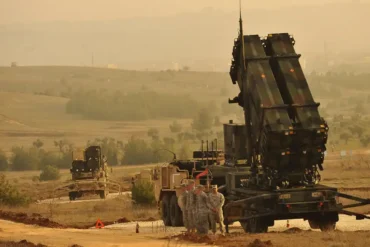
The timing is far from coincidental. The IFPC framework was conceived to defend fixed and semi-fixed assets—forward operating bases, logistics hubs, airfields, and command nodes—against a widening spectrum of aerial threats. These sites have become prime targets for adversaries seeking asymmetric advantage through long-range precision fires and unmanned systems. IFPC effectively bridges the operational seam between short-range air defense platforms and high-end systems such as Patriot and THAAD, creating a mobile, ground-based shield capable of countering cruise missiles, unmanned aircraft systems (UAS), and rockets, artillery, and mortars (RAM).
Iron Dome Lineage Meets U.S. Army Requirements
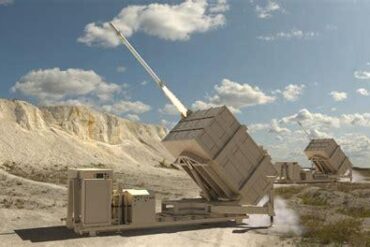
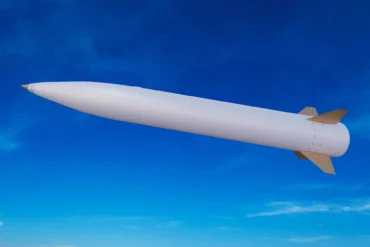
Tamir’s selection is rooted in its operational pedigree. Developed as the interceptor backbone of Israel’s Iron Dome, the missile has been produced at scale and tested repeatedly under real combat conditions. Its baseline configuration features all-weather engagement capability, high agility flight control, and electro-optical guidance optimized for small, fast, and low-flying targets. A proximity-fuzed blast warhead provides a forgiving lethal radius, enabling effective intercepts even against maneuvering threats.
With an engagement envelope estimated between 4 and 70 kilometers, Tamir occupies a sweet spot in the air defense spectrum—far enough to counter inbound cruise missiles and drones before terminal approach, yet agile enough for close-in base defense. For the IFPC mission, however, raw performance is only part of the equation. The Army’s priority is embedding the interceptor within a distributed architecture where sensors, launchers, and fire control nodes operate as a unified combat network.
Enduring Shield and the Second Interceptor Imperative
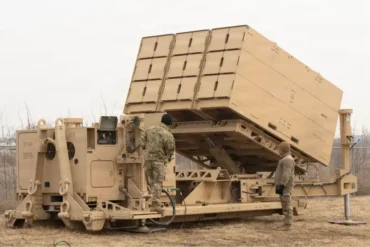
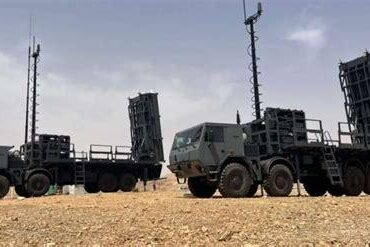
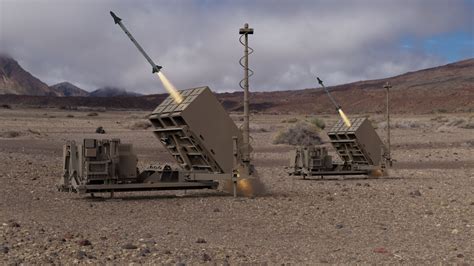
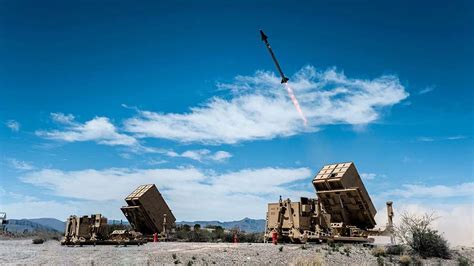
IFPC Inc 2 is built around the Enduring Shield launcher, a modular ground system designed for rapid interceptor integration. Early fielding paired the launcher with the ground-launched AIM-9X Sidewinder, providing a quick-reaction capability against aerial threats. While effective, the Sidewinder was never optimized for the most stressing mid-tier profiles—particularly low-altitude, supersonic cruise missiles that compress engagement timelines and complicate sensor tracking in ground clutter.
As Enduring Shield matured, Army planners recognized the need for a more specialized interceptor capable of handling these advanced threat vectors. The Second Interceptor initiative emerged from that realization, seeking missiles engineered specifically for cruise missile defense rather than adapted from air-to-air roles.
Networked Defense and IBCS Integration
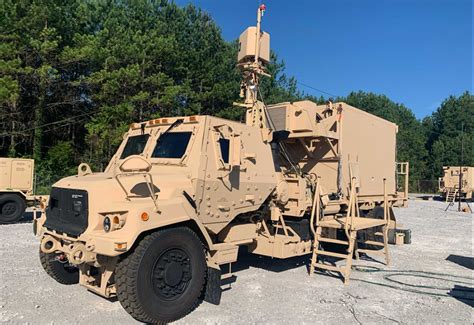
Modern air defense is less about individual missiles and more about information dominance. IFPC Inc 2 is designed to plug into the Integrated Battle Command System (IBCS), the Army’s next-generation command-and-control network. IBCS fuses sensor data from radars, electro-optical systems, and external feeds into a single operational picture, enabling faster target classification and optimal interceptor assignment.
This architecture is crucial in saturation scenarios. Contemporary attack raids rarely involve a single inbound missile. Instead, adversaries layer cruise missiles with one-way attack drones, decoys, and sometimes rocket or artillery fire intended to overwhelm defenses. A networked IFPC battery can allocate interceptors efficiently, preserving magazine depth while maintaining engagement tempo.
Industrial Strategy and U.S. Production Footprint
Selecting a missile with Israeli lineage does not equate to outsourcing U.S. defense manufacturing. The Tamir ecosystem has evolved into a binational industrial enterprise. RTX and Rafael operate a joint venture production facility in East Camden, Arkansas, responsible for manufacturing Tamir interceptors and the U.S. variant known as SkyHunter.
SkyHunter is positioned as a short- to medium-range air defense missile capable of defeating cruise missiles, aircraft, drones, and RAM threats. Domestic production strengthens supply chain security, enables surge manufacturing, and aligns with congressional priorities for U.S. industrial participation. In large-scale conflict scenarios where interceptor consumption rates could spike dramatically, local manufacturing capacity becomes as strategically vital as missile performance.
A Competitive Interceptor Landscape
Rafael’s Phase 1 selection does not signal a sole-source outcome. The Army is deliberately cultivating competition within the Second Interceptor program. Lockheed Martin, for example, secured an Other Transaction Authority (OTA) award in October 2025 to advance its own interceptor design. This parallel development model hedges technical risk while accelerating innovation.
By fostering a “horse race” between interceptor solutions, the Army ensures multiple design philosophies are explored—ranging from seeker technologies to propulsion architectures and cost-per-engagement metrics. The end goal is not merely technical superiority but operational sustainability: a missile that commanders can afford to fire in volume during prolonged engagements.
Security, Integration, and Cyber Assurance
Past U.S. experience integrating Iron Dome components introduced concerns related to cybersecurity and system interoperability. Incorporating foreign-origin technologies into American command networks demands rigorous assurance testing. Data pathways, encryption standards, and software architectures must align with U.S. military cyber protocols.
RSGS’s close coordination with the SHIELD Project Office underscores that Phase 1 is as much about digital integration as kinetic performance. Demonstrating seamless compatibility with IBCS, while safeguarding sensitive operational data, will be pivotal in determining whether Tamir evolves from candidate interceptor to core IFPC munition.
Strategic Context: The Cruise Missile Challenge
Cruise missiles represent one of the most vexing air defense problems of the 21st century. Flying at low altitudes, often terrain-hugging, they exploit radar blind spots and reduce engagement windows. Modern variants incorporate stealth shaping, electronic countermeasures, and high-subsonic or supersonic speeds.
For forward-deployed forces, the threat is acute. Logistics depots, fuel farms, and airstrips are lucrative targets whose destruction can paralyze operations without direct battlefield confrontation. IFPC Inc 2 is engineered to ensure these nodes remain functional under persistent aerial attack.
Tamir’s agility and proximity-fuzed lethality make it particularly suited to this mission set. When integrated with distributed sensors and rapid-fire launchers, it contributes to a defensive web capable of intercepting threats before terminal impact.
Magazine Depth and Cost Realism
One of the quiet but decisive factors in interceptor selection is cost. High-end interceptors like Patriot PAC-3 are extraordinarily capable—but also expensive. Using them against low-cost drones or rockets is economically unsustainable.
Tamir occupies a more cost-efficient tier, enabling commanders to engage lower-value threats without depleting strategic missile inventories. Increasing magazine depth—the number of interceptors ready to fire—ensures defenses remain viable during massed raids rather than exhausting after initial salvos.
Development Trajectory and Future Outlook
IFPC’s developmental lineage stretches back two decades, shaped by evolving threat assessments and congressional mandates. Interim procurement of Iron Dome batteries provided stopgap capability but also exposed integration and sustainment complexities. IFPC Inc 2 emerged as the enduring, fully networked solution.
With Enduring Shield launchers moving through production contracts since 2024, the addition of a second interceptor marks the next maturation phase. Whether Rafael’s upgraded Tamir becomes a permanent fixture or a catalyst pushing competitors to refine their designs, the program’s trajectory is unmistakable.
Operational Implications for U.S. Forces
For deployed units, the implications are immediate and practical. Enhanced mid-tier defense reduces vulnerability during force buildup, sustainment, and command operations. It complicates adversary targeting calculus and raises the cost of long-range strike campaigns.
Layered defense—short-range guns and missiles below, IFPC in the middle, Patriot and THAAD above—creates overlapping engagement zones. This redundancy is essential in an era where aerial threats are cheap, numerous, and technologically diverse.
Conclusion: Building the Mid-Tier Shield
The U.S. Army’s selection of a Tamir-derived interceptor for IFPC Inc 2 reflects pragmatic defense planning shaped by real-world threat evolution. By blending combat-proven missile technology with U.S. networked command systems and domestic manufacturing, the Army is constructing a resilient mid-tier shield designed for saturation warfare.
As cruise missiles, drones, and hybrid aerial threats continue to redefine battlefield risk, interceptor diversity and integration depth will determine defensive success. IFPC Inc 2—now bolstered by Tamir’s entry into the competition—signals an air defense future built not on single systems, but on layered, adaptive, and industrially scalable protection.