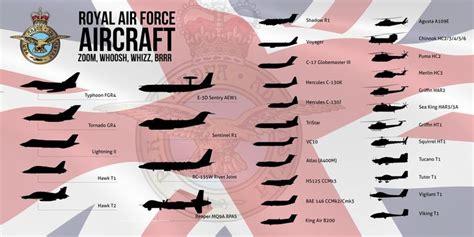
The Royal Air Force (RAF) is often associated with cutting-edge combat aircraft such as the Eurofighter Typhoon and F-35B Lightning II, yet some of its most strategically vital platforms began life as civilian airliners and business jets. Beneath their military designations lie familiar commercial foundations—Airbus A330s, Boeing 737s, Falcon business jets, and Beechcraft turboprops—transformed into mission-critical assets through sophisticated engineering.
These aircraft represent a deliberate strategic choice. Rather than designing entirely new airframes from scratch, the RAF leverages proven commercial platforms and layers them with advanced radar systems, defensive suites, secure communications, and mission-specific modifications. The result is a fleet that combines civilian reliability and global support networks with military-grade capability.
From the Airbus A330 Voyager tanker fleet to the technologically formidable Boeing E-7 Wedgetail, these aircraft form the backbone of Britain’s global reach. They refuel fighters over contested airspace, patrol thousands of miles of ocean, transport senior officials discreetly across continents, and provide airborne command and control in high-intensity operations.
Boeing E-7 Wedgetail: The Most Advanced 737 In The Sky
At first glance, the Boeing E-7 Wedgetail resembles a modified Boeing 737 Next Generation airliner. A closer look reveals the distinctive dorsal “top hat” radar structure—housing one of the most capable airborne surveillance systems ever deployed.
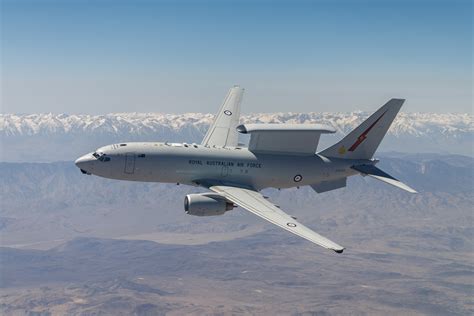
The E-7 replaces the RAF’s aging E-3D Sentry AWACS fleet, marking a dramatic technological leap. Its defining feature is the MESA (Multi-Role Electronically Scanned Array) radar, which uses active electronically scanned array (AESA) technology. Unlike older mechanically rotating radar domes, the MESA system electronically steers its beam at near-instant speed, tracking up to 180 targets simultaneously with an instrumented range of approximately 850 kilometers.
The implications are enormous. The radar can detect small, low-flying threats such as cruise missiles—targets that challenged previous systems—while maintaining performance in adverse weather conditions. Advanced software handles many tasks previously performed manually, reducing crew workload while increasing operational tempo.
Inside, ten state-of-the-art mission consoles allow operators to coordinate air, land, and maritime assets in real time. The aircraft functions as a force multiplier, orchestrating complex joint operations across multiple domains. It does not merely observe battlespace activity; it shapes it.
The cost reflects this complexity. Estimates range from $700 million to $1.8 billion per aircraft, making it arguably the most expensive platform in RAF service. Conversion work for UK aircraft has been localized at STS Aviation Services in Birmingham, strengthening domestic industrial participation in the program.
The E-7 demonstrates how a familiar commercial fuselage can become a strategic nerve center of modern warfare.
Airbus A330 Voyager: The Strategic Lifeline
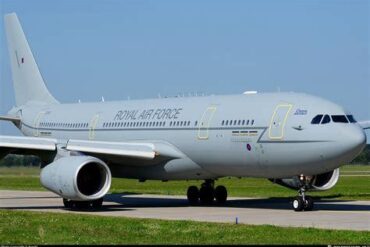
The Airbus A330 MRTT, known in RAF service as the Voyager, forms the backbone of Britain’s global mobility and aerial refueling capability. Derived from the commercial Airbus A330-200, this widebody twinjet has been transformed into a multi-role tanker transport capable of supporting operations worldwide.
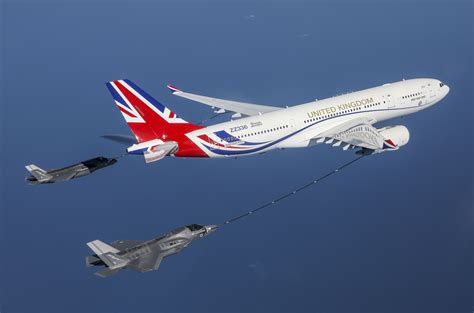
The RAF operates its Voyager fleet under a distinctive Private Finance Initiative (PFI) arrangement with the AirTanker consortium. Fourteen aircraft exist within a structured division between Core Fleet and Surge Fleet airframes.
Core aircraft are permanently assigned to Ministry of Defence operations. They are flown by RAF crews from No. 10 and No. 101 Squadrons and conduct high-end missions including air-to-air refueling for fast jets, strategic passenger transport, and cargo operations.
Surge aircraft provide additional capacity during heightened operational demand. When not required for military tasks, these jets can be leased commercially by AirTanker, flown by civilian crews. This hybrid model ensures cost efficiency while preserving rapid scalability. Should conflict demand it, Surge aircraft can be returned to military service within a defined notice period, often flown by Sponsored Reserve pilots who maintain RAF reserve status.
The Voyager’s refueling system allows it to support aircraft such as the Typhoon and F-35B mid-air, extending combat range dramatically. Its cargo hold can be reconfigured quickly for aeromedical evacuation, providing critical patient transport capability from remote theaters.
Vespina: VIP Transport With Strategic Flexibility
One particular Voyager—ZZ336, known as “Vespina”—serves as the United Kingdom’s dedicated VIP transport aircraft.
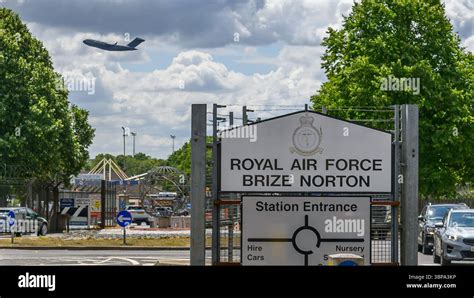
Painted in the distinctive “Global Britain” livery, Vespina carries the Prime Minister and members of the Royal Family on official engagements. Despite its enhanced cabin configuration and increased crew complement when operating VIP missions, it remains fundamentally a military tanker aircraft.
When not tasked with high-profile transport, it reverts to standard operational duties within the Core Fleet. This dual-role design maximizes utilization while avoiding the inefficiency of maintaining a dedicated head-of-state aircraft that flies infrequently.
The South Atlantic Air Bridge: A Civil-Military Hybrid
One Voyager stands apart for legal and operational reasons. Registered as G-VYGJ on the Civil Aircraft Register, this aircraft supports the South Atlantic Air Bridge, a crucial 8,000-mile link between the UK and its overseas territories, including the Falkland Islands.
Operated by civilian AirTanker crews, the flight carries both military personnel and fare-paying civilians. Using a civil registration allows smoother access to international airspace and airports compared to a purely military aircraft.
Despite its civilian appearance, the aircraft retains the ability to refuel military jets if necessary and can be reconfigured for medical evacuation. It is a fascinating blend of commercial aviation logistics and strategic defense necessity.
Boeing P-8A Poseidon MRA1: Maritime Power From A 737
The RAF’s Boeing P-8A Poseidon MRA1 represents another transformation of the Boeing 737 platform—this time into a maritime patrol and anti-submarine warfare powerhouse.
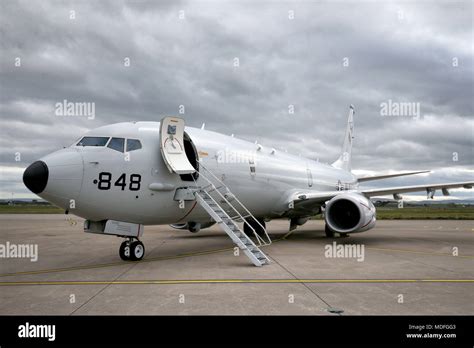
Following the cancellation of the Nimrod MRA4 program, the UK procured nine Poseidon aircraft through the US Foreign Military Sales (FMS) program at a total cost of approximately £3 billion. Based at RAF Lossiemouth in Scotland, the fleet is operated by 120, 201, and 42 Squadrons.
The Poseidon combines long-range endurance with formidable sensor capability. It carries up to 129 sonobuoys for submarine detection and features the APY-10 radar for high-resolution maritime surveillance. Its internal weapons bay accommodates the Mk54 lightweight torpedo, while external hardpoints can carry Harpoon anti-ship missiles.
With a patrol radius of roughly 2,000 kilometers, the aircraft can remain on station for extended periods, safeguarding vital sea lanes and supporting NATO operations. Crucially, the RAF’s fleet remains technically aligned with the US Navy’s P-8s, enhancing interoperability and reducing maintenance complexity.
Envoy IV: Falcon 900LX In Military Service
The Envoy IV, derived from the Dassault Falcon 900LX, fulfills the RAF’s Command Support Air Transport (CSAT) mission.
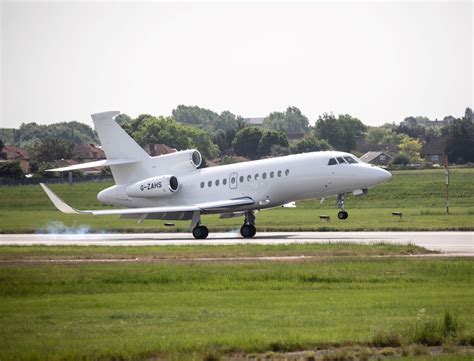
Operated by No. 32 Squadron from RAF Northolt, these aircraft replaced the aging BAe 146 fleet in 2022. Their role is discreet but essential: transporting senior military leaders, government ministers, and occasionally members of the Royal Family with speed and security.
The Falcon platform offers long range, efficient performance, and the ability to operate from shorter runways. Its integration into RAF service reflects the strategic value of adaptable, low-profile transport options.
Phenom 100 T1: Training The Next Generation
The Embraer Phenom 100, designated Phenom T1, serves as a multi-engine training platform for RAF aircrew.
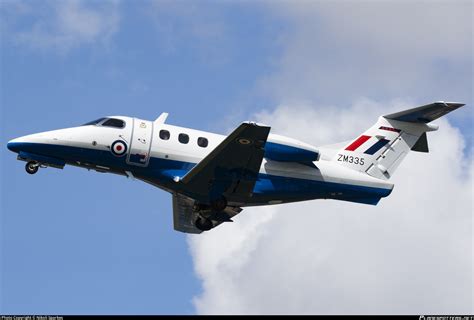
Managed under contract by Affinity Flight Training Systems and flown by No. 45 Squadron at RAF College Cranwell, the Phenom prepares pilots for progression to larger platforms such as the Airbus A400M Atlas and Voyager. Its modern avionics suite and jet performance characteristics provide an effective bridge between elementary training and operational aircraft.
Shadow R1: The Silent Intelligence Collector
The Beechcraft Shadow R1, based on the King Air 350CER, is one of the RAF’s most understated yet operationally vital platforms.
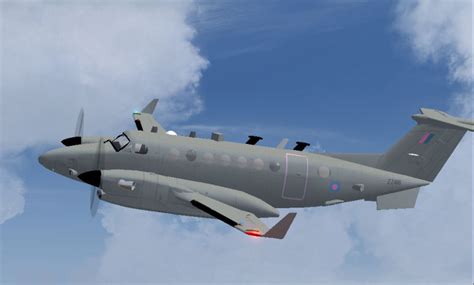
Externally resembling a standard turboprop business aircraft, the Shadow conceals an advanced Intelligence, Surveillance, Target Acquisition, and Reconnaissance (ISTAR) suite. High-definition electro-optical and infrared sensors allow persistent monitoring of ground targets. Communications intercept equipment provides signals intelligence capability.
Its turboprop engines give it a lower acoustic signature than many jet platforms, and its civilian-like profile offers discretion in sensitive environments. Despite this subtle appearance, it is equipped with defensive systems to counter shoulder-fired missile threats.
The Shadow’s endurance enables prolonged overwatch, providing ground forces with real-time intelligence and enhancing operational awareness in complex theaters.
Commercial Foundations, Military Precision
The RAF’s use of civilian-derived aircraft is not a compromise. It is a strategic calculation. Commercial platforms offer proven aerodynamics, global maintenance networks, fuel efficiency, and production economies of scale. Military conversion layers these strengths with radar arrays, hardened communications, defensive countermeasures, and mission systems tailored for national security.
The result is a fleet that blends economic pragmatism with technological ambition. Whether serving as an airborne command center, maritime hunter, strategic tanker, VIP transport, or intelligence collector, these aircraft demonstrate how civilian airframes can be elevated into instruments of national power.
Behind every radar sweep, refueling boom, and surveillance sensor lies a familiar commercial lineage—transformed through engineering precision into capabilities that extend the reach of the United Kingdom across air, land, and sea.