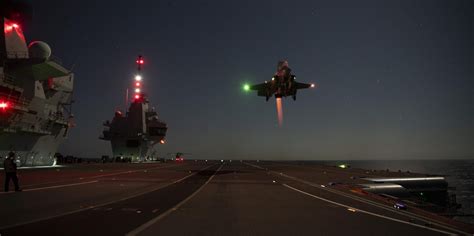
The Royal Air Force (RAF) and Royal Navy’s ambitions to field a fully operational air wing on the HMS Queen Elizabeth-class aircraft carriers are colliding with stark fiscal and operational realities. Despite being a Tier One partner in the Lockheed Martin F-35 Lightning II program, the United Kingdom finds itself constrained by an insufficient number of F-35B short takeoff and vertical landing jets, rising program costs, and systemic staffing challenges. The allure of a cutting-edge, stealthy, carrier-capable air fleet is compelling, yet the hard numbers and strategic circumstances reveal why the UK cannot afford to fully populate its carriers with F-35Bs.
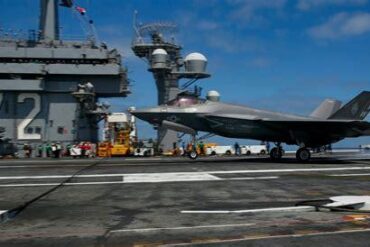
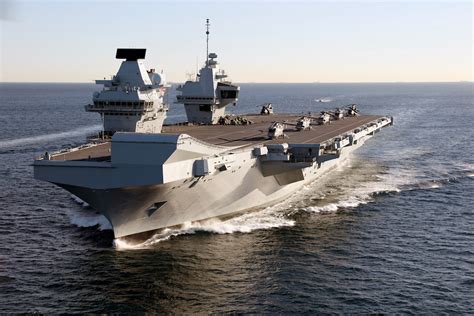
The initial UK commitment to the F-35 program was ambitious: a target fleet of 138 aircraft. Over time, however, this number has proven unattainable. The current fleet stands at 48 F-35Bs, with one jet already lost to an accident, leaving the RAF and Royal Navy with a sharply reduced inventory. Even with planned acquisitions, the total number of carrier-capable F-35Bs is projected to reach only 63 by 2033. This number falls dramatically short of the operational requirement to deploy two carriers with a full complement of 36 to 40 aircraft each, a figure that represents a theoretical maximum rather than the number realistically sustainable given maintenance, training, and deployment cycles.
The challenge is compounded by the structure of the UK Joint Lightning Force (JLF), which consolidates F-35 resources across both the RAF and the Fleet Air Arm. The shared fleet model means that jets are regularly drawn away from carrier-based duties for land-based operations, such as deployments to RAF Akrotiri in Cyprus. This resource-sharing ensures that no carrier air wing can ever operate at its theoretical full strength. Moreover, deep maintenance downtime and test aircraft further reduce the number of jets that are operationally ready at any given time, leaving only a single carrier air wing of roughly 24 to 36 jets consistently deployable.
Financial Constraints and Strategic Choices
One of the most significant obstacles to fully staffing the carriers is the staggering cost of the F-35 program. Initial acquisition expenses have been dwarfed by lifetime maintenance costs, which have surged beyond early estimates. Whereas early projections placed the total UK F-35 fleet cost at around £71 billion, contemporary figures estimate lifetime expenditure at £91 billion. Faced with these financial realities, the Ministry of Defence (MoD) has deliberately slowed procurement to manage the fiscal burden. The result is a cap on total aircraft purchases, favoring a smaller, sustainable fleet over attempting to meet the original 138-jet goal.
In response to budgetary pressures, the UK has also opted to diversify its acquisition strategy by purchasing 12 F-35A conventional takeoff variants for the RAF. These aircraft are 15% cheaper to purchase, 8% less expensive to operate, and possess a longer combat radius and larger payload than their STOVL counterparts. However, the F-35A cannot operate from the ski-jump-equipped Queen Elizabeth-class carriers, meaning these jets cannot offset the shortfall in carrier air wings. This choice reflects a pragmatic prioritization of land-based strike capabilities and long-term nuclear deterrent roles over the complete staffing of carrier decks.
Operational and Technical Bottlenecks
Beyond budgetary concerns, technical and operational limitations further constrain the RAF’s ability to field a full carrier air wing. The integration of British-specific weapon systems, such as the Meteor beyond-visual-range missile and the Spear 3 cruise missile, has been delayed by setbacks in Lockheed Martin’s Technology Refresh Three (TR-3) software package. The TR-3 upgrade, essential for full combat capability, is now expected to be completed no earlier than 2031. Until then, F-35Bs cannot fully leverage their advanced sensor and weapons suite, limiting operational effectiveness and making it less compelling to invest heavily in fleet expansion.
Human resources represent another critical bottleneck. The JLF suffers from an acute shortage of trained pilots, maintainers, and engineering supervisors. Many RAF technicians lack the carrier-specific experience necessary for flight deck operations, resulting in reduced aircraft availability rates. With only 14 personnel per jet—compared to the US Marine Corps standard of 25—the UK struggles to maintain mission-capable aircraft at even one-third of the fleet at any given time. Shared responsibilities at RAF Marham between RAF and Royal Navy maintainers introduce further delays, compounding the operational shortfall.
Strategic Shifts: The Tempest and Unmanned Systems
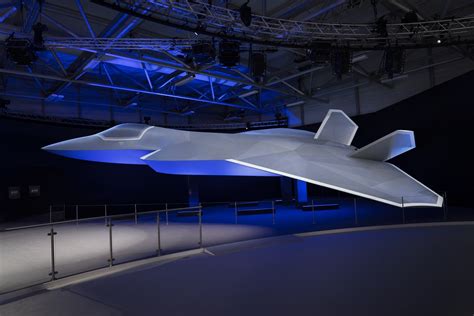
Faced with financial, operational, and geopolitical constraints, the UK has increasingly pivoted toward future-focused alternatives. Chief among these is the BAE Systems Tempest, a sixth-generation fighter developed under the Global Combat Air Program in partnership with Italy and Japan. Unlike the F-35, Tempest guarantees 100% UK control over software, upgrades, and operational deployment, addressing concerns over digital sovereignty and reliance on US technology in critical conflict scenarios. The Tempest demonstrator is slated to fly in 2027, signaling a strategic shift toward domestic high-tech solutions and ensuring the continuity of UK defense industrial capabilities.
In parallel, the Royal Navy is investing in uncrewed and autonomous systems under initiatives such as Project Vanquish (also known as Project Vixen). These drone programs aim to augment carrier air wings by performing intelligence, surveillance, reconnaissance, and strike missions alongside a smaller fleet of manned F-35Bs. By embracing a hybrid air wing model, the UK seeks to maximize operational output per aircraft while mitigating the costs and staffing limitations inherent to a full F-35B fleet.
Geopolitical Considerations and the US Factor
The UK’s reliance on American defense technology also carries significant strategic implications. With former President Donald Trump back in office and a renewed emphasis on “America First” policies, UK defense planners are acutely aware of potential vulnerabilities, including the risk of a US-controlled “kill switch” that could incapacitate allied fleets. This geopolitical reality has reinforced the UK’s strategic pivot toward sovereign platforms like the Tempest, ensuring long-term operational independence while also justifying a conservative approach to expanding the F-35B fleet.
The Reality of Carrier Air Wing Operations
Even if the UK could magically acquire all 138 planned F-35s, practical constraints would still limit carrier air wing effectiveness. Aircraft require regular maintenance, upgrades, and crew training cycles, which inevitably reduce the number of jets available for deployment. Historical patterns in both RAF and Royal Navy operations show that only a fraction of aircraft can be mission-ready at any given time. Current projections of 63 carrier-capable F-35Bs suggest that, under ideal conditions, the UK could only field a single full-strength air wing on one carrier, with the second carrier operating with a significantly reduced complement. This limitation affects the UK’s ability to sustain continuous carrier strike operations in high-intensity scenarios.
Human Capital and Training Imperatives
Addressing pilot shortages and technical expertise gaps is a long-term challenge. Carrier-based operations demand rigorous training for both pilots and deck crews, and the RAF currently lacks sufficient personnel to fully staff dual air wings. Recruiting and retaining qualified personnel is a persistent issue, further exacerbated by the complexity of the F-35 platform. The integration of advanced systems like the Meteor missile and TR-3 software not only delays operational readiness but also requires specialized training that further stretches limited human resources. Consequently, operational constraints are as much about workforce limitations as they are about hardware availability.
Balancing F-35B Capabilities with Cost-Effective Alternatives
The UK’s decision to limit its F-35B fleet and diversify with F-35As, Tempest development, and uncrewed systems reflects a calculated approach to balancing capability with affordability. By focusing on a smaller, high-readiness carrier force supplemented with autonomous drones, the UK can sustain credible maritime strike capabilities while controlling program costs. This approach also aligns with broader defense policy goals, including maintaining a sovereign fighter industrial base, preserving thousands of defense jobs, and securing long-term technological independence from the US.
Conclusion: The Limits of Ambition
The Royal Air Force’s inability to fully staff its aircraft carriers with F-35Bs is not merely a matter of budget; it is the intersection of financial constraints, operational realities, technical delays, human resource limitations, and geopolitical strategy. The vision of two fully armed, stealthy carriers remains an aspirational goal rather than a practical possibility in the near term. Instead, the UK is adopting a multifaceted approach, blending a limited fleet of F-35Bs with land-based F-35As, future Tempest fighters, and uncrewed systems to maintain credible and sustainable maritime strike capability. This hybrid model represents a pragmatic response to the complex realities of modern defense procurement and operational readiness, ensuring that the UK retains strategic flexibility while navigating the unavoidable fiscal and logistical limitations of its defense program.
The story of the RAF’s F-35B fleet underscores the broader challenges of modern military procurement: cutting-edge technology, ambitious operational goals, and constrained resources rarely align neatly. In the case of the UK, strategic pragmatism, investment in domestic capabilities, and creative integration of unmanned systems are emerging as the defining features of a forward-looking, if not fully staffed, carrier strike force. The Royal Navy may not yet sail with a deck bristling with 36 to 40 F-35Bs, but through careful prioritization and technological innovation, it is crafting a credible and adaptable air power solution for the 21st century.