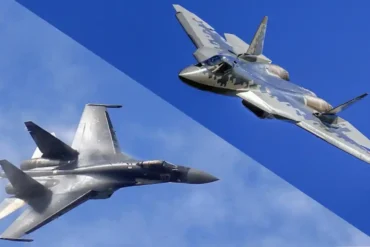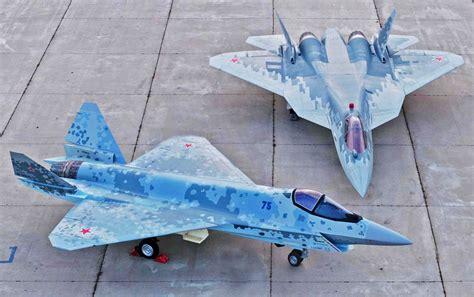
India’s evolving quest for air superiority and technological self-reliance has brought renewed focus to the Russian Su-57E stealth fighter, now emerging as a candidate in the high-stakes Multi-Role Fighter Aircraft (MRFA) competition. With its production line gaining momentum and an ambitious joint-production proposal on the table, the Su-57E is positioning itself not merely as a stopgap, but as a strategic lever in India’s aerospace ambitions. Yet, geopolitical complications, operational readiness concerns, and a strong Western competition landscape demand a cautious, deeply analytical approach.
The Strategic Context: India’s Fighter Jet Dilemma
The Indian Air Force (IAF) faces a declining number of operational fighter squadrons, far below the sanctioned strength of 42. Even with the Rafale, Tejas, and future AMCA in the mix, a significant shortfall persists, particularly in bridging the gap between current capability and future indigenous solutions. Against this backdrop, the Su-57E—an export variant of Russia’s fifth-generation fighter—has reemerged as a serious consideration.
Russia’s Production Surge: Su-57 Scaling Up
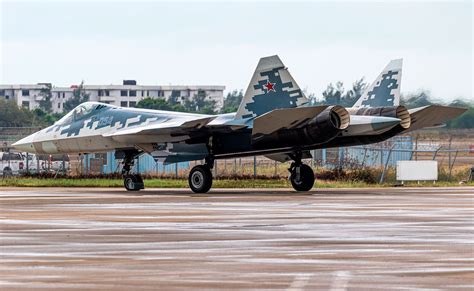
Russia’s ability to deliver the Su-57E hinges critically on its ramped-up production at the Komsomolsk-on-Amur Aviation Plant (KnAAZ). As of early 2025, the plant produces approximately 12 aircraft annually, with an ambitious roadmap to increase capacity to 20 aircraft per year by 2028. This is not just a production promise—it is backed by state orders and domestic demand. The Russian Ministry of Defence’s order of 76 units, signed in 2019, is driving this manufacturing surge. By 2028, with only eight aircraft left as back orders, Russia is expected to complete domestic commitments, opening up room for exports.
A crucial enabler of this acceleration is the Su-57’s independent supply chain, heavily reliant on Russian and Chinese components. This separation from Western dependencies has insulated the program from sanction-related slowdowns, offering India a potentially more reliable acquisition pipeline than platforms tied to the West.
The AL-51 Engine: Bridging Performance Gaps
One of the major historical concerns for India has been the Su-57’s propulsion system. During the now-defunct FGFA (Fifth Generation Fighter Aircraft) joint venture, the IAF expressed dissatisfaction with the engine’s performance and the aircraft’s overall stealth characteristics. Today, those concerns are partially addressed through the AL-51 (Izdeliye 30) engine.
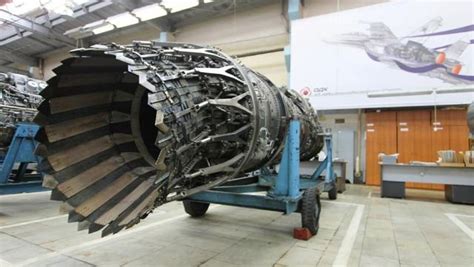
This next-generation powerplant offers 11 tonnes of dry thrust and 17.5 tonnes with afterburner, enabling true supercruise capability. Expected to enter serial production by late 2025, the AL-51 features serrated exhaust nozzles to reduce radar and infrared visibility—an essential upgrade addressing India’s stealth benchmarks. However, initial batches for export may still be fitted with the older AL-41F-1S (Izdeliye 117S) engine, with an upgrade path to the AL-51 provided in later units.
Su-57E in Indian Hands: Transfer of Technology and Local Production
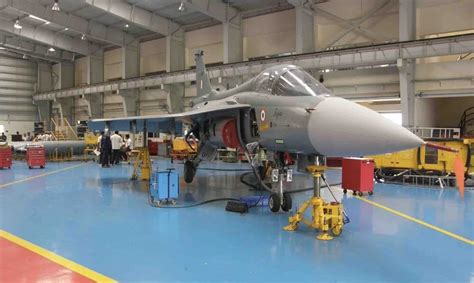
Russia’s offer, presented by Rosoboronexport and United Aircraft Corporation (UAC) at Aero India 2025, includes a full-scale co-production proposal. The plan involves manufacturing the Su-57E at Hindustan Aeronautics Limited (HAL)’s Nashik facility, which currently assembles the Su-30MKI. The key differentiator here is full Transfer of Technology (ToT), empowering India to integrate indigenous systems—ranging from AESA radar and EW suites to locally developed weapons platforms.
This modular approach aligns closely with India’s “Make in India” doctrine. Moreover, leveraging HAL’s experience with Su-30MKI assembly and AL-31FP engine production, India could absorb the Su-57E ecosystem with minimal learning curve. The proposal opens the door to incorporating AMCA-derived technologies into the Su-57, enabling a technology continuity rather than a disjointed parallel development effort.
CAATSA and Sanctions: A Looming Threat
No discussion on Russian defense deals is complete without factoring in CAATSA (Countering America’s Adversaries Through Sanctions Act). The S-400 Triumf acquisition already put India in a geopolitical spotlight, delaying deliveries due to payment complications caused by sanctions. The Su-57E, as a multi-billion-dollar acquisition, magnifies these challenges.
Currently, no robust payment mechanism exists to process such a transaction at scale without attracting scrutiny from the US. Although potential policy shifts under President Donald Trump’s administration may reduce sanctions pressure, the uncertainty surrounding US-Russia relations adds a layer of risk to any Su-57 deal.
Competing Platforms and IAF’s Preference
India’s MRFA tender seeks 114 fighter jets with high local content and strategic flexibility. In this arena, the Su-57E faces formidable Western competition, including:
- Dassault Rafale, already operational and favored by IAF
- F-21 (Lockheed Martin), customized for Indian specifications
- F/A-18 Super Hornet, carrier-capable and offered with local assembly
- Eurofighter Typhoon, a 4.5-generation aircraft with proven versatility
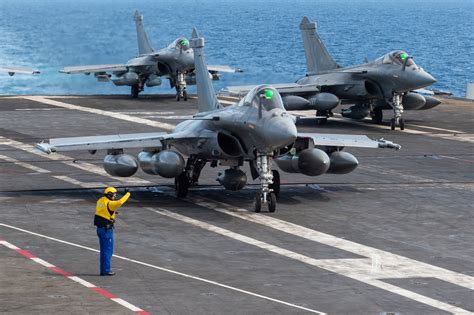
The Rafale’s strong positioning is particularly challenging. With established infrastructure, trained personnel, and an existing logistics chain, it remains the IAF’s comfort choice. Posts on defense forums and expert analysis repeatedly point out that the IAF remains “obsessed with Rafales,” casting a long shadow over Su-57’s chances.
Russia’s preference for a government-to-government (G2G) deal format to bypass the MRFA tender process adds another layer of complexity. This could alienate Western bidders and disrupt competitive transparency.
Fifth-Generation Standards: Does Su-57E Measure Up?
Despite improvements, a critical question remains—is the Su-57E a true fifth-generation fighter by IAF standards? The IAF’s criteria include:
- Full stealth with internal weapons bays
- Supercruise capability
- Advanced situational awareness and network-centric warfare compatibility
While the Su-57E does offer reduced radar and infrared signatures, analysts argue that its stealth still lags behind the F-35. Moreover, with the AL-51 not yet fully integrated into production units, true supercruise capability is still 2–3 years away. A senior IAF official recently remarked that even with the AL-51, the aircraft is “at least 4–5 years from production readiness.”
The IAF’s earlier rejection of the FGFA program in 2018 was rooted in similar performance gaps. The lingering skepticism remains evident in military aviation forums and social media, where experts ask, “Will it really be a fifth-gen aircraft by the time we get it?”
Conclusion: High Promise, High Risk
Russia’s Su-57E offer to India is a bold, technologically ambitious and strategically layered proposition. It addresses real gaps in India’s airpower matrix while supporting long-term goals of indigenous production and technology absorption. The upgraded AL-51 engine, MUM-T capability, and the full ToT proposal mark significant leaps forward.
However, geopolitical realities, sanction risks, and internal IAF preferences create a landscape fraught with uncertainty. As India weighs its MRFA decision, the Su-57E stands as both a potential enabler of strategic autonomy and a test case of diplomatic dexterity.
The final decision will not hinge solely on specifications, but on how deftly India navigates a rapidly evolving global power balance, where airpower is no longer just about the skies—but about sovereignty, alliances, and survival in a multipolar world.