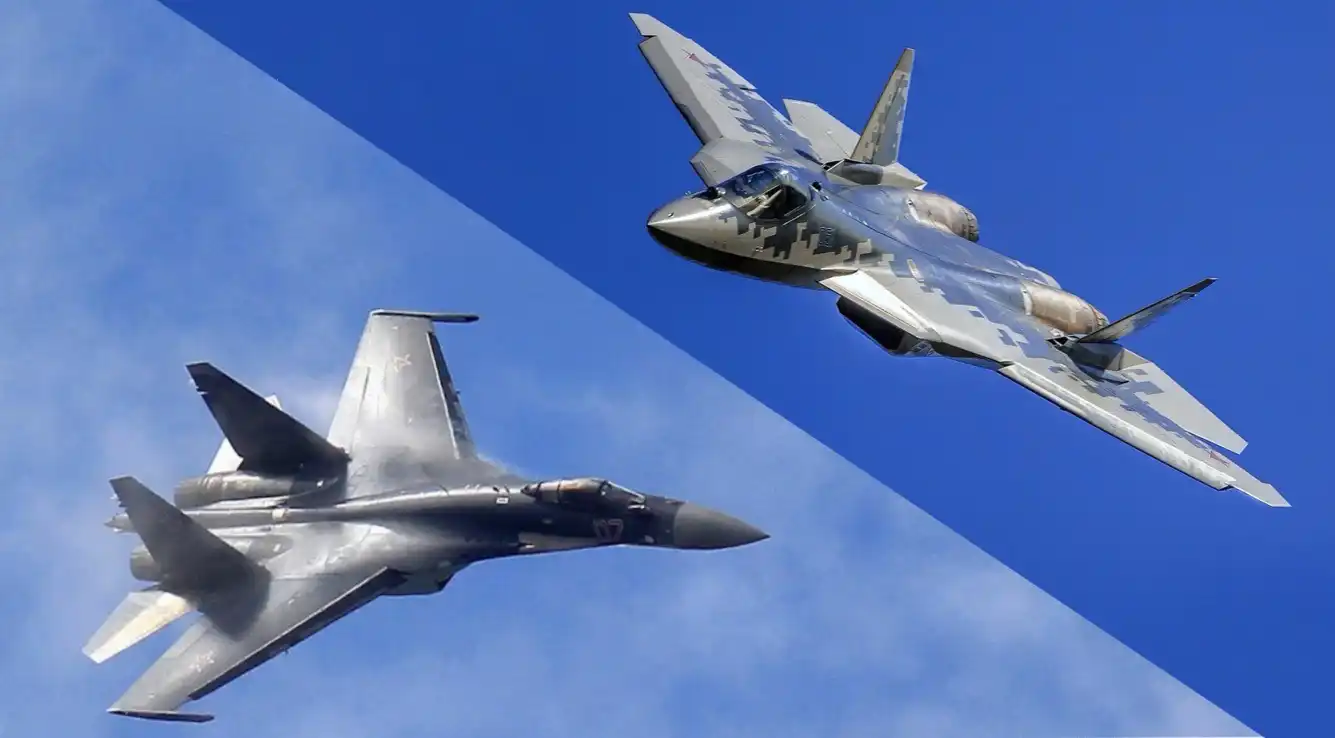
India’s long-standing ambition to modernize its airpower is once again drawing Moscow’s attention. In a bold and calculated move, Russia has bundled its fourth-generation Su-35M fighter jets with its flagship fifth-generation Su-57E to make the package more appealing to the Indian Air Force (IAF), which has grown increasingly cautious in committing to Russian platforms amid geopolitical uncertainty, logistical headaches, and underwhelming progress on stealth jet development.
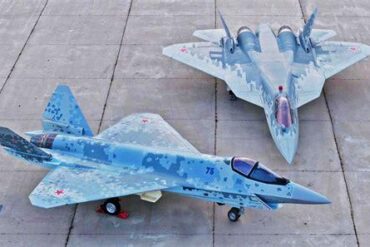
The proposal was revealed during Aero India 2025, where Russian officials from Rostec and Sukhoi presented what they termed a “transitional package.” The concept is clear: offer India immediate combat-ready aircraft to plug current operational gaps, while promising longer-term strategic co-development of next-generation stealth fighters.
The Bundle Offer: Su-35M as Immediate Reinforcement, Su-57E for the Future
With the Indian Air Force’s squadron strength slipping below the sanctioned 42 squadrons, the urgency for replenishment has grown more acute. The Su-35M, a combat-proven multi-role fighter developed from the Su-27 lineage, is being offered as a stopgap solution. Russia proposes delivering up to 40 Su-35Ms within three years, allowing India to strengthen its air superiority posture while continuing its long-term evaluation of fifth-generation platforms.
This isn’t just about numbers. The Su-35M’s 80% system commonality with the Su-30MKI, India’s current Russian-origin frontline fighter, is a significant advantage. It allows for seamless pilot training, logistics integration, and reduced maintenance complexity, making it a low-risk acquisition for rapid deployment.
Technically, the Su-35M is compatible with the R-37M and K-77M long-range air-to-air missiles, weapons that are crucial for operations in high-altitude theaters like the Himalayas. This compatibility gives India an interim high-altitude dominance capability, crucial for tensions along the Line of Actual Control (LAC) with China.
Su-57E: From Export Model to Local Production in Nashik
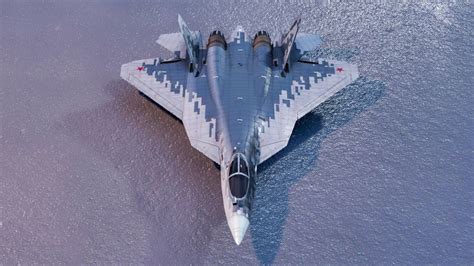
The second pillar of the proposal revolves around co-producing the Su-57E, Russia’s long-touted answer to the F-22 Raptor and F-35 Lightning II. Though the Su-57 has faced considerable delays and performance skepticism globally, Russia is now willing to go further than before to secure a foreign partner—particularly India.
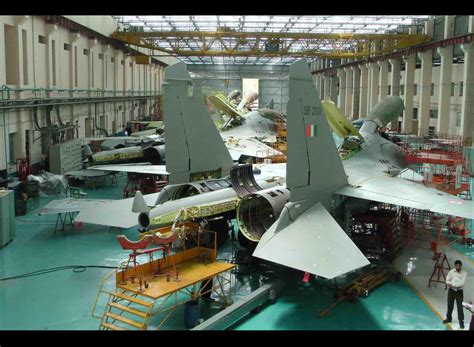
The plan includes establishing local production lines at Hindustan Aeronautics Limited (HAL)’s Nashik facility, with substantial technology transfer in critical areas such as radar systems, engines, and avionics. Russia is offering India access to the Su-57E’s source code, allowing for integration of indigenous systems and weapons—a significant concession that Western manufacturers are unlikely to match.
Strategic Alignment with India’s “Aatmanirbhar Bharat” Goals
This dual-offer plays directly into India’s “Make in India” and “Aatmanirbhar Bharat” defense policy frameworks. By enabling local production and technology access, the proposal appeals to India’s desire for self-reliance in defense manufacturing, particularly after decades of dependence on foreign imports.
Russia’s offer isn’t just about aircraft—it’s about influence. Co-development would allow India to tailor the Su-57E’s architecture to fit its own strategic and operational needs. With potential upgrades like the Izdeliye 117S engine—featuring enhanced stealth characteristics and a longer service life—the Su-57E could evolve into a uniquely Indian stealth platform over time.
A Deal Rooted in Desperation or Strategic Depth?
Critics argue this new bundling strategy is a thinly veiled admission that the Su-57, on its own, is not selling. More than a decade after its first flight, no foreign customer has signed a firm deal for the Su-57E. Past efforts to pitch the aircraft to nations like Algeria, Vietnam, and even Turkey have faltered, primarily due to its developmental delays and limited stealth performance compared to Western benchmarks.
India, too, was once part of the now-stalled FGFA (Fifth Generation Fighter Aircraft) program, a joint initiative with Russia based on the Su-57 airframe. India withdrew from FGFA in 2018 citing concerns over cost, technological asymmetry, and poor transparency. Thus, this renewed push could be seen less as a leap of trust and more as a last-ditch effort by Russia to revive interest in its fifth-generation portfolio.
Competitive Pressure from the West: Rafale and F-35 Loom Large
While the Su-35M and Su-57E package has practical appeal, it arrives in the midst of intense global competition. India’s Multi-Role Fighter Aircraft (MRFA) program, which seeks to acquire over 100 advanced jets, includes contenders like the Dassault Rafale, Eurofighter Typhoon, and most notably, the Lockheed Martin F-35A.
The F-35, backed by Washington’s diplomatic and industrial clout, presents a formidable challenge. It comes with proven combat experience, established production lines, and a wide support network among allies. However, the F-35’s entry into the Indian market is complicated by geopolitical constraints and its limited export flexibility, especially to countries with longstanding defense ties to Russia.
India’s past selection of 36 Rafale jets, now operational with the IAF, has also laid the groundwork for additional French acquisitions. However, the cost per unit remains high, and France has been more conservative in offering technology transfers compared to what Russia is now proposing.
Sanctions and Support Chain Risks: The Su-30MKI Experience
India’s current experience with its Su-30MKI fleet underscores a broader concern—spare parts availability and logistical bottlenecks. Since Russia’s invasion of Ukraine, global sanctions have disrupted supply chains and raised doubts about the long-term viability of relying heavily on Russian platforms.
Despite Rostec’s assurances that production has increased to meet wartime demand, spare parts delays and maintenance shortfalls have reportedly impacted the IAF’s fleet readiness. HAL has struggled to maintain consistent supply from Russian partners, leading to delays in overhauls and reduced serviceability.
Moreover, Russia’s use of Western-origin components in both Su-35M and Su-57 production—many of which are now embargoed—adds another layer of risk. Indian defense planners are acutely aware that these issues could become systemic in future procurements.
Political Calculus: Balancing Partnerships in a Multipolar World
Beyond technical specs, India must weigh the strategic optics of deepening defense ties with Russia at a time when it is actively strengthening relations with the United States, France, Israel, and Japan. New Delhi has walked a diplomatic tightrope, avoiding overt criticism of Moscow’s actions in Ukraine while benefiting from discounted energy imports and defense cooperation.
Opting for the Russian bundle could complicate India’s partnerships with Western powers, especially if the deal triggers secondary sanctions under the U.S. CAATSA (Countering America’s Adversaries Through Sanctions Act). However, Russia’s offer remains attractive because it aligns with India’s desire for strategic autonomy and long-term defense manufacturing capabilities.
Conclusion: Tactical Offer or Strategic Opportunity?
Russia’s combined Su-35M and Su-57E package is more than a sales pitch—it’s a strategic gambit aimed at securing relevance in India’s future airpower roadmap. While the offer aligns with India’s current needs and future ambitions, it is not without significant caveats.
If India accepts, it would gain short-term airpower reinforcement and a long-term foothold in fifth-generation aviation. But it would also be recommitting to a supply chain that has shown vulnerabilities and to a stealth fighter still striving for credibility. Ultimately, the decision will rest on whether India sees this proposal as a calculated step toward self-reliance, or as a high-risk bet on a fading military-industrial relationship.
Until then, Russia waits—offering more than just fighters. It offers a chance for India to co-author the next chapter of aerial dominance, but at a price that goes well beyond rubles.