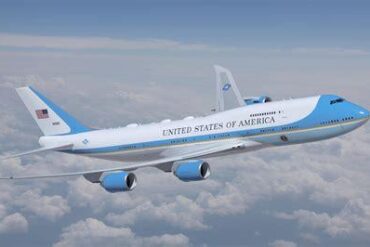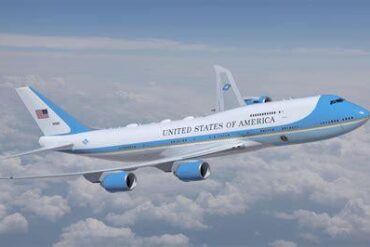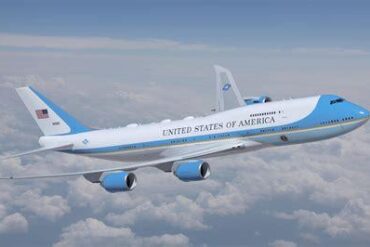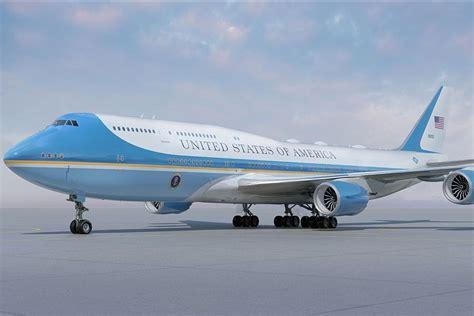
The latest $280 million charge from Boeing on the VC-25B Air Force One replacement program has once again exposed the enormous challenges behind one of the most politically visible aircraft projects in the world. The additional loss is not simply another accounting figure. It represents a deeper problem involving aircraft modification complexity, fixed-price defense contracts, industrial risk, and the long-term relationship between Boeing and the U.S. Air Force.
Boeing’s newest cost increase brings the company’s total losses on the VC-25B program above $3 billion. The two aircraft are still expected to enter service later than originally planned, with the first new Air Force One scheduled for delivery in 2028 and the second following in 2029. The timeline has moved years beyond the original target, creating additional costs for the Air Force while forcing the existing VC-25A fleet to continue flying.
The situation is especially notable because the program was once presented as a major taxpayer victory. In 2017, President Donald Trump pushed Boeing to renegotiate the contract after criticizing the projected cost of the new presidential aircraft. The result was a fixed-price agreement valued at approximately $3.9 billion for two aircraft and associated work. At the time, the deal was promoted as saving taxpayers more than $1 billion.
However, the final outcome has become far more complicated. While the contract price remained fixed, the financial burden shifted heavily onto Boeing. At the same time, delays forced the Air Force to spend additional money keeping older aircraft operational and developing an interim solution known as the VC-25 Bridge.
Boeing’s $280 Million Air Force One Loss Explained
Boeing’s latest financial report revealed that its Defense, Space & Security division recorded another $280 million charge related primarily to additional production and certification resources required for the VC-25B program. The company stated that it continues to expect the first aircraft delivery in 2028, but the financial damage from the project continues to grow.
The VC-25B program began as an effort to replace the aging VC-25A presidential aircraft, the heavily modified Boeing 747-200 aircraft that have served as Air Force One since the early 1990s. The replacement aircraft were supposed to provide greater efficiency, updated technology, and improved mission capabilities.
The Air Force originally considered acquiring new-build aircraft, but the plan changed when Boeing offered two partially completed Boeing 747-8 airframes that had originally been built for the failed Russian airline Transaero. Those aircraft had remained stored after Transaero collapsed, leaving Boeing with expensive unfinished assets.
Using existing airframes appeared to offer a significant cost advantage. Instead of manufacturing completely new aircraft, Boeing and the Air Force could convert existing 747-8s into presidential transports. On paper, this approach looked efficient. In reality, it created a much more difficult engineering challenge.
Why Converting Boeing 747-8 Aircraft Became So Expensive
The biggest misunderstanding surrounding the VC-25B program is that converting a commercial aircraft into a presidential aircraft is a simple modification process. It is not.
A normal Boeing 747-8 is designed to transport passengers or cargo. The Air Force One mission requires an aircraft that functions as a flying command center, capable of supporting national leadership during emergencies.
The modifications required for the VC-25B are extensive. Boeing must integrate advanced communications systems, military-grade electronics, defensive capabilities, electromagnetic protection, secure networks, structural changes, and specialized mission equipment.
A purpose-built military aircraft could have been designed around these requirements from the beginning. Instead, Boeing engineers had to adapt an already completed commercial airframe.
This created unexpected challenges. Wiring routes had to be redesigned. Structural areas required reinforcement. Security requirements increased the complexity of subcontractor operations. Some suppliers experienced financial difficulties, while pandemic-related disruptions further slowed production.
One of the most difficult parts of aircraft modification is that changes made late in the process often create additional changes elsewhere. A new electrical system may affect weight distribution. A structural reinforcement may require additional certification testing. A security requirement may force redesigns of existing components.
The result was a program where every adjustment carried financial consequences.
The Fixed-Price Contract Problem Behind Air Force One
The VC-25B controversy highlights a broader debate inside the defense industry: whether fixed-price contracts create efficiency or simply transfer too much risk to contractors.
Under a fixed-price agreement, the government agrees to pay a set amount while the contractor absorbs unexpected cost increases. For taxpayers, this can appear attractive because the final bill is predictable.
However, fixed-price contracts become dangerous when requirements are complex and uncertain. If problems emerge, contractors must either accept losses, reduce investment, or negotiate future projects differently.
Boeing’s experience with the VC-25B is not isolated. The company has faced significant financial pressure from other fixed-price programs, including the KC-46 Pegasus tanker, T-7A Red Hawk trainer aircraft, and MQ-25 Stingray unmanned tanker.
The company has also experienced major losses on NASA’s CST-100 Starliner spacecraft program, bringing the combined impact of Starliner and VC-25B losses to roughly $5.5 billion.
These experiences have changed Boeing’s approach to government contracts. The company has become more cautious about accepting large programs where technical risks are difficult to predict.
How the Air Force One Deal Created Additional Costs
Although the VC-25B contract remains capped, the broader cost to the Air Force has increased significantly because of delays.
The original plan expected the aircraft to arrive in 2024. Instead, the first aircraft is now expected in 2028. That four-year delay means the Air Force must continue operating the existing VC-25A fleet, which requires increasingly expensive maintenance.
The older aircraft remain highly capable, but maintaining decades-old presidential aircraft is expensive. Parts become harder to source, inspections become more demanding, and maintenance periods become longer.
The delay also created the need for an interim presidential aircraft solution.
The Costly VC-25 Bridge Solution
The Air Force’s temporary solution involved acquiring a Boeing 747-8i originally operated as a luxury aircraft for Qatar. The aircraft was offered as a replacement option while waiting for the new VC-25B fleet.
The aircraft was redesignated as the VC-25 Bridge, but transforming it into a presidential transport created its own challenges.
A presidential aircraft is not simply a luxury jet with additional communications equipment. The true Air Force One mission requires extremely advanced protection and survivability features.
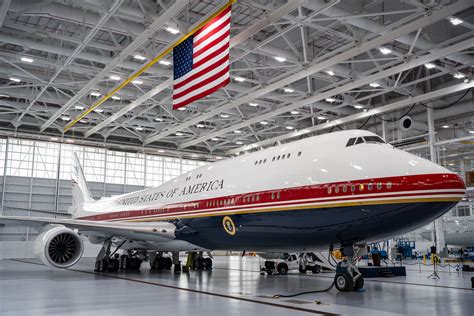
Reports indicated that the temporary aircraft required hundreds of millions of dollars in modifications. Some estimates placed the broader cost near $1 billion when related upgrades and program expenses were considered.
The bridge aircraft also cannot fully replicate every capability of the future VC-25B. Some specialized military systems, structural protections, and advanced defensive features are difficult or impossible to add after the aircraft has already been built.
This creates an unusual situation where the Air Force is spending heavily on a temporary aircraft while still waiting for the permanent replacement.
Why the Boeing Air Force One Problem Matters Beyond Two Aircraft
The VC-25B program is important not only because of Air Force One’s symbolic value. It also demonstrates how defense procurement decisions influence the entire aerospace industry.
The United States depends on companies like Boeing to maintain advanced manufacturing capabilities. While other companies compete in certain areas, Boeing remains one of the most important suppliers of military aircraft and aerospace systems.
If contractors repeatedly experience massive losses on government programs, they may become less willing to compete for future projects. Fewer competitors can ultimately lead to higher costs and fewer innovation opportunities.
This issue is already visible in several programs. Boeing withdrew from some competitions where fixed-price structures created unacceptable financial risks. The Air Force’s Survivable Airborne Operations Center (SAOC) program, for example, moved forward with another contractor after Boeing decided not to continue.
A contract structure that appears beneficial in the short term can create unintended consequences over decades.
The Future Relationship Between Boeing and the U.S. Air Force
The VC-25B situation has created tension, but Boeing and the Air Force remain deeply connected. Their relationship spans generations of aircraft programs, including fighters, bombers, tankers, transports, and special mission aircraft.
The challenge is finding the right balance between protecting taxpayers and maintaining a healthy industrial base.
Government agencies naturally want contractors to control costs. Contractors want contracts that accurately reflect technical uncertainty. When those goals become misaligned, major programs can suffer.
The Air Force One replacement demonstrates that simply transferring financial risk does not eliminate risk. It may only move that risk to another part of the system.
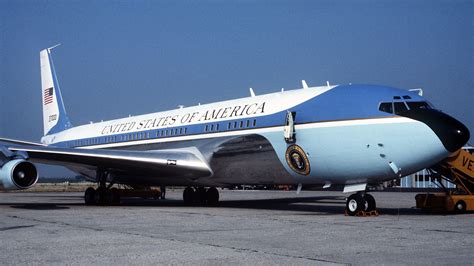
The VC-25B will eventually become one of the most advanced presidential aircraft ever built. When delivered, it will provide decades of service and replace aircraft that have carried U.S. presidents through major global events.
However, the journey to reach that point has revealed important lessons about aerospace engineering, defense contracting, and long-term planning.
What Boeing’s $3 Billion Air Force One Losses Really Mean
Boeing’s latest $280 million Air Force One charge is not just a financial setback. It is a warning about the complexity of modern defense programs.
The VC-25B project shows that aircraft development involves far more than assembling an airframe. Presidential aircraft require specialized systems, strict security standards, extensive testing, and years of certification.
The decision to pursue a fixed-price contract created political benefits by promising cost certainty, but it also placed enormous pressure on Boeing. Meanwhile, delays and temporary solutions increased the overall burden on the Air Force.
The final lesson from the Air Force One replacement program is that the cheapest contract on paper is not always the least expensive option. In highly complex aerospace projects, realistic risk-sharing and long-term cooperation may ultimately provide better value than aggressive short-term savings.