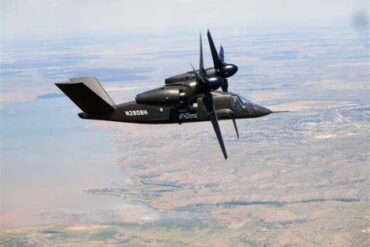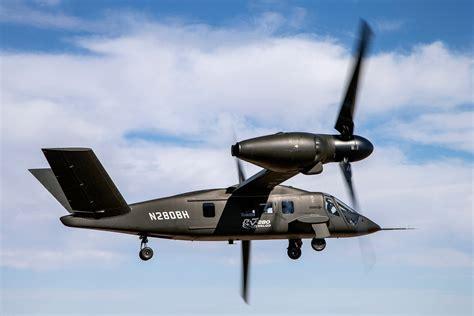
The Bell V-280 Valor is a next-generation tiltrotor aircraft developed by Bell Helicopter for the U.S. Army’s Future Vertical Lift (FVL) program. Designed to replace the aging UH-60 Black Hawk, this versatile platform combines the speed and range of fixed-wing aircraft with the vertical lift capability of helicopters, making it a transformative leap in military aviation. Unveiled at the 2013 Army Aviation Association of America’s Annual Professional Forum and Exposition, the V-280 Valor first took to the skies on December 18, 2017, in Amarillo, Texas. It was officially selected as the Future Long-Range Assault Aircraft (FLRAA) on December 5, 2022, marking a significant milestone in the modernization of the U.S. Army’s air fleet.
Development History of the V-280 Valor
The development of the V-280 Valor traces back to June 2013, when Bell Helicopter announced its selection for the Joint Multi-Role (JMR) Technology Demonstrator (TD) phase, a critical precursor to the FVL program. This phase aimed to identify the technologies and designs that could shape the future of vertical lift aviation. Bell’s proposal, classified as a Category I offering, was recognized for its sound scientific and technical foundation, aligning closely with the Army’s mission objectives.
To support this ambitious project, Bell formed a powerful consortium, partnering with Lockheed Martin for avionics, sensors, and weapons integration. Additional key partners included:
- Moog Inc. – Flight control systems
- GE Aviation – Engine technology
- GKN – Tail structure
- Spirit AeroSystems – Composite fuselage
- Eaton Corporation – Hydraulic and power systems
- Astronics Advanced Electric Systems – Power distribution
- Israel Aerospace Industries (IAI) – Nacelle structures
- TRU Simulation & Training – Simulators and maintenance trainers
This collaboration resulted in the first full-scale mock-up, unveiled at the 2013 Association of the United States Army (AUSA) Expo. By 2014, the Bell-Lockheed team, alongside the Boeing-Sikorsky partnership, was selected to build technology demonstrators for flight testing scheduled for 2017.
Prototype Testing and Early Achievements
The first V-280 prototype began to take shape when Spirit AeroSystems delivered the composite fuselage in September 2015. Remarkably, the entire fuselage, including advanced composite sections, was completed in just 22 months, highlighting the aggressive pace of the program. By February 2017, the aircraft was 95% complete and had begun ground vibration testing in Amarillo, Texas.
The V-280’s maiden flight occurred on December 18, 2017, marking a critical milestone. Initial flight tests throughout 2018 demonstrated rapid progress, with the aircraft achieving key performance goals:
- 80 knots in early tests
- 140 knots with partially forward proprotors
- 250 knots in full cruise configuration by October 2018
By January 2019, the V-280 had reached its target cruise speed of 280 knots, a remarkable achievement that underscores the efficiency of the tiltrotor design. By December 2020, it had logged over 200 flight hours, including long-range ferry flights to optimize its test program near U.S. Army facilities. The aircraft is officially designated YMV-75A by the Department of Defense.
Innovative Design and Advanced Capabilities
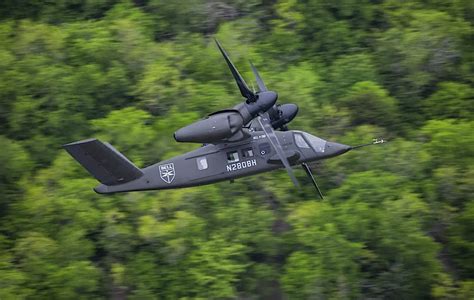
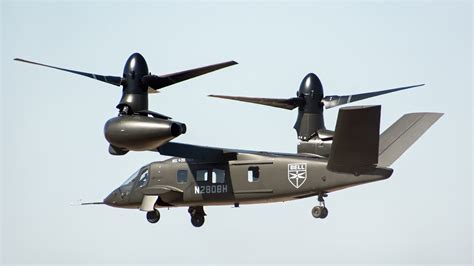
Named for its 280-knot cruise speed, the V-280 Valor represents a significant leap in tiltrotor technology. Unlike the earlier V-22 Osprey, the V-280’s engines remain fixed while the rotors and drive shafts tilt. This design choice simplifies mechanical complexity and improves reliability, as a driveshaft running through the straight wing allows one engine to power both rotors in the event of an engine failure. Key design features include:
- Top Speed: 300 knots (345 mph, 556 km/h)
- Range: 2,100 nautical miles (2,400 mi, 3,900 km)
- Combat Radius: 500–800 nmi (580–920 mi, 930–1,480 km)
- Maximum Takeoff Weight: 30,865 lb (14,000 kg)
- Capacity: 14 troops and a crew of four
The airframe uses extensive composites, including carbon fiber-reinforced polymers, to reduce weight and production costs. Its wings are constructed using a unique sandwich structure with honeycomb cores, resulting in a 30% cost reduction compared to a scaled V-22 wing.
Future Prospects and Strategic Importance
As the U.S. Army moves toward the Future Vertical Lift era, the V-280 Valor is positioned as a cornerstone of its air mobility strategy. Its combination of high speed, extended range, and vertical lift capabilities makes it ideal for operations in challenging environments like the Indo-Pacific. Moreover, its ability to perform multiple mission roles, including troop transport, medical evacuation, and forward arming and refueling, offers a versatile solution to meet evolving military needs.
In October 2021, Bell announced a switch to the Rolls-Royce AE 1107F turboshaft engines, increasing power to 7,000 horsepower while lowering sustainment costs due to decades of proven performance in the Osprey. This move further solidifies the V-280’s role as a reliable and powerful asset for future U.S. military operations.
Conclusion
The Bell V-280 Valor stands as a testament to innovation in military aviation. With its unmatched speed, range, and versatility, it represents a transformative leap in rotary-wing capabilities, setting a new standard for the next generation of combat aircraft. As it moves closer to operational deployment, the V-280 will likely play a critical role in shaping the future of American air power, ensuring rapid response and tactical superiority in the most challenging combat scenarios.